REVIEW · BELGRADE
Red Belgrade Communist Tour
Book on Viator →Operated by Serbia Tour Operator · Bookable on Viator
Belgrade’s gray buildings tell a loud story. This 4-hour walking and trolley tour traces Communist Yugoslavia from Tito’s rise through later decades, using real street corners instead of textbook summaries. I love the timeline feeling as you move from Republic Square toward Dedinje, and I love how the tour lands at the Museum of Yugoslavia and the House of Flowers, so the story actually closes with places you can see.
The one drawback to plan for is physical and pacing comfort: expect lots of walking on hills, and a good part of the time is museum-focused, so the emphasis may lean more toward Tito and Yugoslavia than only day-to-day communism details.
In This Review
- Key things you’ll notice on this tour
- Belgrade’s Communist era is written in the streets
- Trg Republike: Tito’s opening scene and the city’s “contradictory” era
- Terazije: glamorous holidays, Marx and Engels, and Hotel Moskva vibes
- Pionirski Park: the pioneer oath and how socialist childhood worked
- Trolley to Dedinje: Belgrade transit as a time machine
- Museum of Yugoslavia and House of Flowers: Tito’s story in objects and burial
- What the guides do well (and why it changes the experience)
- Price and value: where the $53.10 really goes
- Walking comfort and pacing: what to prepare for
- Who this tour is best for
- Should you book the Red Belgrade Communist Tour?
- FAQ
- How long is the Red Belgrade Communist Tour?
- Where does the tour start?
- What time does the tour start?
- Where does the tour end?
- Is the tour offered in English?
- What’s included in the price?
- Is there a trolley ride during the tour?
- How big are the groups?
- What if I’m the only person on a shared tour?
- Is the tour free to cancel if plans change?
Key things you’ll notice on this tour
- Republic Square to Dedinje gives you a readable postwar-to-2000s city storyline
- Terazije Square and Hotel Moskva area brings in celebrity-era glamour next to ideology
- Pionirski Park pioneer oath theme explains how socialist childhood worked in practice
- A one-way trolley ride helps you experience Belgrade’s historic public transit while moving neighborhoods
- Museum of Yugoslavia + House of Flowers turns politics into objects, gifts, and a real burial site
Belgrade’s Communist era is written in the streets
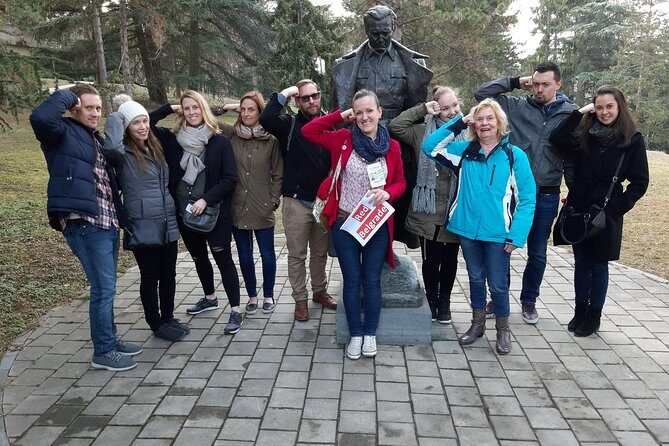
Belgrade can feel layered on purpose: older kingdoms, socialist-era planning, and newer updates all sit close together. This tour helps you read those layers in order, starting with the moment Yugoslav communism took shape in the capital and ending with Tito’s lasting imprint.
What makes this one practical is that it is not just about repeating dates. The guide points at buildings, symbols, and square layouts, then connects them to how people lived and how the society changed across decades. If you like understanding how big political systems show up in everyday city design, you’ll get a lot from this route.
Also, the tour is small enough to ask questions. In past runs, I saw evidence of groups feeling personal, including a small group size example, and there are guide names like Nebo, Dragor, Marko, Radica, Nina, Hristina, Isadora, Borjan, and Dragana connected with strong performance. If you’re the type who asks follow-ups, this format is a good fit.
You can also read our reviews of more tours and experiences in Belgrade.



Trg Republike: Tito’s opening scene and the city’s “contradictory” era
You start at Trg Republike, the place where Yugoslavia’s socialist proclamation story takes its cue. This square is presented as a starting overture, and it’s a smart place to begin because the whole tour feels like it’s answering the same question: how did this new system get built so publicly?
The walk through this area mixes eras on purpose. You’ll see socialist-grey building styles tied to constructivism-era planning next to monuments from the Yugoslav Kingdom period and later decades. That contrast matters. It shows you that Communist Yugoslavia did not wipe the board clean; it reinterpreted a city already full of history.
The guide’s approach also highlights the social side of ideology, including nostalgia around Tito for people who grew up during that period. You should expect discussion of conspiracy theories and urban legends that circulated in the second half of the 20th century. That is not random gossip. It’s a way to explain how ordinary Belgraders processed power, propaganda, and uncertainty.
One practical tip: because this part sets the tone, arrive on time and bring a water bottle. You’ll want your attention for the early context so the later stops click faster.
Terazije: glamorous holidays, Marx and Engels, and Hotel Moskva vibes
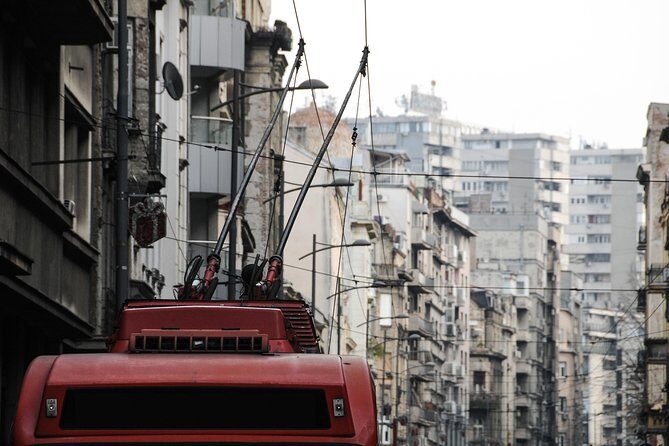
Next comes Terazije Square, a space that is easy to walk past without realizing how much political meaning can sit underneath the aesthetics. This stop leans into stories of holidays and festivities, plus famous names and unusual guests linked with Hotel Moskva.
That’s a clever contrast to Republic Square. Socialist Yugoslavia is often remembered as grey and strict, but this area is used to show the other side: public celebrations, high-profile visitors, and the idea that modern life kept happening around ideology.
You also learn about the area’s Marx and Engels connection and the Trade Union Hall presence. The tour frames work-cult ideals as a core element of Yugoslav society, then uses the story of a miner becoming a superstar to make the theme feel human. You don’t just get ideology as a concept. You get it as social messaging: who is celebrated, who is promoted, and why.
If you like urban storytelling, this is one of the stops where the guide’s pacing really matters. The square is wide, traffic is real, and you’ll want the guide to slow you down to see what you’d miss on your own.
Pionirski Park: the pioneer oath and how socialist childhood worked
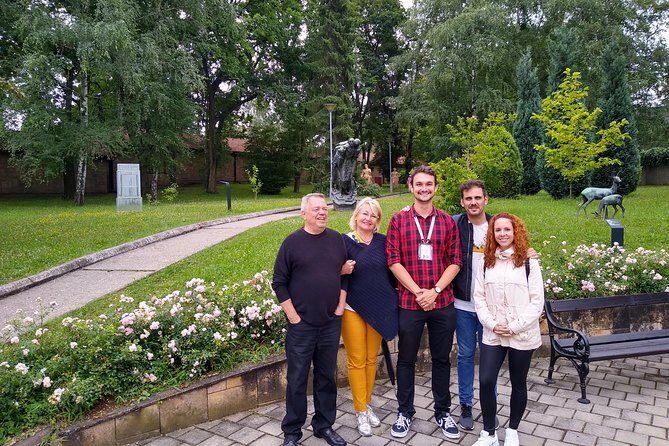
At Pionirski park, the focus shifts from power structures to how the system shaped identity from a young age. The pioneer oath ritual is used to explain how socialist education and youth organizations worked in practice, not just as politics but as routine life.
This is where the tour’s tone gets interesting. It presents the socialist regime as more liberal than you might expect compared to other systems, while still describing the limits and the dark parts without sugarcoating. You’re told how Western influence found a route through music and how lifestyles changed across the decades.
Expect the guide to keep connecting these themes back to what the city shows you. On the way, there is also the monument of Ivo Andrić, the Nobel Prize–winning Serbian writer. This detail is useful because it reminds you Yugoslavia’s identity was not only about the party line. It also lived in literature, diplomacy, and cultural status.
Wear shoes you can trust. This is part of the overall long, on-your-feet style of the tour, and the route can include hilly segments that add up by the end.
Trolley to Dedinje: Belgrade transit as a time machine
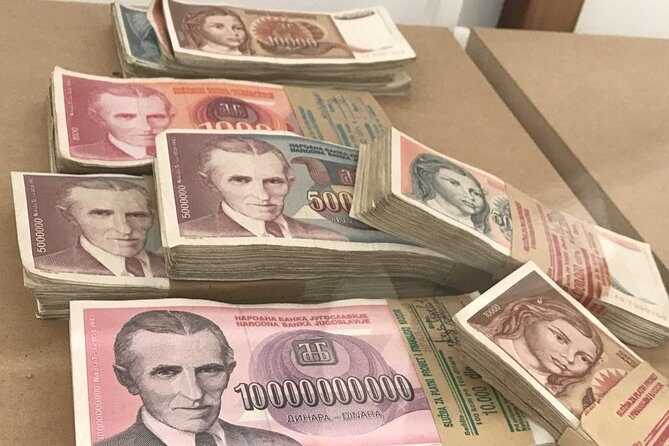
After Pionirski park, you catch a trolley ride, a symbol of public transportation from earlier times that is still active. This matters because it breaks the walking rhythm, but it also gives you a moving vantage point. You’ll feel like you’re traveling through time rather than just standing in place reading plaques.
The trolley takes you toward Dedinje, described as Belgrade’s elite district. Expect the contrast to show up fast: embassies, residential villas, and a neighborhood designed for status. You’re essentially shifting from the “center of ideology” feeling into a district associated with influence and power.
You’ll also be guided toward the Museum of Yugoslavia area here. Even if you’re visiting Belgrade for the first time, this part helps you connect transit routes and neighborhoods. It’s not only about seeing Tito’s legacy. It’s about learning how the city is laid out around power and institutions.
In plain terms: if you want context for where things sit in Belgrade, the trolley segment helps you get oriented fast.


Museum of Yugoslavia and House of Flowers: Tito’s story in objects and burial
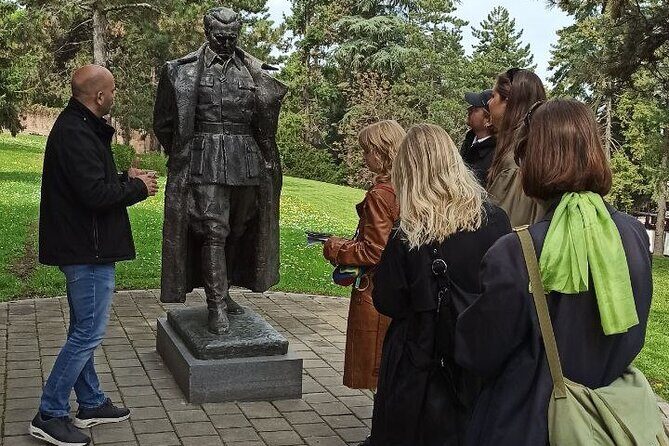
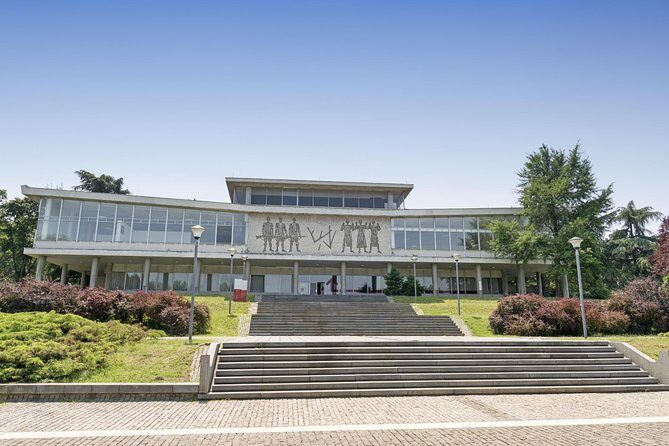
The tour’s main anchor is the Museum of Yugoslavia, devoted to Josip Broz Tito. The museum visit comes with entry included, so you’re not juggling ticket buying while your schedule is already tight.
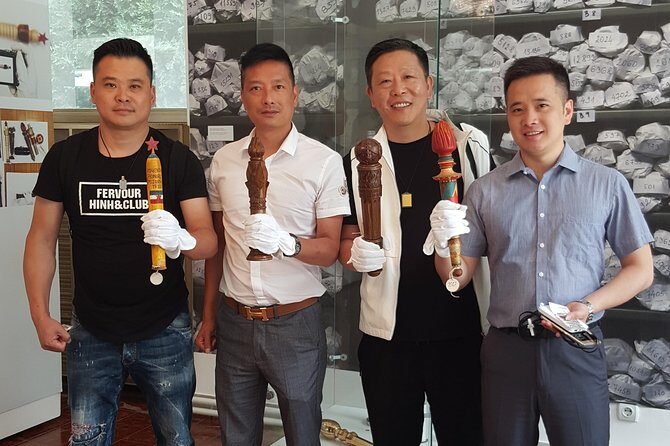
This stop is described as Tito-centered, and that’s not a complaint. The museum is where the tour’s ideology talk becomes tangible. You’ll see ceremonial gifts given to the Yugoslavian president, including a notable gift associated with Apollo 11. That kind of object makes the era feel real. It connects local leadership to global attention.
The museum time is also used to bring the story toward the end of Tito’s life and the final chapter of the former republic. The tour wraps up with a visit to the mausoleum known as the House of Flowers, where Tito is buried.
If you’re the type who needs closure for a history story, this is a strong design choice. You don’t just read about a political era and then run off to dinner. You finish at a specific site tied to the person who shaped the era.
The guides are typically praised for explaining what you’re seeing and answering questions patiently. Names like Nebo and Dragor show up repeatedly in that theme, with comments about guides taking time and keeping the explanations clear. That kind of museum support makes a big difference, especially when museums can otherwise feel like slow browsing.
What the guides do well (and why it changes the experience)

The biggest consistency across strong guide feedback is pacing with questions. Many of the named guides are praised for answering thoroughly, speaking with enthusiasm, and keeping the tour lively without turning it into a script.
A second strength is balance across the wider Serbia and Yugoslavia story. Even when the tour title points you toward communism in Serbia, the way the guide ties the Communist period to later decades helps you understand how the region’s politics evolved. In other words, you’re not only getting what communism was. You’re getting why it mattered for what came after.
A third strength is teaching you to read the city as evidence. Instead of asking you to trust the guide’s claims, the tour points to visible clues in squares and building styles. Once you start looking for those clues, Belgrade becomes easier to navigate after the tour ends.
One word of caution: there has been at least one experience where the spoken language matched a different expectation than the booking selection. So if language matters to you, double-check the language setting before you go. It’s a small step that prevents a frustrating mismatch.
Price and value: where the $53.10 really goes
The listed price is $53.10 per person for about 4 hours. On paper, that can look like a lot for a city walk. In practice, the value is in what you do not have to figure out yourself.
You get an English-speaking guide, trolley tickets, and the entry fee for the Yugoslav History Museum. That means you’re paying for both the interpretation and parts of the “transport and admission” puzzle. For a museum-based stop, that can easily add up on your own.
You also get mobile tickets, and the tour is built as a guided circuit that handles movement between key areas. There’s also mention of group discounts and the option between private and group settings, which can help if your travel style is flexible.
If you want the short version: this price works best if you care about understanding context, and if you’re okay with walking plus a museum stop. If you only want a quick highlight loop with zero museum time, you might feel the content is heavier than expected.
Walking comfort and pacing: what to prepare for
This tour is not a sit-down experience. You’ll be strolling scenic streets, moving between squares, and then spending real time inside the museum.
Shoes matter. Reviews linked to this experience point out that you should plan for long, hilly walking. So pack comfortable footwear and bring water, even if you expect you can buy it somewhere along the way.
For timing, expect about 20 minutes at each of the square/park stops, then a longer museum block and the trolley segment. That schedule is generally workable in a morning. Still, if you get tired walking, you may want to take your cue from the guide and pace yourself during transitions.
Who this tour is best for
I’d book this if you fall into any of these groups:
- You’re curious about 20th-century Balkans history and want Belgrade’s political story anchored to real places.
- You like guided interpretation, especially when it mixes ideology with everyday life.
- You want first-day orientation in Belgrade’s center and then a move into Dedinje so the city starts making sense.
- You’re visiting for a short time and want the “big Tito sites” packaged into one morning.
It’s less ideal if you want a strict, narrow focus on communist ideology only. Even when communism is central, the tour’s strongest pull is Tito and Yugoslavia, especially through the Museum of Yugoslavia and House of Flowers.
Should you book the Red Belgrade Communist Tour?
Book it if you want a guided, street-to-museum route that explains how Yugoslavia’s Communist era shows up in Belgrade’s squares, buildings, and transit. The mix of Republic Square context, Terazije’s glamour-versus-ideology contrast, pioneer-childhood themes at Pionirski park, and the finished story at the House of Flowers is a thoughtful flow.
Skip it (or adjust your expectations) if you’re not comfortable with a lot of walking on hills, or if you want minimal museum time. Also, if you’re picky about language, confirm the English option before you set off.
FAQ
How long is the Red Belgrade Communist Tour?
It runs for about 4 hours.
Where does the tour start?
The meeting point is Trg Republike 9, Beograd 11102, Serbia.
What time does the tour start?
The start time is 10:00 am.
Where does the tour end?
The tour ends at the House of Flowers area in Belgrade after the Museum of Yugoslavia visit.
Is the tour offered in English?
Yes, the tour is offered in English.
What’s included in the price?
The price includes an English-speaking guide, trolley tickets, and entry fee for the Yugoslav History Museum.
Is there a trolley ride during the tour?
Yes. You’ll take a trolley ride, described as a one-way trip within the experience.
How big are the groups?
The tour has a maximum of 25 travelers.
What if I’m the only person on a shared tour?
There is a minimum number of passengers of 2. If you are the only guest, you’ll be informed at latest 24 hours before and can choose between canceling with no fees or paying a 75% supplement to proceed.
Is the tour free to cancel if plans change?
Yes, cancellation is free up to 24 hours in advance for a full refund.