REVIEW · BELGRADE
Belgrade: The White Emigration in Serbia in the Wake of the Russian Revolution
Book on Viator →Operated by Snurk.Travel · Bookable on Viator
Russian refugees reshaped Belgrade in plain sight. This 3-hour stroll ties the aftermath of the Russian Revolution to real, touchable places in the city, with big questions like Nansen passports and how Serbia handled an army in exile.
I like that the route stays grounded in buildings and burial places, not just lecture-mode history. You’re guided through spots such as Holy Trinity Church and the areas around the Serbian Parliament, where Russian influence shows up in how the city looks today.
One possible drawback: if you prefer lighter sightseeing with minimal politics, this tour spends time on high-stakes history. It raises awkward, very practical questions about power, safety, and survival.
In This Review
- Key highlights you’ll care about
- Before You Go: the big questions behind this 3-hour walk
- Stop 1: Holy Trinity Church and Baron Wrangel’s burial
- Stops 2 and 3: parliament, ministries, and the Royal Palace link
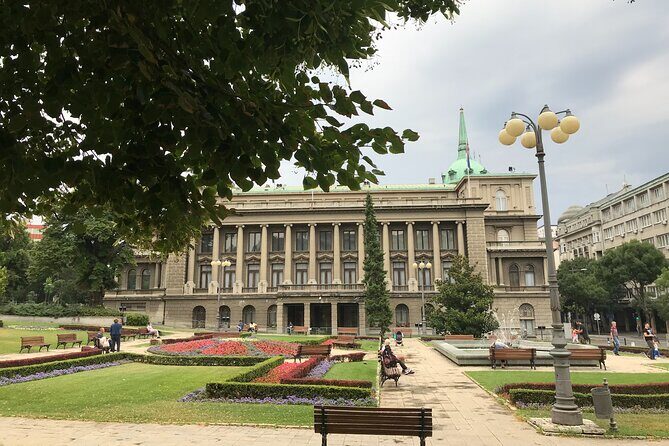
- The House of the National Assembly and the government zone
- The Royal Palace and Nicholas II’s monument
- Stop 4: Hotel Moskva coffee break and the Moskva and Aurora cakes
- Stop 5: National Theatre and the Russian arts thread
- Stop 6: Serbian Academy of Science and Art and the fate of emigrant scientists
- Stop 7: Nemanjina (Gavrilo Princip square), and why WWI is part of the same story
- Price and logistics: is it good value for $173.64?
- Who should book this Belgrade White Emigration tour?
- Quick tips to make the most of it
- Should you book it?
- FAQ
- How long is the tour?
- What is the price per person?
- Where do I meet for the tour?
- Where does the tour end?
- Is the tour private or shared?
- What stops are included?
- Do I need to pay admission tickets?
- What’s included, and what’s not?
- Is there a food or drink stop?
- Can I cancel for free?
Key highlights you’ll care about
- A clear theme from revolution to exile, centered on why so many Russians ended up in Belgrade
- Baron Wrangel’s burial at Holy Trinity Church, a direct link to the White Army story
- Russian architectural fingerprints in the look of government buildings and the park setting
- Hotel Moskva stop with coffee and the Moskva and Aurora cakes, plus a peek at Belgrade style
- Theatre and music thread through Russian ballerinas, street songs, and choir traditions
- World War I connections at Nemanjina square, tied to Gavrilo Princip and global history
Before You Go: the big questions behind this 3-hour walk
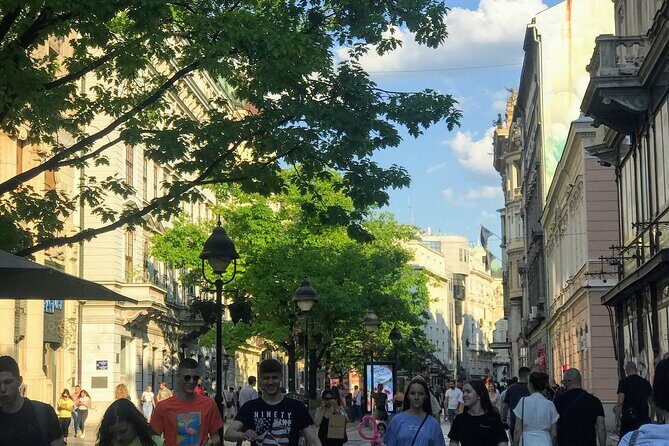
This tour’s pitch is simple: follow the Russian emigrants and see what they left behind in Belgrade. The deeper idea is more demanding. You’re not only looking at landmarks, you’re trying to understand how a country dealt with an outside refugee community that included a fully trained, and even partially weaponised, army.
You’ll also run into the puzzle of identity and paperwork: what Nansen passports are, and why they show up in modern conversations again. That’s the kind of detail that helps the story feel less like distant politics and more like real people trying to live.
You can also read our reviews of more tours and experiences in Belgrade.

Stop 1: Holy Trinity Church and Baron Wrangel’s burial
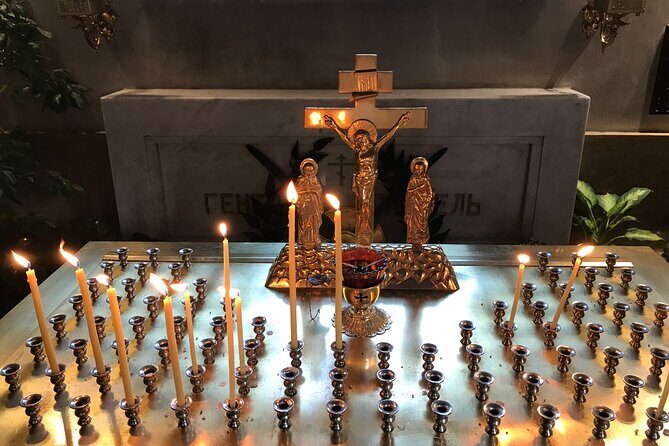
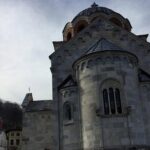
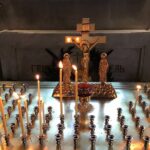
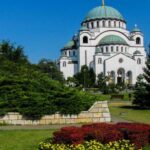
Your first stop is Holy Trinity Church, where you’ll walk to the Russian church associated with Baron Wrangel’s burial. This is one of those moments that instantly sharpens the theme of the whole tour: exile wasn’t just about leaving home, it was also about where a body might finally rest.
It’s also a useful tone-setter for the rest of the walk. When you start here, you understand that this isn’t only about architecture or famous names. It’s about the human weight of the Russian Civil War aftermath and the White Army’s long shadow.
Practical note: the scheduled time here is about 30 minutes, and admission is free. So you can slow down without feeling rushed.
Stops 2 and 3: parliament, ministries, and the Royal Palace link
From the church, the tour shifts into city shape. You move through a picturesque, formerly royal park area, and you look for a Russian footprint in Belgrade’s architecture.
The House of the National Assembly and the government zone
At the House of the National Assembly of the Republic of Serbia, you focus on the skyline and the planning logic around it. You’ll also spot the buildings connected to Serbia’s institutions from the same visual world: the post office, the General Staff, and ministries.
What I like here is how the guide connects aesthetics to influence. Instead of treating architecture like a photo-op, you learn why Russian architects mattered to Belgrade’s look and why that influence isn’t always acknowledged in a straightforward way.
Admission is free at this stop, and the time is again about 30 minutes. That’s long enough to notice details without feeling like you’re stuck in one place.
The Royal Palace and Nicholas II’s monument
Next comes the Royal Palace area, plus the monument to Nicholas II. This is where the tour tightens the relationship thread between the Serbian and Russian dynasties.
It’s a good stop for anyone who enjoys political history, but it still stays visual. You’re walking past royal spaces and thinking about family ties, alliances, and why symbolism mattered so much in the early 1900s.
Everything here is also free to enter for the purposes of the tour, with about 30 minutes allocated.

Stop 4: Hotel Moskva coffee break and the Moskva and Aurora cakes
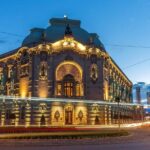
Then you get a reset. You head to Hotel Moskva, and the walk includes the transition from what used to be craft workshops to a street that’s now taken over by designers.
That change matters. It’s a reminder that emigration history doesn’t freeze in time. Belgrade keeps evolving, and the city layer-cakes new identities over older ones.
Inside Hotel Moskva, you’ll have coffee and try the Moskva and Aurora cakes, prepared according to a half-century-old recipe. Even if you’re not normally a dessert person, this is a fun, low-effort way to connect the story to everyday life. Plus, it’s a nice break from standing still in cold or heat.
The listing notes admission is free at stops, and the tour also says snacks aren’t included. Still, the coffee and cake at Hotel Moskva are part of the scheduled experience. Alcoholic beverages are not included, so if you want a drink with dessert, you’ll need to plan on your own.
Stop 5: National Theatre and the Russian arts thread
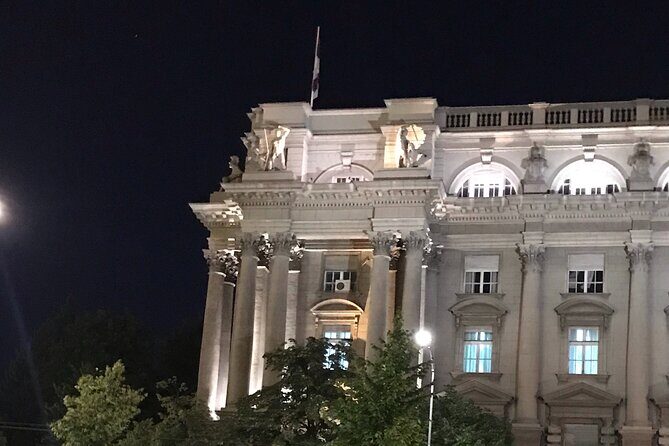
From there, the tour heads to the National Theatre. This is where the Russian emigration story moves into the arts.
You’ll learn about Russian ballerinas performing there, and about the scenic designers, choreographers, and directors who worked in that creative orbit. The tour also brings in Serbian cultural texture through street songs, and it points you toward who is worth remembering with kind words when a choir sings in Serbia.
I like this shift because it prevents the story from becoming one-note politics. When a community rebuilds itself in exile, arts are often one of the fastest ways to keep dignity, identity, and community alive. Belgrade becomes a stage, not just a shelter.
This stop is short—about 15 minutes—and admission is free for the tour context. If you’re the kind of person who enjoys quick, information-heavy stops, this is paced well.
Stop 6: Serbian Academy of Science and Art and the fate of emigrant scientists
Next you visit the Serbian Academy of Science and Art, with views and connections that also bring in Belgrade University. This is where the theme expands again: not just soldiers and artists, but scientists and the people who think for a living.
The tour asks what happens to emigrant scientists when they land somewhere new. It’s a smart question, because exile doesn’t only uproot lives—it can also reshape careers, research networks, and what societies are able to study and build.
If you like history that follows people’s work, not just headlines, this stop usually lands well. It’s scheduled for about 30 minutes, with admission free.
Stop 7: Nemanjina (Gavrilo Princip square), and why WWI is part of the same story
The final stop is at Nemanjina, the Gavrilo Princip square. Here, the tour links the role of the First World War and the incident’s impact on world history.
This part works because it helps you see how the early 20th-century story in the Balkans wasn’t a local soap opera. It was part of the chain reaction that changed Europe, then sent shockwaves across borders—exactly the kind of conditions that later made large-scale emigration possible.
You’ll also visit many places Russian emigrants would have visited a century ago that still stand today and are open for you to experience now. That’s the practical payoff: even after you leave the tour, you’ll recognize streets and squares with a new layer of meaning.
The time here is about 30 minutes, admission-free for the tour.
Price and logistics: is it good value for $173.64?
At $173.64 per person for about 3 hours, you’re paying for a focused guided walk with a heavy historical theme, multiple named stops, and a scheduled coffee and cake break at Hotel Moskva.
Here’s why that can be good value:
- Most stops are admission-free in the tour plan, so you’re not stacking museum ticket costs on top.
- You get a structured route through meaningful locations rather than trying to stitch the story together on your own.
- The coffee and cake stop turns the tour into an experience, not only a lecture.
Here’s what to watch:
- Snacks aren’t included, and alcoholic beverages aren’t included. If you’re sensitive to hunger, plan accordingly.
- The tour tackles serious political history. You won’t just breeze through the city; you’ll spend time on the why behind hosting and organizing an army in exile.
The tour is private, meaning only your group participates. That often improves the experience because you can ask questions without listening to your guide compete with other voices.
Also, you’ll have a mobile ticket and confirmation is received at booking time. Group discounts are available, which can help if you’re going with friends or family.
Who should book this Belgrade White Emigration tour?
You’ll likely enjoy this tour most if you like:
- Russian and Serbian history connections, especially the Revolution-to-exile arc
- Architecture-led sightseeing where buildings actually have a story
- Art and culture links, from ballet to theatre to choir traditions
- World War I context tied to local sites
It may be less ideal if you want a purely casual walk with minimal context. This tour is designed to make you think about exile, identity, and power, not just admire facades.
Quick tips to make the most of it
Wear comfortable shoes. The tour is a walking experience, and it packs multiple stops with short scheduled time blocks. Bring your questions too—especially about how paperwork, passports, and exile logistics shaped real lives.
And since snacks aren’t included and the coffee stop is the planned break, consider a light meal before you go or have a plan for later.
Should you book it?
I think it’s a strong choice if you want Belgrade to feel specific, not generic. The combination of Baron Wrangel’s burial, Russian architectural influence around major institutions, and the arts and science angles gives you a fuller picture of what Russian emigration meant on the ground.
If you’re curious about Nansen passports, dynastic ties like the Nicholas II connection, and the unusual challenge of Serbia hosting an army in exile, this tour is built for you. If you prefer simple city wandering and light facts only, you might find the political framing heavier than you expect.
If that sounds like you, book this anyway but go in with the mindset that history here isn’t abstract—it’s mapped onto the streets you’ll walk.
FAQ
How long is the tour?
The tour is about 3 hours.
What is the price per person?
The price is listed as $173.64 per person.
Where do I meet for the tour?
The meeting point is St. Mark Orthodox Church, Bulevar kralja Aleksandra 17, Beograd, Serbia.
Where does the tour end?
It ends back at the meeting point.
Is the tour private or shared?
It’s a private tour/activity, with only your group participating.
What stops are included?
The tour includes: Holy Trinity Church, the House of the National Assembly, the Royal Palace area and Nicholas II monument, Hotel Moskva, National Theatre, Serbian Academy of Science and Art, and Nemanjina (Gavrilo Princip square).
Do I need to pay admission tickets?
Admission tickets are listed as free for the stops included in the tour.
What’s included, and what’s not?
A guide is included. Alcoholic beverages and snacks are not included.
Is there a food or drink stop?
Yes. At Hotel Moskva, the itinerary includes coffee and tasting the Moskva and Aurora cakes.
Can I cancel for free?
Yes, free cancellation is available. You can cancel up to 24 hours in advance of the experience for a full refund.