REVIEW · BELGRADE
Tito and History Vintage Car Tour
Book on Viator →Operated by Yugoverse · Bookable on Viator
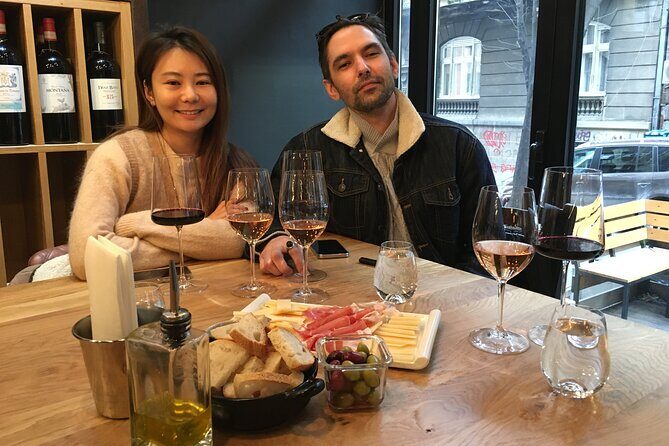
A car tour with Tito-sized detours. This private vintage Yugoslav drive is a fun way to connect Yugo trivia with real Belgrade landmarks, from the Genex Tower to the Museum of Yugoslavia. I like that the guide (Jovana in at least one recent group) brings the subject to life with real passion, and I also like that you’re not just staring out a window: you get snacks and soda along the way while learning how people actually lived with these cars and the era behind them.
The main thing to keep in mind is access. At Palata Srbije, you’ll hear about the building and see pictures of the inside, but you can’t count on public interior access there—so plan for more “stories and architecture you can see” than museum-depth time.
In This Review
- Key Highlights You’ll Want to Know Before You Go
- How This Private Tour Works in Real Life
- The Yugo Angle: Why This Car Tour Feels More Than Technical
- Stop 1: House of the National Assembly (Obrenović Dynasty Roots)
- Stop 2: Park of Friendship and the Non-Aligned Summit Tree Line
- Stop 3: Palata Srbije and the Modernist Masterpiece with Limited Access
- Stop 4: Western City Gate (Genex Tower) Brutalism Fix
- Stop 5: Museum of Yugoslavia and Why It’s Not a Typical Museum
- What the $144 Price Really Buys You
- Who This Tour Is Best For
- Should You Book Tito and History Vintage Car Tour?
- FAQ
- Where does the Tito and History Vintage Car Tour start?
- How long does the tour take?
- Is pickup available?
- Is this a private tour?
- Are admission tickets included?
- What happens if weather is bad?
Key Highlights You’ll Want to Know Before You Go
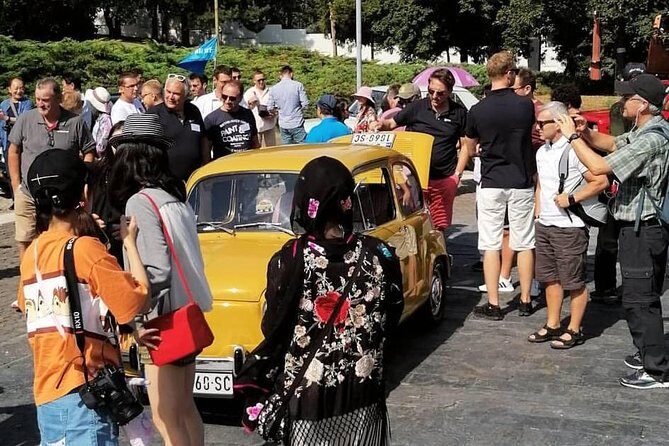
- Yugo talk, including the convertible: You get the specific model stories, not vague auto history.
- Short and efficient tour pacing: About 2 to 3 hours, designed for maximum Belgrade contrast.
- Snacks and soda included: Small comfort on a tour that packs multiple stops.
- Brutalist Belgrade stop at Genex Tower: Two linked towers with a bridge and a revolving restaurant concept.
- Museum of Yugoslavia built around Tito gifts: Over 200,000 items organized into 20 collections.
- Admissions handled for you: No spot payments, and museum ticket time is included.
How This Private Tour Works in Real Life
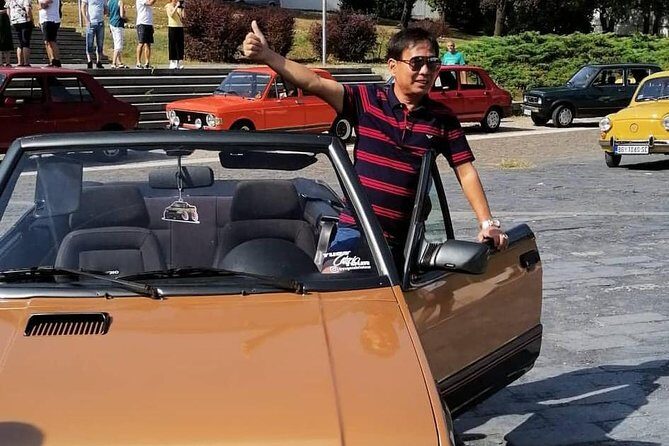
This is a private tour, meaning it’s only your group. That matters in a city like Belgrade, where having a guide who can slow down for questions makes the experience feel less like a checklist. You’ll have the chance to ask about the Yugo myth, how it became a symbol, and why people remember it the way they do.
You can request pickup, or you can meet at Dragoslava Jovanovića 14, Beograd 11000. Either way, you’re not left figuring out timing. You’ll also get a mobile ticket, and the tour includes snacks and soda during the drive/walk between sights.
One more practical note: the tour’s listed hours are broad (9:00 AM to 9:00 PM, Monday through Sunday), but good weather is required. If weather turns, the tour can be rescheduled or refunded, so keep an eye on conditions if your trip is in a shoulder season week.
You can also read our reviews of more historical tours in Belgrade

The Yugo Angle: Why This Car Tour Feels More Than Technical
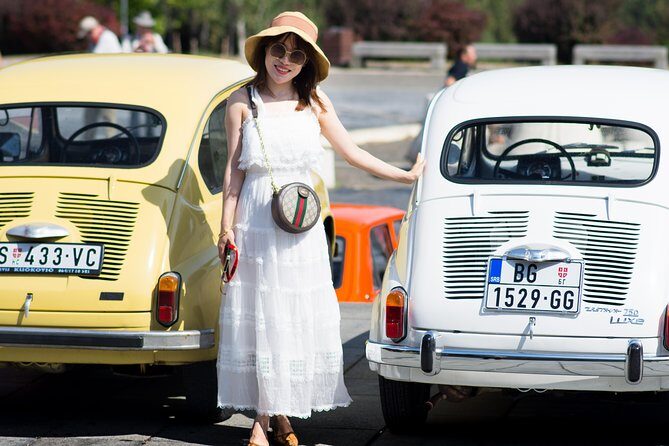
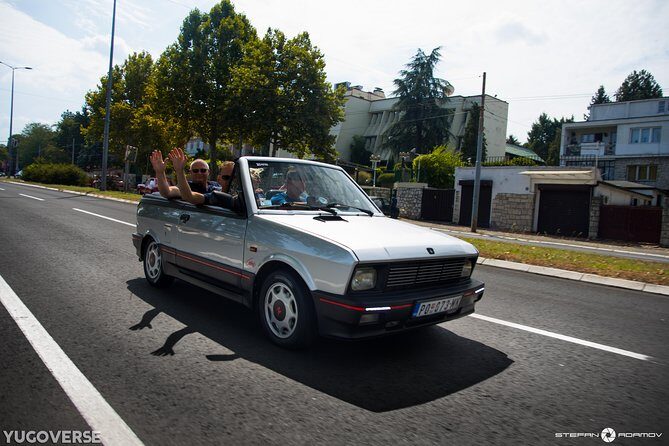
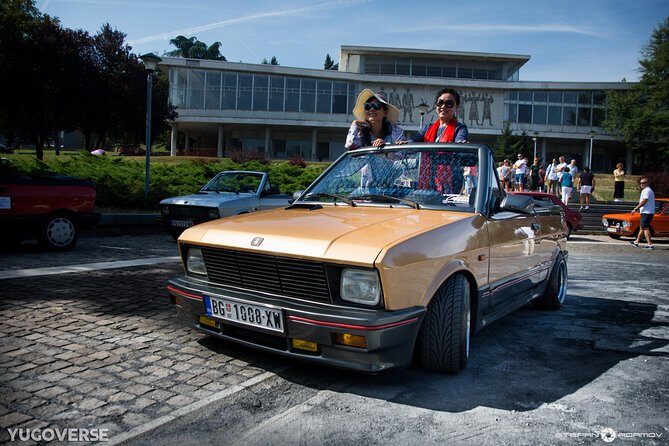
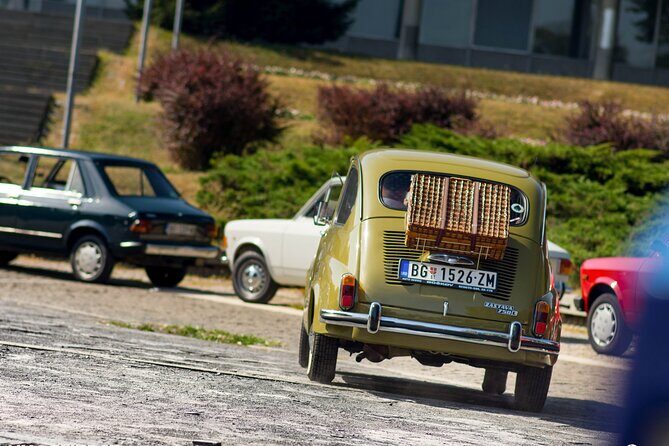
Vintage-car tours can go two ways: either they’re all engine talk, or they turn into a history lecture that uses cars as a prop. This one does a better job of blending the two. You’ll specifically learn about the Yugo, including details about the Yugo convertible—the kind of specificity that makes it easier to understand why this car ended up with such a big cultural reputation.
What I like about this approach for your trip is that you’re not stuck in one lane. You’ll be looking at buildings and city spaces while learning how the Yugo fits into the broader Yugoslav story—how design, economics, and identity shaped what people drove and how they talked about it.
If you love car details, you’ll probably enjoy the model focus. If you’re more of a culture/history person, you’ll still get plenty to chew on because the tour isn’t only about “what the car was,” but also about what the era meant.
Stop 1: House of the National Assembly (Obrenović Dynasty Roots)
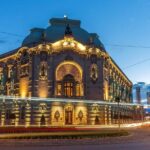
Your tour begins at the House of the National Assembly of the Republic of Serbia. It’s not just a government building to pass by. It was the royal residence of the Obrenović dynasty, and today it houses the City Assembly of Belgrade.
Why it’s a good first stop: it gives you a quick anchor for Belgrade’s layered story. In a couple of short minutes, you move from the idea of monarchy to today’s civic use. It’s also a free admission stop, which keeps the tour moving without adding friction early on.
The only downside is time. At about 15 minutes, you won’t have the luxury of lingering over every architectural detail. You’re meant to get your bearings, then roll on.
Stop 2: Park of Friendship and the Non-Aligned Summit Tree Line
Next up is the Park of Friendship (Park Prijateljstva), a place with an unusual vibe: one part idealism, one part reminder of how messy history can be. The park is tied to the Belgrade Conference in September 1961, the First Summit of the Non Aligned.
Here’s what makes this stop interesting for a travel mindset: the park’s design is a physical record of diplomacy. The Peace Alley is about 180 meters long, lined with two rows of trees planted during the summit. The tour explains that the trees were planted by attending leaders as symbols of dedication to world peace. The names connected to this story include Queen Elizabeth II, Margaret Thatcher, Jimmy Carter, Indira Gandhi, and Nikolay Chaushescu, plus references to leaders like Robert Mugabe and Josip Broz Tito’s era.
You’ll also see how the “friendship” theme mixes with the park’s reputation as one of the most nobly conceived—and possibly incomplete—parks. This is one of those stops where you end up thinking about what cities preserve, what they leave unfinished, and how symbolism plays out in real time.
Again, the time is brief (about 20 minutes), so it’s best treated as atmosphere and context, not a slow stroll through every corner.
Stop 3: Palata Srbije and the Modernist Masterpiece with Limited Access
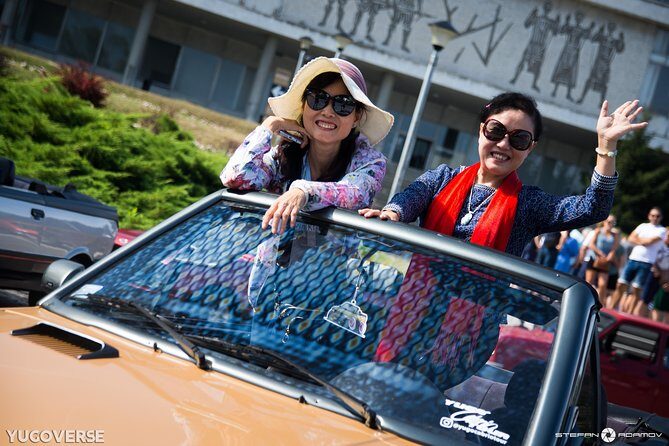
Palata Srbije is one of Belgrade’s most impressive modernist buildings, described as the largest and most spectacular masterpiece of modernist architecture in the city. The tour gives you the history of the building, then you get pictures of the interior, even though the interior is closed to the public.
This stop is valuable because it teaches you how to look at modernism like a visitor with a guide. Without the background, you might see a bold structure and move on. With the story, you’ll notice design choices and get a better sense of why this building became an important modern landmark.
The drawback is straightforward: you should go expecting exterior viewing and photos, not a full interior visit. If you’re the type who always wants “inside access” at every stop, you may feel slightly short-changed here. Still, the stop works as a brain-refresh between more “car and museum” moments.




Stop 4: Western City Gate (Genex Tower) Brutalism Fix
Then comes the Western City Gate, also known as the Genex Tower—a 36-storey skyscraper in Belgrade designed in 1977 in brutalist style. This is the stop for architecture lovers.
The tower is made of two towers connected by a two-storey bridge, with a revolving restaurant at the top concept. The design is dramatic, and the brutalist approach makes it a visual anchor for the whole neighborhood conversation about Yugoslav-era urban planning.
If you like “buildings that look like they mean business,” you’ll appreciate how purposeful the design feels. And even if you don’t track architecture terms, it’s easy to enjoy because it’s so visually specific.
Time is short on this style stop, so the best move is to bring your camera and be ready to take a few angles. This is one of those structures where different viewpoints change the entire impression.
Stop 5: Museum of Yugoslavia and Why It’s Not a Typical Museum
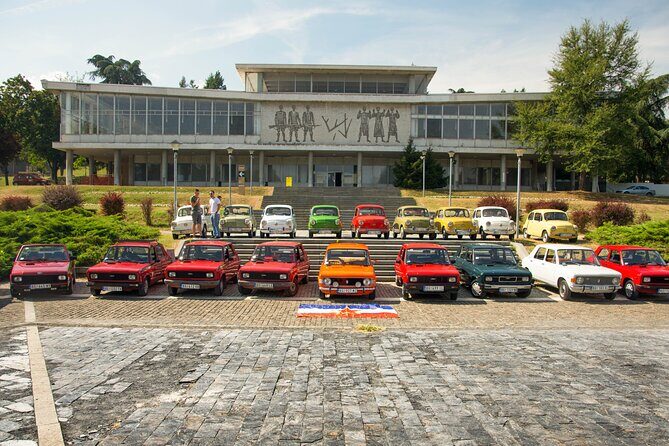
The Museum of Yugoslavia is the grand payoff. It’s called a museum, but it doesn’t feel like the standard format. Instead of a straightforward timeline display, the core of the collection is built on the gifts given to Tito.
The museum’s foundation dates to 1962, collecting gifts not only from Yugoslavia’s own world but also from many world leaders. After Tito’s death, the museum was merged with multiple residence properties: the House of Flowers, the Residence, the Pool House, the Hunting Lodge, and the Old Museum, plus the tomb of Josip Broz.
The scale is impressive: over 200,000 items categorized into 20 collections. The tour includes your museum time (about 40 minutes), so you’re not stuck guessing how long to spend or when to enter.
Here’s the balanced way to look at this museum: it’s a people-and-power museum as much as it is an object museum. You’re seeing how an era wanted to be seen—through gifts, displays, and preserved spaces. If you like political history told through everyday artifacts, you’ll likely enjoy this format. If you prefer pure car stories, the museum might feel like a detour—but it also explains the backdrop that made the Yugo era what it was.
What the $144 Price Really Buys You
At about $144 for roughly 2 to 3 hours, this isn’t an economy “hop-on, hop-off” deal. It’s paying for a private guide, car/city storytelling, and the built-in convenience of having all fees taken care of.
Practically, that matters because you avoid the “how much does this cost and where do I pay” stress. The first stops list admission as free (assembly building, park, Palata Srbije), and the museum ticket is included. On top of that, you get snacks and soda, plus the option of pickup.
For value, I’d focus on fit. If you want a guided connection between cars, architecture, and Yugoslav-era context, this price makes sense. If you’re mostly chasing a single car stop and you hate spending time on political-era landmarks, you might feel it’s more than you wanted.
Who This Tour Is Best For
You’ll probably love this tour if you:
- Like the idea of a private guide explaining context as you go, not just facts in a row.
- Have a curiosity about the Yugo beyond the internet reputation.
- Enjoy architecture stops like modernism at Palata Srbije and brutalism at Genex Tower.
- Want Tito-era history shown through objects and spaces rather than only textbooks.
You might choose something else if you:
- Want a car-only experience with minimal history.
- Are strict about interior access at every stop (Palata Srbije is photo-based, not public interior).
- Prefer very long time in a museum. At about 40 minutes, you’ll get a focused visit, not a deep archival day.
Should You Book Tito and History Vintage Car Tour?
I’d book it if you want an efficient, guide-led way to see Belgrade through an unusual theme: vintage Yugoslav cars as a doorway into the city’s architecture and Tito-era storytelling. The Yugo focus, the private group feel, and the mix of landmarks (including Genex Tower and the Museum of Yugoslavia) make it feel more intentional than a typical sightseeing loop.
I’d hold off if you’re mainly after interiors and long museum time, because a couple of stops are intentionally structured for quick context rather than extended entry.
FAQ
Where does the Tito and History Vintage Car Tour start?
The tour starts at Dragoslava Jovanovića 14, Beograd 11000, Serbia.
How long does the tour take?
It lasts about 2 to 3 hours.
Is pickup available?
Yes. You can request pickup or you can head to the Belgrade meeting point listed above.
Is this a private tour?
Yes. It’s a private tour/activity, so only your group participates.
Are admission tickets included?
The tour says all fees are taken care of with no paying on the spot. The Museum of Yugoslavia admission is listed as included, and the other stops are listed as free admission.
What happens if weather is bad?
The experience requires good weather. If it’s canceled due to poor weather, you’ll be offered a different date or a full refund.