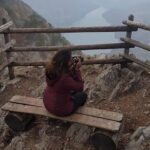
Belgrade tells its story on your feet. This guided crash course makes big Serbian moments feel real because you walk through them, starting in the city center and ending in the student heart; I love how the guides connect the past to the present, including how modern politics grew out of older power struggles. The one trade-off: it’s a fast-moving overview, so if you want extreme detail on one topic, you’ll need to follow up on your own after the walk.
I also like the route logic. You’ll pass the House of the National Assembly, stroll through Old Belgrade’s Skadarska Street, then climb up to Kalemegdan Fortress for river views and empire-era symbols before ending at Ružica Church and Studentski trg. Guides such as T.B., Marina, and Jovana are often praised for staying friendly and keeping the pace comfortable while still packing in plenty of context.
In This Review
- Key takeaways before you go
- A 3-4 Hour Orientation Through Belgrade’s Turning Points
- Terazije Start Point: starting in the city center you’ll recognize fast
- House of the National Assembly: politics you can actually stand next to
- The ridge and old streets theme: how Belgrade split and survived
- Skadarska Street: Bohemia vibes with a historical spine
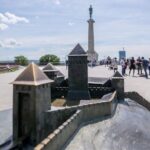
- Kalemegdan Park and Belgrade Fortress: rivers, France, Victor, and Ali Pasha
- Ružica Church: a small church with a long survival story
- Studentski trg: ending where Belgrade breathes like a city
- Price and value: what you’re really paying for
- Pace, group size, and why it feels personal
- Who should book this Serbian History crash course
- Should you book A Crash Course through Serbian History?
- FAQ
- Where does the tour start and end?
- How long is the tour?
- How much does it cost?
- Is the tour in English?
- What’s included in the price?
- Is food or coffee included?
- Are there admission tickets for the stops?
- What’s the group size limit?
- What if weather is bad?
- Is there free cancellation?
Key takeaways before you go
- Street-level history: you learn how places shaped power, daily life, and street patterns.
- A route you can reuse: by the end, you’ll know where to return for sights on your own.
- Kalemegdan views that explain the city: Sava/fortress context makes Belgrade feel like one story.
- Short stops, strong payoff: each place is timed so you don’t wander lost.
- Small-group feel: up to 30 people, and it often feels more personal than you’d expect.
A 3-4 Hour Orientation Through Belgrade’s Turning Points
Think of this as your history “map.” Instead of treating Belgrade like a list of monuments, you’ll connect buildings and neighborhoods to the forces that shaped them—Roman-era foundations, Ottoman influence, Austro-Hungarian-era impacts, and the political story that leads into the modern state.
You’ll get a guided walk in English that usually runs about 3 to 4 hours. At $72.41 per person, it’s not a cheap activity, but it can be good value if you’re trying to squeeze the most context out of a limited time window. The ticket includes the guide, and several stops are free to enter, so you’re mainly paying for interpretation and flow.
The vibe is practical: you’ll leave with a sense of direction and a set of “why this place matters” notes you can keep using while you explore later.
You can also read our reviews of more historical tours in Belgrade

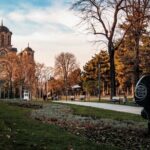
Terazije Start Point: starting in the city center you’ll recognize fast
Your walk begins at Terazije 16, in central Belgrade—an area that helps you shake off jet lag quickly because you’re already near major pedestrian streets. If you’re planning to explore more after the tour, this matters. Starting centrally means you’re not spending your first morning or afternoon commuting back and forth.
From the start, your guide frames the city as two halves shaped by geography and history. That theme comes up again and again during the walk, especially once you reach the ridge and fortress viewpoints later.
One small but real comfort point: the tour is designed for most people to join, it’s in English, and it runs near public transportation. If your plans change, you’ll likely have easy ways to regroup before or after the walk.
House of the National Assembly: politics you can actually stand next to
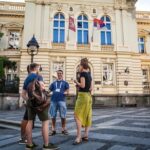
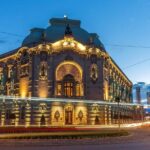
The tour’s first stop is the House of the National Assembly of the Republic of Serbia. It’s one of the key places in the city center, and the story around it is bigger than a single building. You’ll hear how different dynasties and royal courts helped shape the region, and you’ll connect those old power structures to what you see today.
Because the admission here is listed as free, you don’t have to play the “is it worth paying?” game. In tours like this, that freedom matters—you can focus on the explanation and not the small cost calculations.
The timing is short (about 15 minutes), so treat this stop like a launchpad. You’re not meant to memorize dates. You’re meant to learn the “how did we get here” thread that later connects to Ottoman-era figures, fortress symbolism, and the city’s long memory.
The ridge and old streets theme: how Belgrade split and survived
After the Assembly stop, the walk shifts toward the urban backbone of Belgrade. The guide points out the ridge that separates the city into two parts, and how that natural feature helped form the main pedestrian area and main street since Roman times.
This is the kind of detail that turns a confusing grid into something you can read. Once you understand that geography guided movement for centuries, you start seeing why Old Belgrade feels the way it does—tight, walkable, and shaped by what the terrain allowed.
If you’re the type who likes learning “the rules of the city,” this is where you’ll feel it click. It also helps you later when you’re choosing where to eat or which direction to wander without second-guessing yourself.
Skadarska Street: Bohemia vibes with a historical spine
Next up is Skadarska Street, part of Old Belgrade’s older quarter. The promise here is atmosphere: feel the true spirit of Bohemia in this old and unique neighborhood, and understand how cultural life formed alongside the political one.
Even when the tour is brief, this is the kind of stop that gives your brain a break. You’re not just collecting facts—you’re also picking up how the city “sounds” and “moves.” Skadarska Street helps you picture everyday life, not only high-level events.
Practical tip: this is a good spot to slow down for a minute, look at side streets, and notice where pedestrians naturally gather. When you return later for your own exploration, those are the cues that save you time.
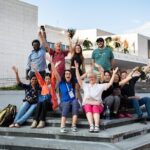


Kalemegdan Park and Belgrade Fortress: rivers, France, Victor, and Ali Pasha
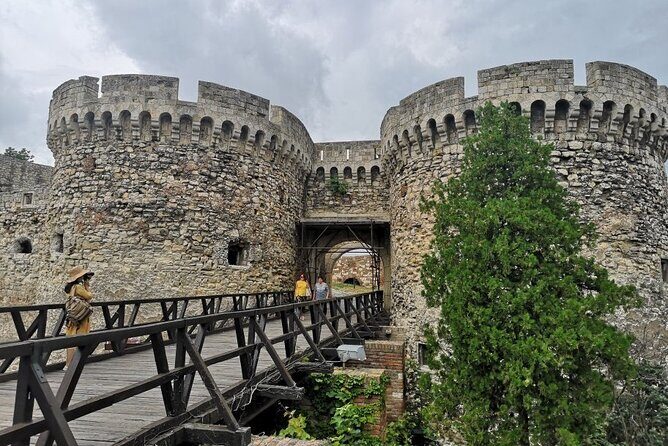
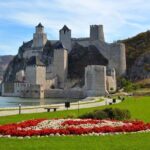
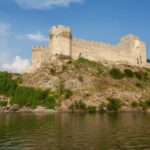
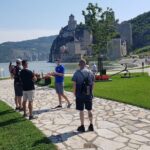
If you want one stop that makes Belgrade feel dramatic, it’s Kalemegdan Park and Belgrade Fortress. You’re above the confluence of two mighty rivers, which is exactly why fortifications mattered here. You’ll walk the promenade and take in views over the Sava river—and those views are not just pretty. They explain the strategy.
The tour also includes several specific landmarks and stories:
- The Monument of Gratitude to France, which gives you a clear example of how international relationships show up physically in the city.
- A Victor statue, tied to the broader narrative the guide is building.
- The grave of Ottoman vizier Ali-Pasha, which anchors the Ottoman presence in a concrete, visitable way.
This stop lasts about 1 hour, and that extra time makes sense. Fortress areas are where you’ll need breathing room to look around, absorb the history visually, and not feel rushed.
One consideration: fortress hills can mean more uneven ground. Wear shoes that handle walking on slopes, especially if you catch the day when the weather is changeable.
Ružica Church: a small church with a long survival story
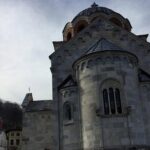
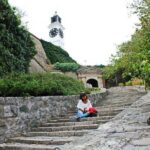
Then you’ll head to Ružica Church, a lovely building tied to the city’s layered history. It was built in the 15th century, destroyed in the 16th, and later rebuilt in the 19th—so the building itself becomes a time capsule of damage and recovery.
Admission is listed as free, and the stop is short (about 15 minutes). That’s ideal for a church visit on a walking tour: you get the essential context without turning it into a full museum session.
What I like about Ružica in this itinerary is that it balances the bigger political stories. Fortress symbolism and national institutions can overwhelm your brain if you don’t get a human-scale moment. Ružica gives you that reset.
Studentski trg: ending where Belgrade breathes like a city
The tour finishes at Studentski trg, next to Student Park. This is a smart landing spot because it’s in the center of Belgrade and it feels like a place where life happens between lectures. You’ll get a short stop (about 15 minutes) to take in the greenery and the energy of the student neighborhood.
If you’re planning what to do next, this is useful. You’ll end near a central area, so you can keep walking, grab food, or use nearby transport without feeling stranded at the edge of town.
It’s also a nice emotional bookend. You start with political power and city foundations, climb into strategic fort walls, and then finish in a public space filled with ordinary daily rhythms. That contrast is exactly what makes the tour’s “past-to-present” approach stick.
Price and value: what you’re really paying for
At $72.41 per person, you’re paying for a guided 3-4 hour framework, not for museum tickets or transport. The tour includes a tour guide, and the listed stops have free admission.
That’s the value angle: you’re buying interpretation that helps you connect buildings and neighborhoods into one story. Without that, you could still visit many of these places—but you’d be piecing things together on your own with a lot more guesswork.
The tour does not include coffee or tea or food and drinks. So if you like breaks (most people do), plan for a quick stop on your own before or after. Also, bring water if the weather is warm; the itinerary is outdoors-heavy, especially around Kalemegdan.
Pace, group size, and why it feels personal
This is a group tour with a maximum of 30 travelers, offered in English, and it often has a booked-in-advance pattern (average booking about 14 days ahead). That tells you two things: it’s a popular introduction tour, and it’s likely to run regularly enough for you to fit it into a short schedule.
The practical upside of a 30-person cap is that you can usually hear the guide and still ask questions. The reviews also point to that Q-and-A style: guides like Pedja and Marina are described as friendly, patient, and willing to answer questions, which makes the history feel more usable.
The pacing is another key point. Some feedback notes that the tour gives a strong overview without going overboard, and that the guides watch comfort levels. So you shouldn’t expect a silent, breathless history lecture.
Who should book this Serbian History crash course
This tour is best for you if:
- You want a clear orientation fast, not a scattered “checklist” day.
- You like learning how politics, war, and empire show up in everyday street-level spaces.
- You’re curious about how Ottoman and European influences appear around Belgrade.
- You want an easy plan that ends near central public space so you can keep exploring.
It’s less ideal if you already know Serbian history deeply and want a tighter, specialized academic approach with lots of long stops in one place.
Should you book A Crash Course through Serbian History?
Yes, if you’re on a time crunch and you want the city’s story explained in a way you can carry with you. The route covers major landmarks that explain Belgrade’s geography and power shifts—National Assembly context, Old Belgrade street feel, Kalemegdan Fortress viewpoints, Ružica Church survival, then an end at Studentski trg where you can switch from history mode to real-life Belgrade.
I’d book it especially if you like the idea of learning why places look the way they do. At this price, you’re not just paying to walk—you’re paying to understand. Just go in expecting an overview, not a full textbook session.
FAQ
Where does the tour start and end?
It starts at Terazije 16, Beograd 11000, Serbia, and ends next to Student Park at Studentski trg 16, Beograd 11000, Serbia.
How long is the tour?
The tour lasts about 3 to 4 hours.
How much does it cost?
The price is $72.41 per person.
Is the tour in English?
Yes, the tour is offered in English.
What’s included in the price?
The tour guide is included.
Is food or coffee included?
No. Coffee and/or tea and food and drinks are not included.
Are there admission tickets for the stops?
The listed stops include free admission ticket entries.
What’s the group size limit?
The tour has a maximum of 30 travelers.
What if weather is bad?
This experience requires good weather. If it’s canceled due to poor weather, you’ll be offered a different date or a full refund.
Is there free cancellation?
Free cancellation is available. You can cancel up to 24 hours in advance for a full refund, and changes within 24 hours are not accepted.