REVIEW · BELGRADE
Belgrade Big Tour: Top Attractions and Belgrade Neighborhoods
Book on Viator →Operated by VICTOR TOURS · Bookable on Viator
Belgrade hits you fast, then keeps going. This Big Tour is a smart way to get oriented in a single day: hotel pickup, an air-conditioned van, and a guide who points out the details you’d normally miss. I also love that St. Sava Temple admission is included, so you don’t have to hunt down tickets mid-itinerary.
One thing to weigh: this is a day of moderate walking and some stairs, especially around the fortress and Gardos Hill in Zemun. If you’re sensitive to tight meeting times, pay attention to the guide’s group cues and build in a little patience.
In This Review
- Key highlights to look forward to
- Price and what you actually get for about $72.59
- The route logic: why this day feels efficient (not frantic)
- Kalemegdan Park and Belgrade Fortress: the confluence view plus real old gates
- Pobednik, Upper Town details, and the Sava promenade moments
- New Belgrade’s architecture tour: socialist power, brutalist edges, and modern venues
- Zemun: Central European charm on the Danube with time for actual lunch
- Gardos Hill and the Millenary Monument: the view that makes the walk worth it
- Dedinje mansions, Topčider Hill atmosphere, and Red Star context
- St. Sava Temple and the central squares finish: Belgrade’s grand finale
- Who should book this tour (and who might want a different plan)
- Should you book the Belgrade Big Tour?
- FAQ
- What time does the tour start?
- How long is the tour?
- Is pickup included?
- What language is the tour guide?
- Is there a group size limit?
- What’s included in the price?
- Is lunch included?
- How much walking should I expect?
- Can I cancel for a full refund?
- Is the tour wheelchair-friendly or suitable for everyone?
Key highlights to look forward to
- Kalemegdan Fortress + Upper Town churches for the big Belgrade views and the old walls
- Pobednik and the Sava promenade for landmark statues and river panoramas
- New Belgrade architecture stops from socialist-era government buildings to Sava Center
- Zemun cobblestones and Danube fish restaurants with built-in time for lunch
- Gardos Hill + the Millennium Tower area for the best “from above” angle
- St. Sava Temple (admission included) plus a grand finish around central squares
Price and what you actually get for about $72.59
At about $72.59 per person for roughly 7–8 hours, this tour is basically priced for convenience plus guide time. You’re paying for door-to-door pickup (within a defined area), transport in a climate-controlled vehicle, and someone to connect the dots between centuries of Belgrade’s changing rulers and neighborhoods.
The biggest value lever is the included admission fee for the Church of Saint Sava. Add in the fact that most other walking stops are handled without separate ticket burdens, and you get a day that’s easier to manage than trying to piece it together yourself across multiple districts.
Food isn’t included, so you’ll want to plan for lunch on your own. The itinerary actually gives you that opening—especially in Zemun—so you can eat where it makes sense rather than grabbing something on the run.
You can also read our reviews of more tours and experiences in Belgrade.


The route logic: why this day feels efficient (not frantic)
This isn’t a straight line. It’s a loop designed to hit Belgrade’s “three stories” in one go: the fortress and old core, the Danube-side charm of Zemun, and the modern/post-war face of New Belgrade, finishing with the city center.
You start with Kalemegdan and the fortress area, then bounce back and forth between walking stretches and vehicle time. Later, you’ll cross over toward Zemun’s old town, then head to Dedinje for the mansion district mood before returning to central Belgrade around the major squares.
The tour keeps group size capped at a maximum of 16 travelers, which helps. It’s still sightseeing, not a private wander. If you want long, slow museum-style pacing at every stop, you’ll need to pair this with a second day in Belgrade.
Kalemegdan Park and Belgrade Fortress: the confluence view plus real old gates
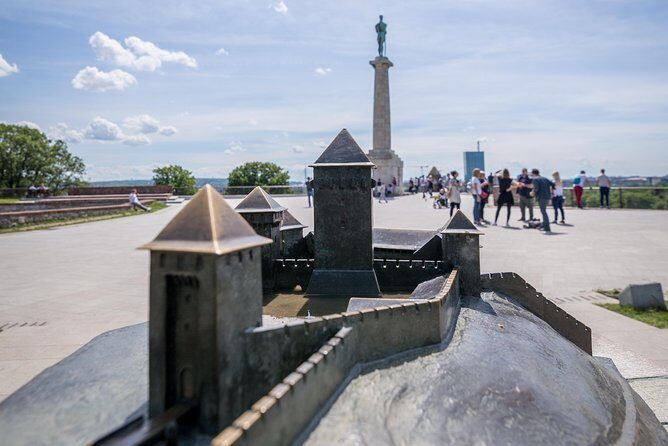
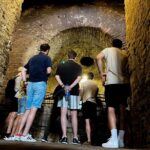
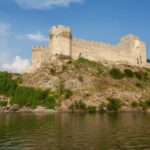
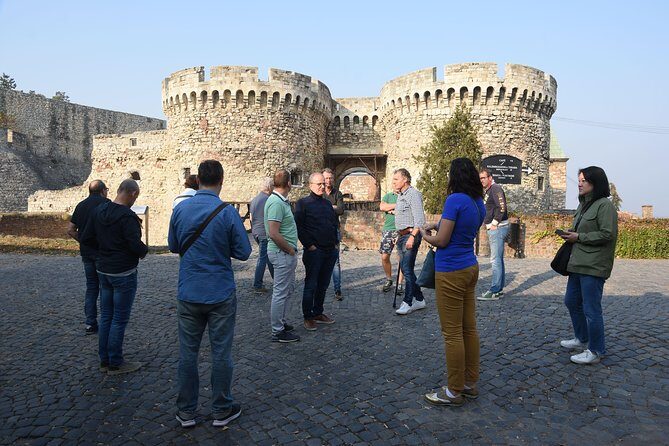
Kalemegdan Park is Belgrade’s classic starting point, and the fortress here works like a giant outdoor timeline. From Leopold’s Gate, you pass the remnants of the Roman castrum of Singidunum, then look at later medieval fortifications layered on top of that older foundation.
The tour doesn’t just point at walls. It walks you through key gates tied to the 15th-century fortress story—places like Zindan Gate, Despot’s Gate, and Jakšića Tower. That matters because the fortress is one of the few places where you can feel how the city was built to defend itself, not just to look pretty.
You’ll also go inside two Orthodox churches within the fortress area: the Chapel of St Petka and Ružica Church (Virgin Mary Church). Even if you’re not a big church-history person, these stops add texture. In a single morning you get both the religious architecture and the strategic setting.
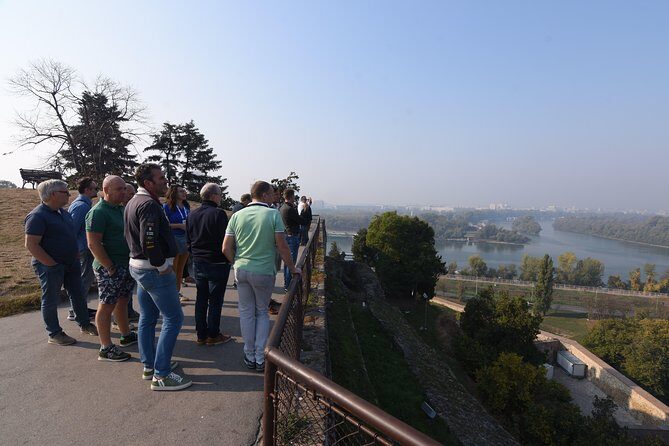
Then comes the payoff: the viewpoint where you can see the confluence of the Sava and the Danube. It’s the kind of sight that turns Belgrade from a name on a map into a place with geography you can actually understand.
Pobednik, Upper Town details, and the Sava promenade moments
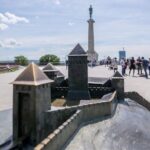
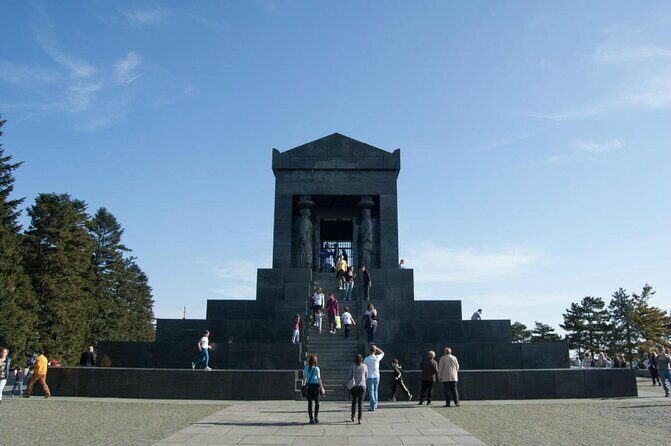
After the fortress core, you continue through the Upper Town area and hit Pobednik—the Victor monument by sculptor Ivan Meštrović. This is one of those landmarks that feels simple in photos, but you get why it matters when you see its position and scale in person.
Your guide also points out other fortress-adjacent features and city gates as you move toward the promenade—things like the Roman well, King’s gate, and then the Sava promenade. There’s also time near spots such as Damat Ali Pasha Tomb, Clock Gate, and Clock Tower.
Back in the park area, you may see the Monument of Gratitude to France by Meštrović and busts connected with Serbian literary figures. This is one of the stops where a guide earns their fee: they help you notice what you’d otherwise walk past, like how public monuments are part of political memory, not just decoration.
After this, you’re back into the vehicle for the next chapter: leaving the fortress atmosphere for New Belgrade’s modern wave.
New Belgrade’s architecture tour: socialist power, brutalist edges, and modern venues
New Belgrade can be a surprise if your mental image of Serbia is all medieval stone and fortress views. This part of the city was shaped after WWII, during the socialist regime, and it shows in the government and cultural buildings.
You’ll pass major landmarks such as the Palace of Federation (also known as Ex-Central Committee of the Communist Party), the Genex Tower (sometimes referred to as the Western Gate of Belgrade), and Sava Center—one of the biggest congress halls in the region.
There’s also mention of New Belgrade appearing in the orbit of international architecture conversations, including a MoMA exhibition titled Toward a Concrete Utopia. You don’t need to be a design nerd to enjoy these stops. What makes them interesting is how the city tried to reinvent itself with scale and concrete ambition.
Expect a contrast between earlier city layers and this more functional, state-planned look. You’ll also see practical modern landmarks on the route, including the restaurant Novak connected to Novak Đoković’s family, plus Belgrade Arena, one of the area’s major sports venues.

Zemun: Central European charm on the Danube with time for actual lunch
Zemun is where Belgrade slows down in a good way. The neighborhood is known for its Central European feel: cobblestone streets, quieter quarters, and a Danube-side restaurant scene that’s perfect for a food break.
You’ll first move through area landmarks like Avijatičarski Trg, where WWII heroes are commemorated, and then you’ll spot pre-war modernism references such as the Air Force Ministry building and the older elementary school structure nearby. From there, you continue along Gospodska Street, catching architectural highlights like the Post Office, Hotel Central, the Town Museum, and the House with a Sundial.
Then it’s down to the Danube bank. The walking portion includes the Zemun Promenade, where old plane trees shade the fish restaurants. This is a good time to take photos and just absorb the river energy—because later you’ll be back in city-center “big buildings” mode.
Next comes a key Zemun moment: St. Nicholas Orthodox Church (from the 17th century), followed by the climb toward Gardos Hill. From here, Zemun starts to feel like a cultural mix—more Mediterranean in vibe than you might expect.
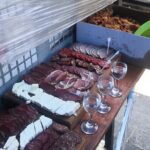
And yes, you should plan to keep hunger in mind. The tour builds in a longer stop at Main City Square, with time for lunch, coffee, or exploring the streets. If you want a simple plan, go for Danube fish, or classic local comfort food like burek or ćevapčići.
Gardos Hill and the Millenary Monument: the view that makes the walk worth it
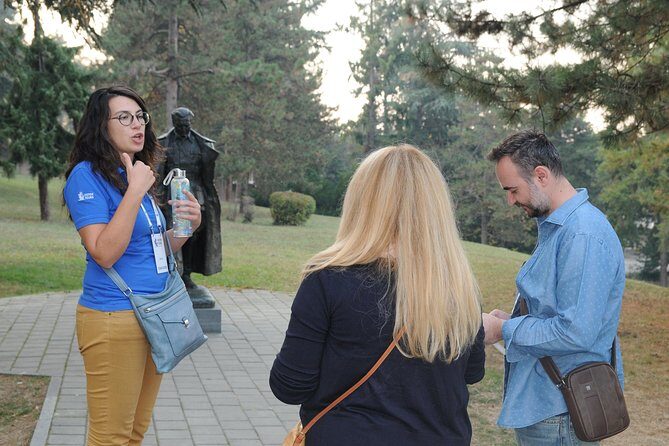
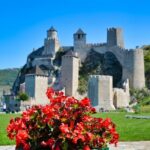
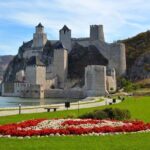
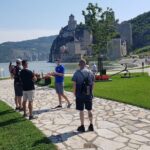
Gardos Hill is the physical heart of old Zemun. The climb gives you that classic “from above” perspective, and the tour ties it to local history with the Zemun citadel remains beside the Millennium Tower (the Millennium Tower area is your landmark here).
The tower is associated with the era when the Austro-Hungarian Empire marked its southern edge. Even if you skip the climb, the view from the hilltop area gives you a strong overview of both old Zemun and the river bend.
One important note: the Millennium Tower admission isn’t included. If you’re the type who wants to go all the way up for the best angles, budget for that extra ticket decision in the moment.
This stop is short by design, but the payoff is visual. You’ll understand why Zemun is such a popular day-trip choice for people who want something different than Belgrade proper.
Dedinje mansions, Topčider Hill atmosphere, and Red Star context
After Zemun, the tour heads across the Gazela Bridge toward Dedinje. This is one of Belgrade’s more luxurious residential areas, with mansions that sit in greener, calmer terrain—especially around Topčider Hill.
Your guide gives historical context about these properties and the turbulent 20th-century shifts that affected the city and its elite spaces. That commentary is the difference between seeing big houses and actually understanding why they look the way they do.
Then you hit a sports landmark: Rajko Mitić Stadium, home of Red Star Belgrade. The tour frames the club rivalry with Partizan Belgrade, which plays across a small hill. Even if you’re not a football fan, it’s an easy way to learn how Belgrade’s identities get organized around institutions.
This section works well if you like learning how everyday life intersects with history—political and cultural, not just tourist facts.
St. Sava Temple and the central squares finish: Belgrade’s grand finale
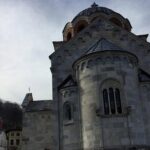
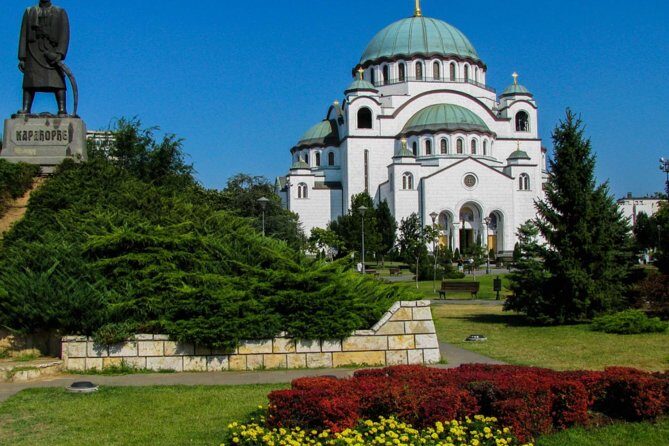
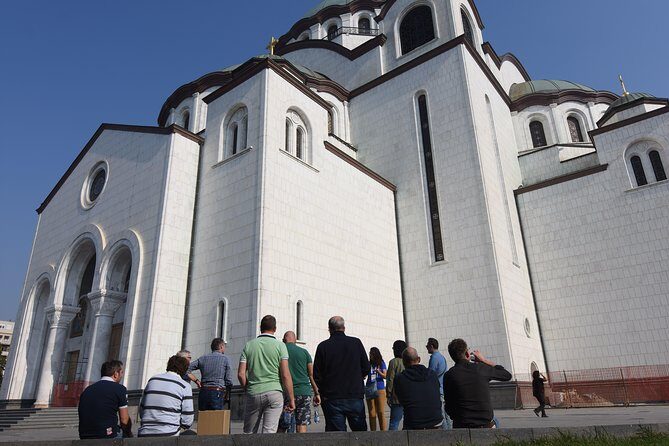
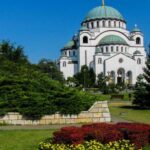
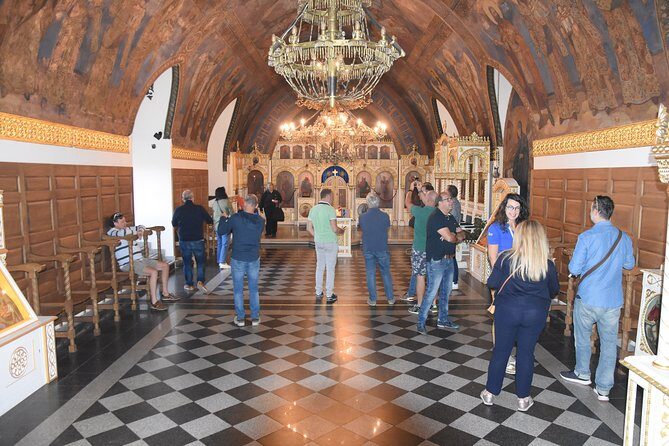
The Church of Saint Sava is the big spiritual and architectural statement of the day, and the admission is included. Expect a serious scale moment. Construction started in the 1930s on the site tied to St. Sava’s relics, after Ottoman forces burned them.
Visually, it’s Serbian-Byzantine style on a huge footprint: the dome dominates, and the central gilded cross adds extra height. The tour explains the structure in numbers—about 70 meters for the dome and 82 meters total including the cross. When something is that large, you don’t need to be a specialist to feel the impact.
After the temple, you re-enter the vehicle and move through the city’s administrative core via Slavija Square and along Nemanjina Street, passing major state institutions and pre-war architecture examples.
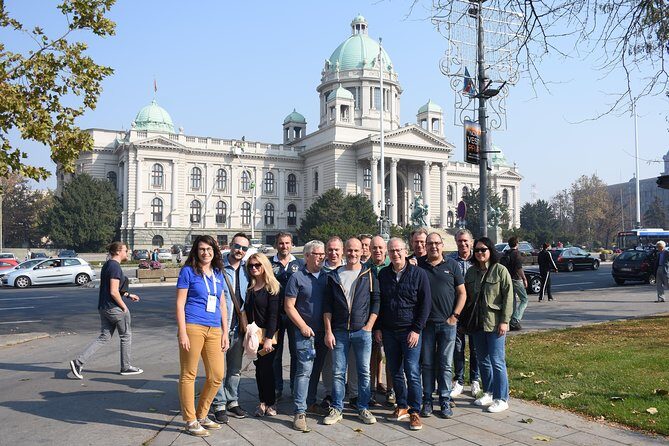
Then you reach the Republic Square area. This is where the tour wraps the civic story: you hear about major buildings like the National Museum and the National Theatre and Opera, plus the equestrian monument to Prince Mihailo.
You also stop at Terazije Square, known for the 19th-century white stone fountain and the Moskva Hotel. From there, you pass Nikola Pasić Square and end near the House of the National Assembly, with a photo-friendly look at the Old and New Royal Palaces and stories tied to the dynasties that ruled Serbia in the 19th and 20th centuries.
It’s a satisfying closer: the day starts with rivers and fortress walls, and ends with grand civic architecture and the city’s public face.
Who should book this tour (and who might want a different plan)
Book this if you’re a first-time visitor or you only have a short window to understand Belgrade’s different sides. This route hits the main “why Belgrade is Belgrade” sites: the fortress geography, Zemun’s Danube vibe, New Belgrade’s post-war architecture, and the St. Sava spectacle.
Also book it if you like guides who explain the why behind the what. People often single out how tour leaders manage the story—how they connect fortress gates to broader history, or how they explain why modern buildings look the way they do.
You might skip it if you want slow pacing. Some parts are quick stops, and the walking segments include stairs and a hill climb. And if you’re the type who needs long free time at every highlight, plan on adding extra time elsewhere.
Should you book the Belgrade Big Tour?
Yes—if your goal is to get your bearings fast and see a lot of real Belgrade in one day without juggling transit and ticket decisions. At this price point, the mix of paid entry (St. Sava), transport, and expert commentary is a solid deal for a first visit.
I’d still go in with realistic expectations: it’s a tour loop. You’ll enjoy it most if you treat it like a well-edited highlights reel, then follow up later with deeper time in the parts you liked best—maybe Zemun for lunch-and-stroll energy, or New Belgrade if architecture is your thing.
If you want, tell me your travel dates and what you care about most (history, architecture, river views, food), and I’ll suggest the best way to pair this tour with a second day in Belgrade.
FAQ
What time does the tour start?
The start time is 9:30 am.
How long is the tour?
It runs about 7 to 8 hours.
Is pickup included?
Yes. Hotel pickup is included. Pickup is possible from hotels/Airbnbs/pensions within a 5 km radius of Republic Square.
What language is the tour guide?
The tour is offered with an English-speaking professional, certified guide.
Is there a group size limit?
Yes. The tour has a maximum of 16 travelers.
What’s included in the price?
Included are hotel pickup, the certified English-speaking guide, transport by air-conditioned van/minibus, and entrance fee for the Church of Saint Sava.
Is lunch included?
No. Food and drinks are not included. The day includes free time in Zemun for lunch or coffee.
How much walking should I expect?
There is a moderate amount of walking, including stairs and a hill climb in Zemun.
Can I cancel for a full refund?
Yes, free cancellation is available up to 24 hours in advance of the experience start time.
Is the tour wheelchair-friendly or suitable for everyone?
The tour says most travelers can participate, and service animals are allowed. If you have mobility concerns, note the walking and steps involved, especially around the fortress and Gardos Hill.