REVIEW · BELGRADE
Half-Day Sightseeing and Walking Tour of Belgrade City
Book on Viator →Operated by Aleksandar Bastic · Bookable on Viator
Belgrade packs a lot into a short walk. This half-day route threads Serbia’s changing power from medieval emperors to Austro-Turkish-era landmarks, with stops paced for questions and side stories from Aleksandar Bastic. I love that the group stays small (max 6), so the guide can slow down when you want context. I also like how many of the sights have no ticket cost, so you get more sightseeing for your $38.34. One thing to consider: the tour is listed as English, so if you need a different language, confirm before you go.
What makes this tour work is the way it turns street corners into a timeline you can actually see. You start at Crkva Svetog Marka and move through royal Belgrade, public monuments, and the fortress ridge at the Danube–Sava confluence. I liked the practical, human feel in the explanations too—guide tips like dressing for church entry (pants if you’re visiting churches) came up during the walk. The one drawback I’d flag is that busy city noise can make parts of the narration hard to catch on loud streets, especially near intersections.
In This Review
- Key highlights you’ll notice right away
- Why this half-day Belgrade walk is a smart first move
- Starting at Kosovska 47 and ending near the Belgrade City Library
- Crkva Svetog Marka: Stefan Dušan’s sarcophagus and medieval Serbia
- Belgrade’s Old Palace: the Obrenović royal line in plain sight
- National Assembly building and the “Play of the black horses”
- Terazije Fountain: a 19th-century decorative meeting point
- Prince Mihailo Monument: names, sculptor credits, and 19th-century pride
- Kneza Mihailova: where you’ll feel Belgrade’s street rhythm
- Kalemegdan Park and Belgrade Fortress: the ridge that explains the city’s strategy
- Clock Tower (Sahat Kula): Austrians started it, Turks finished it
- Monument of Gratitude to France: WWI friendship made visible
- The City Keys handover memorial: why 1867 matters
- Coffee and/or tea: the Belgrade ritual part you should not skip
- Price and value: what $38.34 buys you in real terms
- What to expect on the ground (and how to prepare)
- Who should book this tour
- Should you book this half-day Belgrade walking tour?
- FAQ
- How long is the Half-Day Sightseeing and Walking Tour of Belgrade City?
- What is the tour price per person?
- Where do I meet, and where does the tour end?
- What’s included in the tour?
- Is the tour offered in English?
- Can I cancel for a full refund?
Key highlights you’ll notice right away
- Small group pacing (up to 6) that keeps questions easy
- Medieval to 20th-century timeline without feeling like a lecture
- Kalemegdan ridge viewpoints over the Danube and Sava meeting area
- Major monuments in the city center with names, dates, and why they matter
- Coffee or tea included, treated as part of the Belgrade routine
Why this half-day Belgrade walk is a smart first move
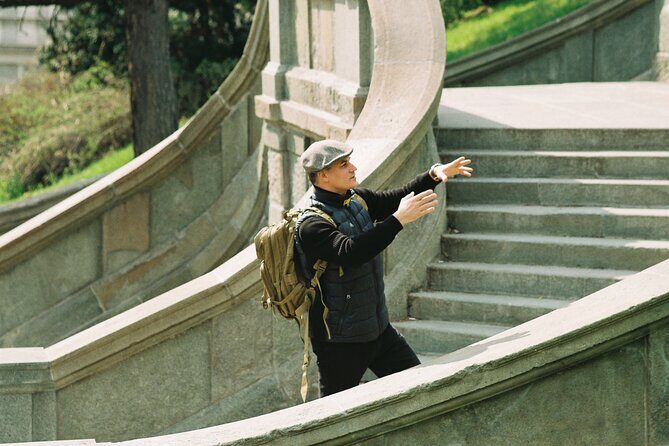
If you’ve only got a few hours in Belgrade, this tour is a good way to get your bearings fast. You’re not just checking off “pretty buildings.” You’re walking through places that explain how Belgrade became the layered city it is today—medieval Serbia, 19th-century nation-building, Austro-Turkish rule, and 20th-century memory all leave fingerprints here.
The route makes sense for a short visit because it stays in the center. You also avoid the most common first-time-tour problem: wandering without a story. Here, you get a storyline that connects each stop. And because many admissions are free for the sights on the itinerary, your money goes toward the guide and the experience, not a pile of entrance fees.
One more thing: the guide you get matters, and this provider is known for strong, calm handling of complicated topics. In the experience you’re booking, you may meet Aleksandar Bastic, and in some groups the guide has also been Milica—both are described as able to connect history to real life in Belgrade.
You can also read our reviews of more walking tours in Belgrade
Starting at Kosovska 47 and ending near the Belgrade City Library
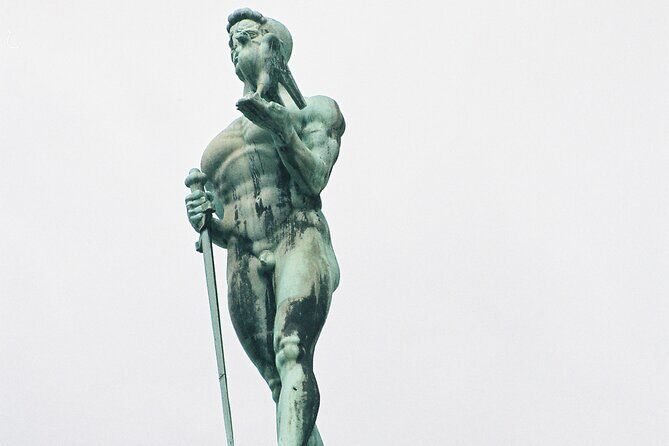
You start at Kosovska 47, Beograd 11000, and the tour begins at 11:00 am. The final stop is at the end point Kneza Mihaila 54a, which is essentially in the orbit of the Belgrade City Library (56 Knez Mihailova Street).
This end point is convenient because it drops you back on Kneza Mihailova, a pedestrian-friendly central street. Translation: after the tour, you can keep walking, grab coffee, or switch plans without needing transport. Just keep an eye on timing—this is a 2 to 3 hour tour, so you’ll move steadily.
You’ll also receive a mobile ticket. That’s useful in Belgrade, where queues and paperwork can feel like a speed bump when you’re trying to sightsee.
Crkva Svetog Marka: Stefan Dušan’s sarcophagus and medieval Serbia
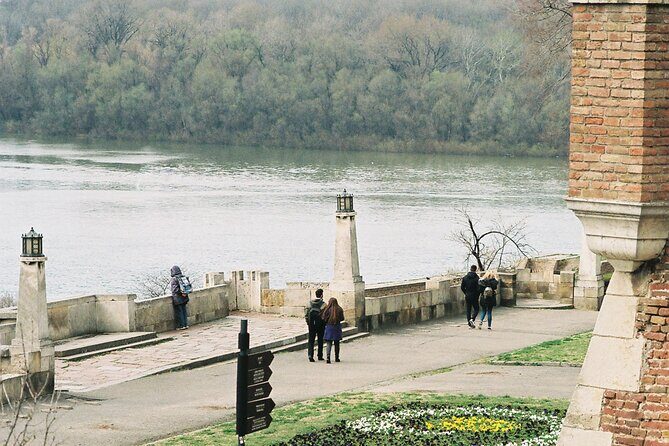
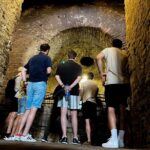
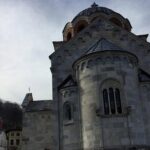
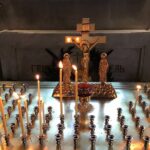
The first stop is Crkva Svetog Marka, where you’ll find the tomb and sarcophagus of Emperor Stefan Uroš IV Dušan of Serbia. Even if medieval names sound like alphabet soup at first, this is a strong start because it puts a human face on history: a ruler whose title stretches across regions and ambitions.
The guide time here is short (around 20 minutes), so the point isn’t to spend hours in deep study. It’s to give you the key idea: medieval Serbia wasn’t just a backdrop—it was a power with reach and claims. When you see the monument in context early on, the rest of the day reads clearer.
Practical note: churches can have dress expectations. One tip that came up from the guide’s guidance in real life was to have pants ready for kids if they need to enter—simple, but it can save you from a last-minute hassle.
Belgrade’s Old Palace: the Obrenović royal line in plain sight
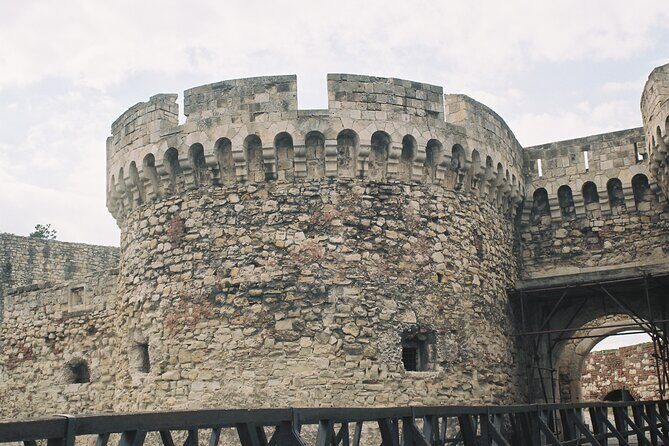
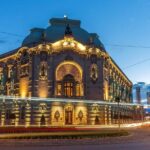
From the church, you head toward the center of state power: the Old Palace (the Royal Palace of the Obrenović dynasty). Today it houses the City Assembly of Belgrade.
What I like about this stop is how it blends past and present. The exterior matters, but the bigger value is understanding that buildings like this are not just “old.” They’re still being used. You get a quick lesson in how 19th-century architecture and political identity went together, with construction dated 1882 to 1884 and designed by Aleksandar Bugarski.
The tour gives you about 30 minutes here, with an emphasis on how the building looks and why it’s considered one of the notable academism achievements in Serbia of the 19th century. If you care about architecture, this is one of the places where the tour pays off fast—because you can actually see the style while you learn the background.
National Assembly building and the “Play of the black horses”
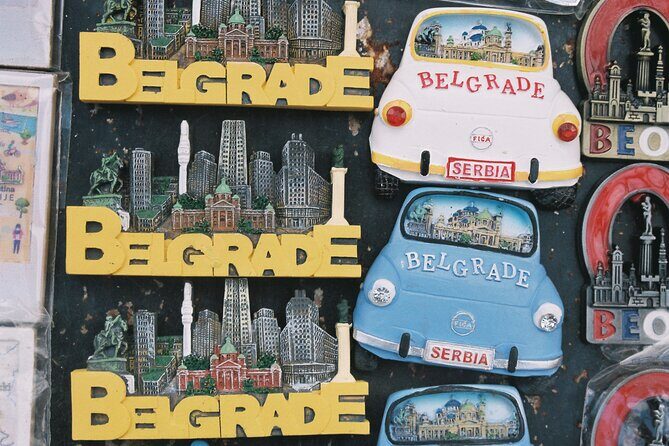
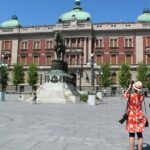
Next is the House of the National Assembly of the Republic of Serbia, starting in front of the building and including time for the sculpture group Play of the black horses.
Construction took a long time—almost 30 years—mainly due to lack of finances and wars, and even because of misunderstandings in society. That detail is more than trivia. It helps you understand why central monuments often feel slow, contested, and political. These are not always clean, top-to-bottom “one government, one plan” stories.
You’ll spend around 15 minutes here. That’s enough to learn what it represents and to notice the sculpture presence without turning it into a long museum stop. If you want photos, I’d use this stop for close-up shots of the facade elements and the sculpture area.
You can also read our reviews of more city tours in Belgrade


Terazije Fountain: a 19th-century decorative meeting point
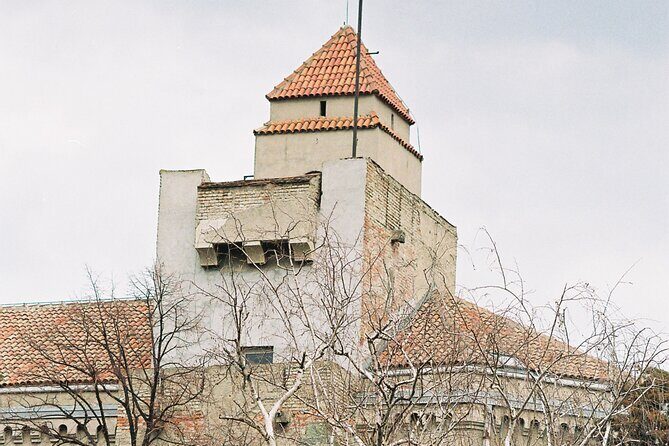
At Terazije Fountain, you’ll learn it was erected as both utilitarian and decorative at Terazije in 1860. This stop is brief (about 15 minutes), but it’s a useful one because it resets the pace after heavier institutional buildings.
Think of it as a palate cleanser. In a city center walk, fountains and public objects are where daily life happens around big politics. You get a sense of Belgrade as a place people actually move through—not just a place governments built.
If you want the most value here: slow down for a minute and look at how the fountain sits in the street scene. Then connect it to the next monument, where national symbolism becomes more obvious.
Prince Mihailo Monument: names, sculptor credits, and 19th-century pride
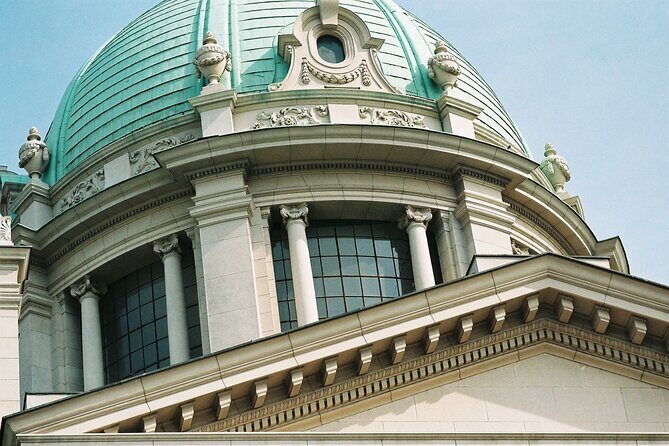
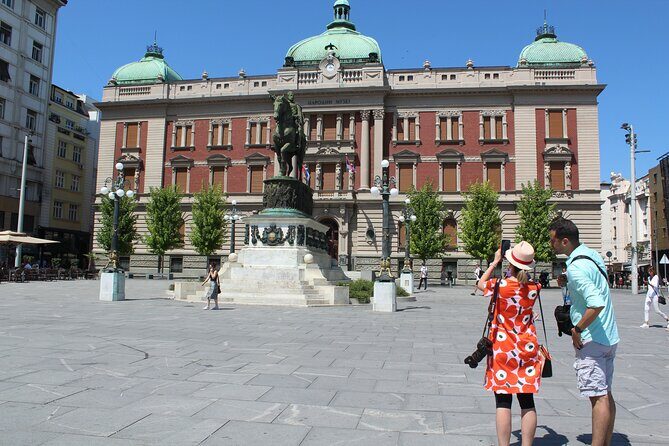
The Prince Mihailo Monument is next, with time for details including that it was made by the world-famous sculptor Enrico Pazzi, while the decorative reliefs were designed by Konstantin Jovanović.
I like this stop because it gives you “who did what” information, not just dates. It helps you see the monument as a product of craft and international influence, not just local commemoration. The tour keeps it quick (about 15 minutes), but it’s enough to connect the monument to the idea of Prince Mihailo Obrenović’s role in Serbian recognition and national direction.
Then you’re ready for the day’s most practical walking segment: you move toward the central pedestrian street that locals use.
Kneza Mihailova: where you’ll feel Belgrade’s street rhythm
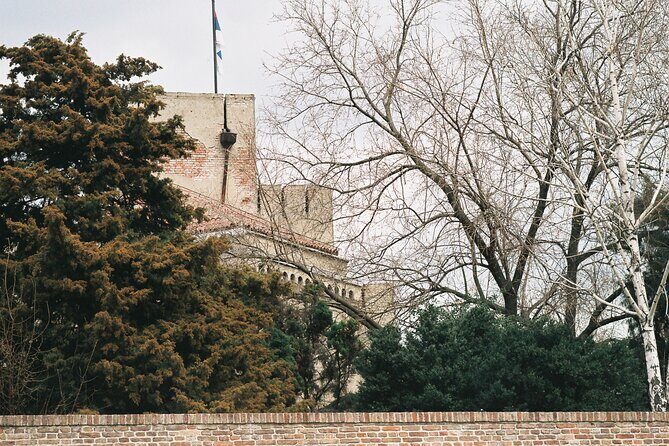
Knez Mihailova is a large pedestrian street in central Belgrade, near Kalemegdan Fortress. The tour gives you about 20 minutes here, and the value isn’t only the sightseeing. It’s the way this street acts like a hinge between the monuments and the fortress area.
This is where you’ll likely notice two things. First, Belgrade has a “walk-through” feel; people linger and browse rather than only passing through. Second, you’re close enough to Kalemegdan that you can start picturing the fortress ridge in your mind as a visual anchor for the whole tour.
If you’re hungry, this is a good point to think about what comes after. And if you’re not, it’s still a good pause to rehydrate before the fortress section, where you’ll do more standing and looking out over the city.
Kalemegdan Park and Belgrade Fortress: the ridge that explains the city’s strategy
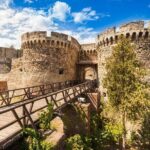
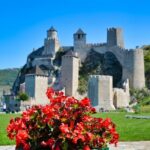
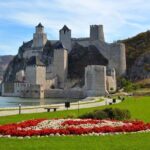
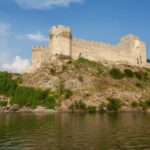
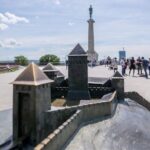
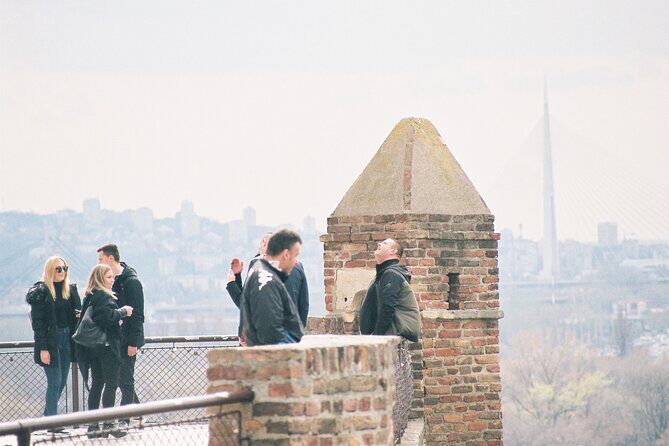
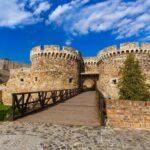
The biggest chunk of time lands at Kalemegdan Park and Belgrade Fortress (about 45 minutes). The key idea you’re given is simple but powerful: the ridge at the confluence of the Sava and the Danube had strategic importance for controlling the surrounding plains, and it has been inhabited since prehistoric times.
This is the stop where the tour shifts from “what was built” to “why it mattered.” When you’re standing on a fortress ridge, you immediately understand how geography shapes power. You can feel why Belgrade was fought over, governed, and rebuilt. It’s not abstract.
A small caution: because this area sits on a ridge, plan for a bit of walking over uneven ground and lots of standing. Wear comfortable shoes. You’ll get better views when you’re not fighting your footwear.
Clock Tower (Sahat Kula): Austrians started it, Turks finished it
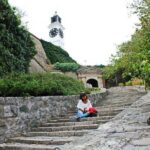
Next is the Clock Tower (Sahat Kula) with about 10 minutes. The tour explains that its construction started under the Austrians but finished under Turkish rule, with the timeline between 1740 and 1789.
This is a good “history in one object” stop. You’re seeing a structure created through changing control, not a single clean era. Even in a short window, it helps you understand why Belgrade feels like it has layers from different empires.
If you want a photo: this is an easy one to capture quickly because it’s a distinct landmark.
Monument of Gratitude to France: WWI friendship made visible
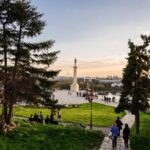
Just outside Kalemegdan Fortress is the Monument of Gratitude to France, honoring friendship and cooperation between Serbia and France during World War I. You’ll spend about 15 minutes here.
This stop adds a different kind of context. Instead of explaining empire-by-empire politics, it shows how modern national memory gets shaped through international alliances. It’s also the kind of monument that makes sense even if you’re not a WWI specialist; the guide can point you to why it exists and how it fits the city’s story.
The City Keys handover memorial: why 1867 matters
The final history hit is the Keys Handover Memorial, marking the spot where on 6 April 1867, town keys of several Serbian fortresses were given to Prince Mihailo Obrenović by the Ottoman Turks.
The tour connects this moment to a bigger arc: it was an important step toward Serbian international recognition at the Treaty of Berlin (1878).
I love how this ending works. You’re closing the loop on the day’s themes: power, sovereignty, and identity shifting through symbolic acts. A key handover sounds small until you understand it as a public transfer of authority and legitimacy.
When the tour finishes, you’re positioned right on Kneza Mihailova again, close to the library area, so you can keep exploring at your own tempo.
Coffee and/or tea: the Belgrade ritual part you should not skip
Coffee or tea is included, and that’s not just a perk. One review mentioned Turkish coffee in the experience. Even if your version is tea or coffee, the key is that you get a short pause with local context about the drink as a ritual.
If you’re visiting in cooler months, this break also makes the tour feel more human. You’ll walk more comfortably when you know there’s a warm stop built into the plan.
Price and value: what $38.34 buys you in real terms
At $38.34 per person for about 2 to 3 hours, this tour is priced like a small-group guided walk, not a long “big bus” production. The math is helped by two things that matter in the real world:
- Many listed sights have admission ticket free for this tour route.
- A max group size of 6 means you’re more likely to get direct answers instead of hearing only from the front of a crowded line.
You’re also paying for a guide who can connect dates and place names into a timeline you can remember. In the feedback for this experience, guides Aleksandar Bastic and Milica are repeatedly described as friendly, personable, and able to explain complex history in a way that stays practical during your walk.
If you want a “first taste” of Belgrade that helps you plan later neighborhoods and meals, this is a solid value.
What to expect on the ground (and how to prepare)
This is a walking tour, so come ready for city pavement. Expect frequent changes in pace: short photo stops, then a burst of explanation, then walking again.
Here’s what I’d do to make the day smoother:
- Wear comfortable shoes for the fortress area and any uneven ground.
- If you plan to enter churches, keep an eye on the outfit guidance you may hear during the tour (like having pants ready for kids).
- Bring water or a small snack if you get hungry easily; lunch isn’t included.
- If you struggle with hearing over traffic noise, choose where you stand during louder segments. You can often step slightly off the busiest road edge without falling behind.
Also, this is offered in English. If you’re traveling with someone who doesn’t speak English, you should confirm language support before booking.
Who should book this tour
I think this tour fits best if you:
- Want a high-quality overview of central Belgrade without spending a full day.
- Enjoy learning how monuments and buildings connect to political change.
- Like asking questions and getting direct answers in a small group.
- Are visiting for the first time and want a timeline you can carry into the rest of your trip.
It’s also a good choice if you’re solo. One of the strong themes in feedback is that solo visitors feel comfortable and get attention rather than being treated like a floating extra.
If you’re a hardcore history student who wants deep museum study, you might find the fortress and landmark stops short. But if you want clarity and momentum, this route is built for that.
Should you book this half-day Belgrade walking tour?
Yes, I’d book it if your goal is to understand Belgrade quickly, see the core monuments, and get guided context without wasting time on transport. The combination of free-to-view sights, a small group, and a guide who can connect complicated Serbian history to what you’re standing in front of makes this a dependable way to start.
Before you go, do one simple check: confirm the language you need. Since the tour is listed in English, it can be a deal-breaker for non-English speakers unless you verify options first.
FAQ
How long is the Half-Day Sightseeing and Walking Tour of Belgrade City?
It runs about 2 to 3 hours.
What is the tour price per person?
The price is $38.34 per person.
Where do I meet, and where does the tour end?
You start at Kosovska 47, Beograd 11000, Serbia, and you end near Kneza Mihaila 54a, Beograd 11000, Serbia (in front of the Belgrade City Library at 56 Knez Mihailova Street).
What’s included in the tour?
Coffee and/or tea is included.
Is the tour offered in English?
Yes. English is listed as the available language.
Can I cancel for a full refund?
Yes. Free cancellation is available up to 24 hours in advance for a full refund.