REVIEW · BELGRADE
Belgrade Old City 2-Hour Walking Tour
Book on Viator →Operated by VICTOR TOURS · Bookable on Viator
Belgrade reads best on foot. This 2–3 hour Old City walk is a smart way to get your bearings fast, with an English-speaking guide who connects major monuments to how people actually lived. I like the way the tour anchors you at Republic Square and follows the story of Prince Mihailo, then shifts into real Belgrade neighborhoods like Dorćol. I also love the Ružica Church stop, because the interior details are unforgettable, and you may even catch a service in session.
One possible drawback: you’ll be doing a solid amount of walking on uneven paths, and the tour notes a moderate fitness level. Also, at Ružica Church, photos may not be appropriate if a service is underway, so plan to rely on your eyes instead of your camera. On the plus side, guides like Jelica, Aleksandar, and Melissa are praised for excellent English and for making the history feel human.
In This Review
- Key things to know before you go
- Why this Belgrade Old City walk is a good first move
- Republic Square and the Prince Mihailo story at Trg Republike
- Studentski Trg: where the university lives without a campus
- Dorćol’s Ottoman-era crossroads and the Jewish community center
- Bayrakli Mosque (Bajrakli džamija): the Ottoman thread still visible
- Kalemegdan begins at Leopold’s Gate: Roman traces to medieval walls
- Ružica Church: military past, cartridge chandeliers, and a real service moment
- Upper Town viewpoints: Sava and Danube at the confluence
- Pobednik (Victor Monument): the Belgrade landmark you’ll see again
- Roman well, gates, and a walk along the Sava side
- Kosančićev Venac: Patriarchy, cobblestones, and Belgrade Montmartre vibes
- Finishing back at Republic Square via Knez Mihajlova
- Price and value: is $60.08 worth it?
- Who should book this tour?
- Should you book the Belgrade Old City 2-Hour Walking Tour?
- FAQ
- FAQ
- How long is the Belgrade Old City walking tour?
- What does the tour cost?
- Where does the tour meet, and where does it end?
- What language is the tour offered in?
- Is hotel pickup included?
- Is this tour private?
- Are there admission fees for the sights on the route?
- Do you need special fitness for the walk?
- Are service animals allowed?
- What is the cancellation policy?
Key things to know before you go
- A tight route with major stops: Republic Square, Dorćol, Bajrakli Mosque, and the Kalemegdan fortress circuit in one go.
- Professional English guides: recent guides mentioned include Jelica, Aleksandar, and Melissa.
- Ružica Church is a highlight: it’s tied to military history, with a striking interior featuring chandeliers made from spent cartridges.
- You get fortress views of the Sava–Danube confluence from the Upper Town.
- All the listed sights are marked admission-free on the tour route.
- You’ll end where you started at Republic Square, which makes planning the rest of your day easier.
Why this Belgrade Old City walk is a good first move
This tour is built like a guided orientation walk, not a random checklist of buildings. You start at Republic Square and you keep moving, so you see how Belgrade’s city center flows into Dorćol, then up into Kalemegdan, then back toward the Sava river area and the cobblestone streets of Kosančićev Venac.
The duration is usually 2 to 3 hours, which is long enough to feel you’ve seen the heart of the city, but short enough that you can still eat, shop, or pop into a museum afterward. It’s also a private tour/activity, meaning it’s set up so only your group participates. That matters because history stops can turn awkward when groups get loud; a private format helps the guide keep the story coherent.
The day-to-day practical side is solid too. The meeting point is at Trg republike 3, and the tour ends back at the same spot. It also runs daily, during the 10:00 AM to 4:00 PM window. If you like the idea of asking questions while you walk, this tour style fits well.
You can also read our reviews of more walking tours in Belgrade
Republic Square and the Prince Mihailo story at Trg Republike
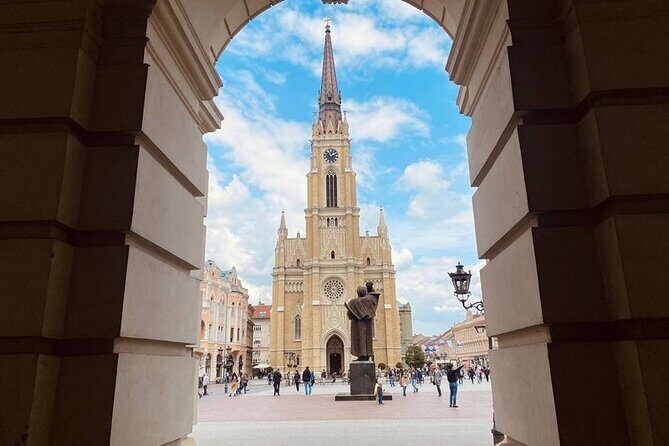
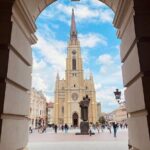
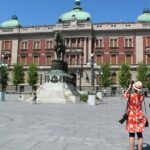
You meet at Republic Square (Trg Republike) in front of the Prince Mihailo monument, the horseman statue that’s become shorthand for the city’s modern self-image. From that point, the guide frames the square like a stage set: you’ll learn what matters most around you, including the National Museum and the National Theatre.
Then comes the Prince Mihailo angle, which is more useful than it sounds. Even if you know little Serbian history, this stop gives you a timeline anchor for the 19th century. It also helps you understand why certain buildings look the way they do and why certain names keep showing up in the city’s public life.
Practical tip: this is open-sky walking time. If you’re visiting in hot weather, treat this as the part where you slow down, drink water, and save your best photo angles for later shade if you’re heat-sensitive.
Studentski Trg: where the university lives without a campus
After a short walk you reach Studentski Trg (Student’s Square), described as the oldest urban city square in Belgrade. Instead of just being a pretty plaza, it has a purpose in the city: it’s an academic hotspot even though Belgrade doesn’t have one main campus.
You’ll hear about key institutions clustered here, including the Faculty of Philosophy, the Faculty of Philology, and the Faculty of Mathematics and Natural Sciences. There’s also the Captain Miša’s Edifice, the headquarters of the University of Belgrade. The story tied to Captain Miša’s charity and generosity is one of those details that makes a city feel lived-in, not museum-frozen.
Why this stop matters for you: it balances the fortress-and-monuments part of the day with day-to-day Belgrade energy. It’s also a nice mental reset. After Ottoman and medieval layers later on, this is where you see the modern city using its oldest square as a living public space.
Dorćol’s Ottoman-era crossroads and the Jewish community center
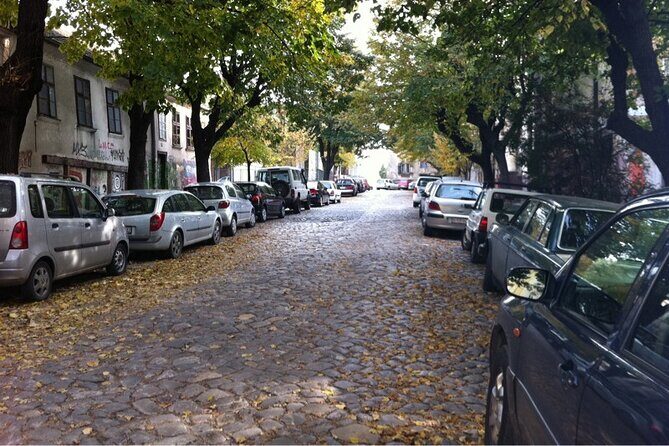
Next is Dorćol, which the tour frames as one of Belgrade’s more lively neighborhoods, with cafes, galleries, restaurants, and museums. The name itself connects to the Ottoman period. It’s linked to a colloquial Turkish word meaning crossroad, and the guide explains why that idea fits: the area was a trading point during Ottoman occupation.
You’ll stand by the Jewish community center and hear a story about Jewish community life in Belgrade and what happened during World War II. The point here isn’t just dates. It’s context for how Belgrade’s multicultural history was shaped by power shifts and war.
Practical tip: Dorćol is a neighborhood you can keep exploring on your own after the tour. Once you’ve heard the guide’s version of the story, it’s easier to notice what feels old, what feels adapted, and what feels newly made.
Bayrakli Mosque (Bajrakli džamija): the Ottoman thread still visible
Then you reach the Bayrakli Mosque (Bajrakli džamija), a 16th-century site that’s noted as the only remaining mosque in Belgrade. This is a quick stop, but it’s a powerful one because it shows continuity. Empires change. Religions and community spaces change. Yet this building remains as a marker you can’t fake.
The guide will tell stories about how Belgrade looked and lived under the Ottomans, and that framing helps you see the mosque as more than a landmark. It’s evidence of where daily routines, beliefs, and public life used to be shaped by Ottoman rule.
One consideration: because this is a working religious site, you’ll want to follow whatever guidance you get from the guide on respectful behavior and photography.
You can also read our reviews of more city tours in Belgrade


Kalemegdan begins at Leopold’s Gate: Roman traces to medieval walls
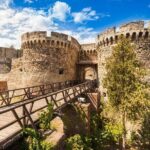
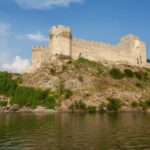
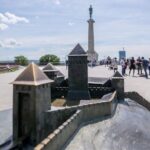
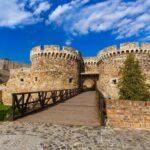
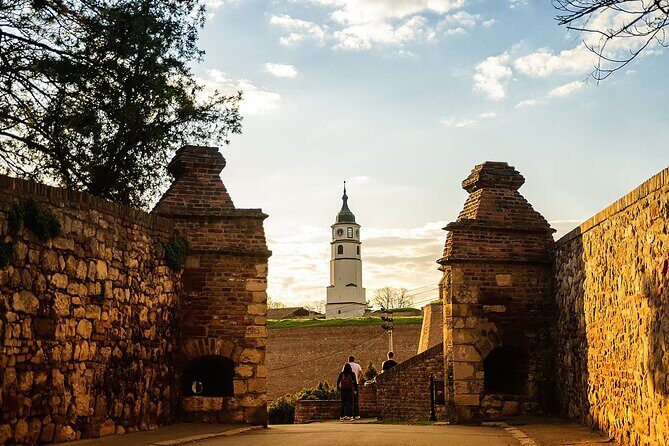
Now the tour turns into Kalemegdan, the oldest and largest park in the city center, and the route goes right into the fortress story. Starting from Leopold’s Gate, you pass remains tied to the Roman castrum of Singidunum, and then medieval walls built on top of it.
As you walk, you’ll encounter key fortress elements including Zindan Gate, Despot’s Gate, and Jakšića tower, all dating back to the 15th century. The guide’s job here is to make the time layers feel chronological instead of confusing. When it works, you can look at a wall and sort-of “read” which era contributed which piece.
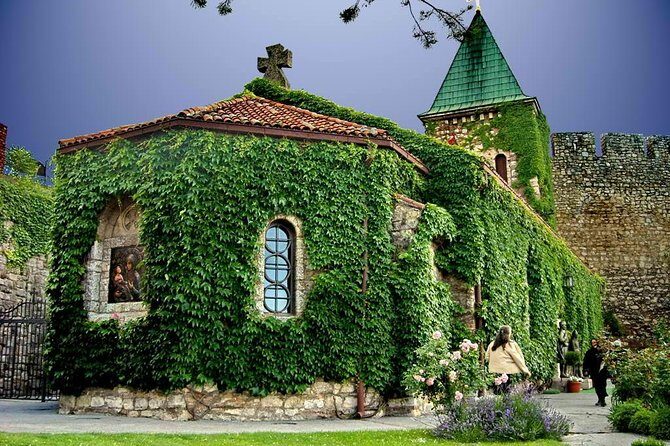
Then you’ll visit two Orthodox church stops within the fortress area: the Chapel of St Petka and the Ružica Church. That pairing is smart. You’re looking at military structures and then shifting to spiritual space without changing location. It helps you feel how this fortress wasn’t only for war.
Ružica Church: military past, cartridge chandeliers, and a real service moment
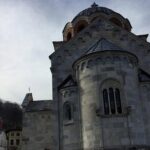
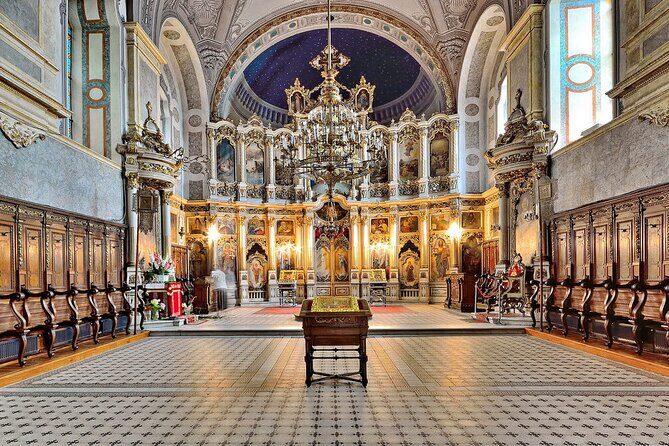
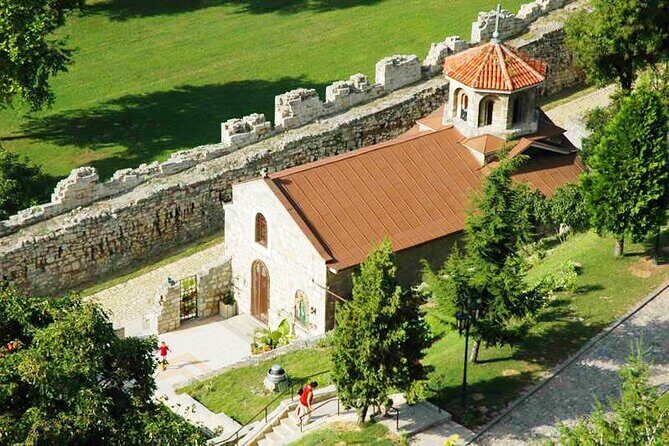
Ružica Church (the Church of the Holy Mother of God) was built around 1875, but before it was a church, the building served as a gunpowder magazine and a military school. Today, it’s described as the oldest Orthodox church in Belgrade and one of the most impressive visually.
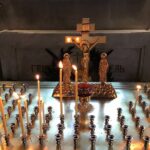
The interior details are the star: you’ll see three chandeliers made from spent cartridges, plus cannon ammunition, officers’ swords, and soldiers’ pistols associated with the Salonika Front. That kind of material doesn’t just decorate. It tells you how Belgrade and Serbia transformed the meaning of weapons into memorial and identity.
A personal note from the guide experience you’ll likely appreciate: if a service is in session, photos may not be appropriate, and you may still be able to experience the service for a few minutes. That’s exactly the kind of respectful, human travel moment that doesn’t need a perfect picture to matter.
Upper Town viewpoints: Sava and Danube at the confluence
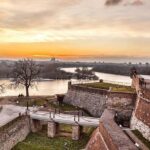
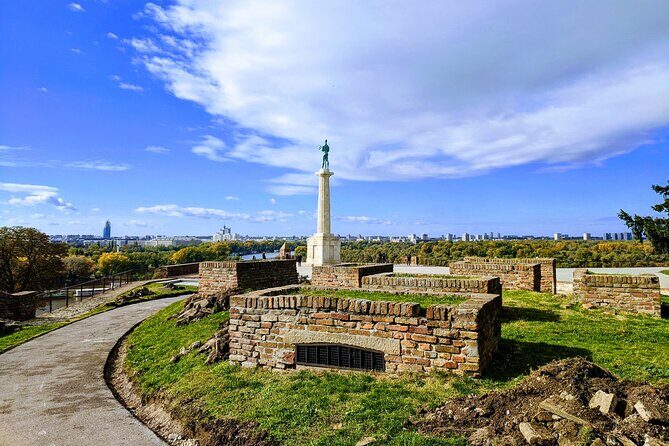
After Ružica, you keep moving in the fortress’s Upper Town. One of the big payoff moments is the view of the two-river confluence: the Sava and the Danube coming together. The guide routes you through key points like the Mehmed-pasha Sokolović fountain, Defterdar’s Gate, and then sets you up to see the Lower Town from above.
You’ll also observe the Main gunpowder storage, Karl VI’s Gate, and the Nebojša tower. Even if you’re not a fortress expert, this segment helps you understand how the fortress controls sightlines and movement. You’re not just standing at lookouts. You’re seeing how a defensive system thinks.
If you like photos, this is the portion where you’ll want your phone ready and your body positioned. Wind can be a factor near river views, and the walkways can be uneven, so take your time.
Pobednik (Victor Monument): the Belgrade landmark you’ll see again
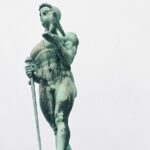
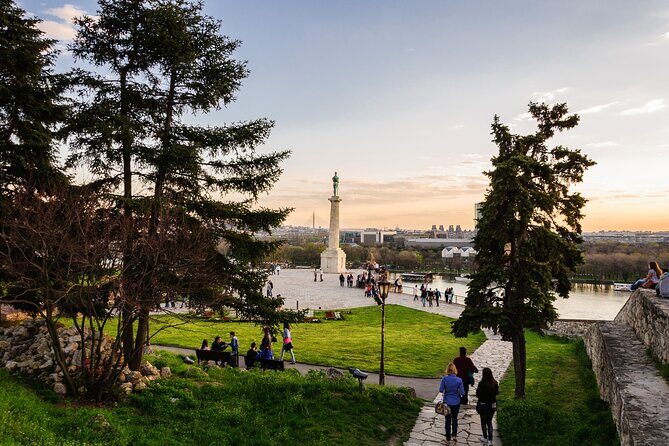
Next is Pobednik, the Victor monument, which the tour calls Belgrade’s most recognized and photographed landmark. It was made by sculptor Ivan Meštrović in 1928, and it’s meant to remind people of Serbia’s triumph over both the Ottoman and Austro-Hungarian Empires.
This stop is short, but it’s worth it because it’s a cultural reference point. You’ll likely see the monument appear in Belgrade conversations and photos later. Standing in front of it with the guide’s context helps you connect an iconic statue to a specific historical meaning.
Practical tip: plan to get your main photo here, because later parts of the route shift back toward walking and other sights. If the light is strong, you might wait a few minutes for a better angle rather than snapping immediately.
Roman well, gates, and a walk along the Sava side
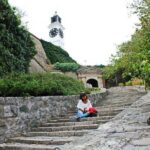
As you continue through the Upper Town route, you’ll pass the Roman well, King’s Gate, and the Sava promenade. The guide also points out Damat Ali Pasha Tomb, the Clock Gate with the Clock Tower, and Istanbul’s Gate (Stambol gate) as you move toward leaving the fortress behind.
One of the quieter rewards comes after you transition out of the fortress circuit and back into Kalemegdan park: you’ll find the Monument of Gratitude to France by Ivan Meštrović, plus a number of busts representing famous Serbian men of letters.
This is where your day feels less like marching and more like strolling with purpose. It’s also a good section to ask your guide what else in Belgrade matches your interests, because you’re no longer stuck in the “must see every gate” rhythm.
Kosančićev Venac: Patriarchy, cobblestones, and Belgrade Montmartre vibes
Leaving Kalemegdan, you head toward Varoskapija, the part of town built on the Sava river banks. Here you’ll see the Serbian Orthodox Patriarchy and Belgrade Cathedral. You’ll also pass the oldest Belgrade tavern, The Question Mark, and the Residence of Princess Ljubica, described as an elegant Balkan style building.
Then you get the cobblestone streets and the artist-quarter feel of Kosančićev Venac. It’s referred to as Belgrade Montmartre, and the logic is clear once you’re there: painters, sculptors, photographers, art galleries, and art schools make this quarter feel creative instead of purely administrative.
The guide also connects this area to national memory by describing the site where the National Library of Serbia once stood before it was destroyed in the 1941 Nazi bombing. For me, that’s the emotional center of this area. You see beauty and craft nearby, but you also understand why the scars matter.
Finishing back at Republic Square via Knez Mihajlova
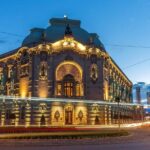
Your route brings you back toward the city center via King Peter’s street, with stops passed along the way such as King Peter the 1st Elementary school, the neo-renaissance palace of the National Bank of Serbia, and an Art Nouveau department store.
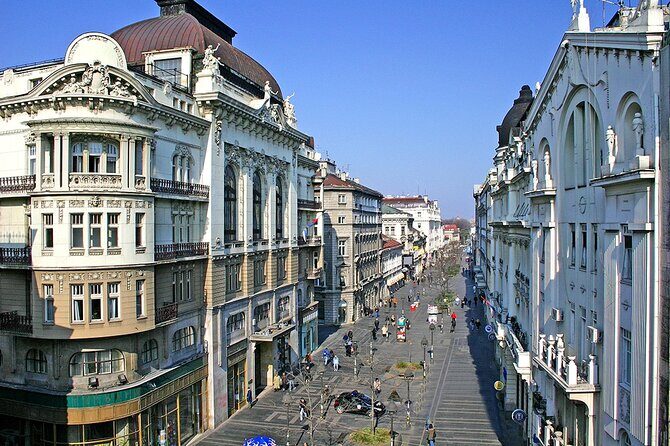
Then comes the pedestrian street Knez Mihajlova, leading back to Republic Square. Here you’ll pass examples of 19th and 20th century civil architecture, including the Serbian Academy of Science and Arts.
Ending where you started is more than convenient. It means you can keep your day flexible. Maybe you want to return to a museum you just glimpsed from outside. Maybe you want a café break in a square-adjacent location. Either way, you’re not fighting with complicated “end point” logistics.
Price and value: is $60.08 worth it?
At $60.08 per person for about 2 to 3 hours, the value depends on how you like to travel. If you enjoy a guided story and want your first day in Belgrade to feel coherent, this is a reasonable price because you get a professional English guide and a dense route of major sights.
A key detail for value: the listed stops are all marked as admission ticket free within the context of this tour. That doesn’t mean you’ll never spend money in Belgrade, but it does mean you’re not paying extra for entry fees just to see the core landmarks the guide is taking you to.
You also get a mobile ticket and there are group discounts, which can help if you’re traveling with friends. Since it’s private for your group, you’re not competing with strangers for the guide’s attention as much as you might on a large-group bus-style tour.
If you’re traveling with someone who prefers silent wandering, you might feel the time pressure. But if you like asking questions and getting context while you walk, the structure justifies the cost.
Who should book this tour?
I’d book this if you’re:
- A first-timer who wants a guided orientation to the Old City + fortress zone
- Interested in how Belgrade layers history across empires, wars, religion, and city life
- The type who enjoys short stops with stories you can carry later when you pass the same buildings on your own
It may feel less ideal if you:
- Want long, slow museum time (this is mostly walking and viewpoint/church stops)
- Struggle with moderate walking on mixed surfaces
- Need lots of photo time inside active religious services, since rules can apply at Ružica Church if a service is underway
Should you book the Belgrade Old City 2-Hour Walking Tour?
If you’re trying to decide whether to book, here’s the honest way to think about it. This tour works best when you want direction. It’s not a random walk. It’s a curated route that takes you from the modern center at Republic Square into Dorćol, across an Ottoman survival point at Bajrakli Mosque, up to Kalemegdan’s Roman-to-medieval walls, and then back down into neighborhoods tied to memory and art.
My advice: book it early in your visit. You’ll know where things are after, which makes the rest of your trip feel smoother. Also, if Ružica Church is on your must-see list, this is the kind of guided stop that can turn into a personal moment, even when photos are restricted.
FAQ
FAQ
How long is the Belgrade Old City walking tour?
It runs for about 2 to 3 hours.
What does the tour cost?
The price is $60.08 per person.
Where does the tour meet, and where does it end?
It starts at Republic Square, Trg republike 3, Beograd 11000, Serbia, and ends back at the same meeting point.
What language is the tour offered in?
It’s offered in English.
Is hotel pickup included?
No. Hotel pick-up and drop-off are not included.
Is this tour private?
Yes. It is listed as a private tour/activity, with only your group participating.
Are there admission fees for the sights on the route?
The tour stops are marked as admission ticket free.
Do you need special fitness for the walk?
The tour advises a moderate physical fitness level.
Are service animals allowed?
Yes, service animals are allowed.
What is the cancellation policy?
Free cancellation is available up to 24 hours in advance for a full refund.