REVIEW · BELGRADE
NATO Bombing of Belgrade Private Tour
Book on Viator →Operated by Serbian Private Tours · Bookable on Viator
Belgrade remembers in concrete and steel. This private tour connects the dots between key bombing targets and the people affected, using on-site storytelling at five major landmarks. I love the way the guide keeps it human, not just political, and I also like how free admission at each stop keeps the experience focused on learning, not ticket math.
My other big win is the format: a private group with hotel pickup and drop-off, so you’re not stuck in a rushed crowd. Still, this tour is emotionally heavy—expect disturbing details and war memories, especially around the sites tied to deaths of civilians and pilots.
In This Review
- Key things to know before you go
- The value: what you’re really paying $145.10 for
- How the 10:00 am format works in practice
- Stop 1: RTS and the Monument Zašto? at the memorial site
- Stop 2: The Ministry of Defence, still photographed for a reason
- Stop 3: Ušće Business Center on the skeleton of the Central Committee
- Stop 4: The Chinese Cultural Center and the controversy of 7 May 1999
- Stop 5: Air Force Command Building and the pilots who fought back
- What makes the storytelling work (and what you should do)
- Who this private NATO bombing tour is for
- Getting the most out of your 3–4 hour route
- Should you book this tour?
- FAQ
- How long is the NATO Bombing of Belgrade Private Tour?
- What time does the tour start?
- Is this tour private or shared?
- Does the price include pickup and drop-off?
- Are entrance tickets included?
- What’s included in the $145.10 per person price?
- Is food included?
- FAQ
- Can I request pickup from a location other than the listed meeting points?
- What language is the tour offered in?
- When will I receive confirmation after booking?
- How does cancellation work?
Key things to know before you go
- Small, private group time: Only your group rides with the guide/driver, so questions feel natural.
- Hotel pickup and city driving included: You start at 10:00 am and get dropped back off after the route.
- Five stops tied to specific nights and targets: RTS, the Ministry of Defence, Ušće (former Communist Party Central Committee), the Chinese Cultural Center, and the Air Force Command building.
- Free entry at every stop: Each site is listed as free for the tour visit (about 30 minutes each).
- Bottled water provided: A small comfort that helps on a 3–4 hour urban route.
The value: what you’re really paying $145.10 for
At $145.10 per person for a 3 to 4 hour private outing, the price isn’t about “stuff.” It’s about access and time. You’re paying for a guide/driver to pick you up, drive between sites, and explain why these places matter—while keeping the route tight enough that you still get a coherent story.
You also get a few practical inclusions that add up in the real world: hotel pickup and drop-off, a private tour setup, and bottled water. And since admission at the stops is listed as free, you’re not paying extra on top to get inside or to spend time at each location.
You can also read our reviews of more private tours in Belgrade

How the 10:00 am format works in practice
The tour starts at 10:00 am. You’ll be picked up from your hotel or other specified location (you can even request pickup from the Belgrade port area where cruiser boats dock). Once you’re in the van, you’re not managing transit or route planning; the driver handles that while the guide lines up the story beats.
Each stop is scheduled around 30 minutes, which is long enough to look at what’s there and hear the explanation, but short enough to keep momentum. Total time comes out to roughly 3 to 4 hours, depending on how the group moves and how many questions you ask.
One more note: it’s offered in English, and confirmation comes when you book unless you’re booking within 20 hours of travel—in which case you’ll get confirmation as soon as possible based on availability.
Stop 1: RTS and the Monument Zašto? at the memorial site
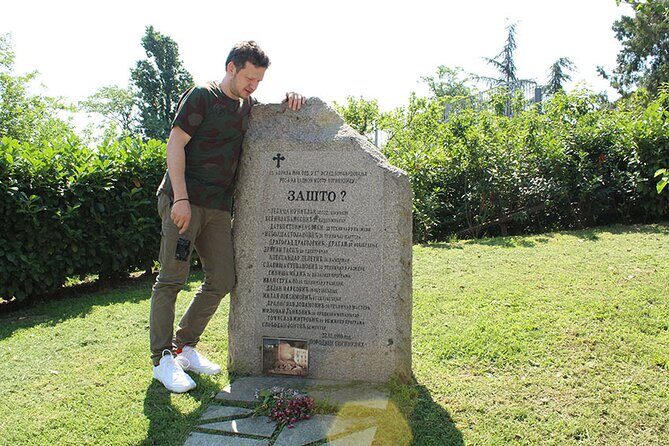
Your tour begins at the RTS (Radio Television of Serbia) building. Right away, you’re confronted with the monument Zašto? (Why?) and a disturbing account of the night when 16, mostly young people, were killed during the night shift.
What I like about this stop is the contrast between the past and the present. The information you hear isn’t abstract—it’s tied to the physical site. The building that’s still standing on the RTS location remains unrepaired, serving as a memorial for what happened.
Why it matters for your trip: if you only read about the NATO bombing in a book, you miss the way places hold memory. At RTS, the “why” question is literal. You’ll probably leave thinking about how a city decides what to keep visible.
Possible drawback to consider: this is the kind of opening that sets an intense tone. If you prefer lighter sightseeing first, you might feel the emotional weight immediately rather than gradually.
Stop 2: The Ministry of Defence, still photographed for a reason
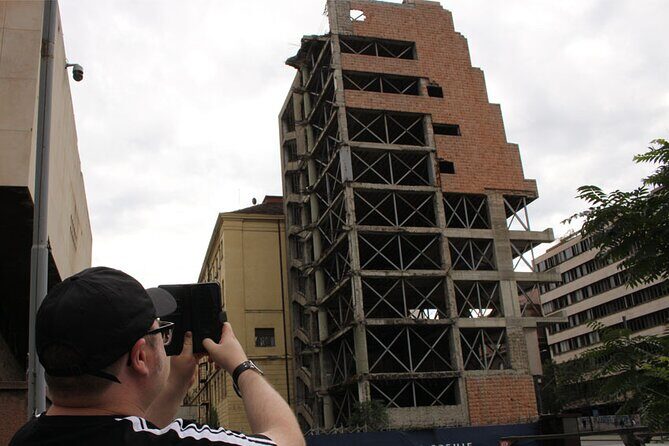
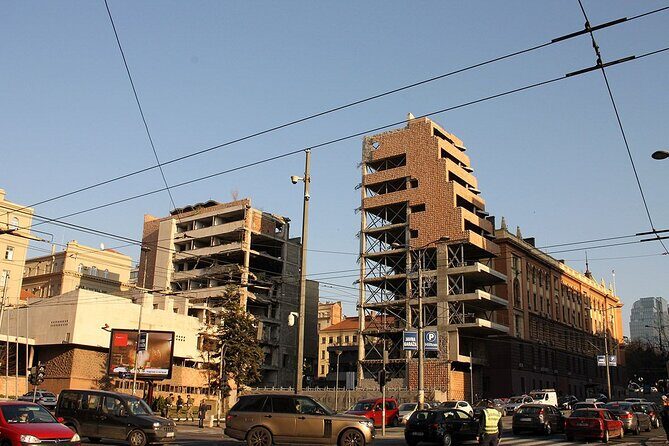
Next is the Ministry of Defence—one of the most familiar images from Belgrade’s 1999 bombing coverage. This stop keeps the focus on the night of 29 April 1999, when NATO actions targeted military objectives and affected nearby areas too.
Here, you’ll learn that one person lost their life, and many civilian buildings nearby were damaged as a consequence of those hits. It’s direct. No soft framing.
What you’ll get from standing there (beyond photos): you start to see how “military objective” language meets real neighborhoods. Even if you’ve seen the pictures before, the scale and location give the story more weight than screen images ever do.
Good to know: the stop is scheduled for about 30 minutes. That’s enough time to absorb the guide’s explanation and look around, but not long enough to treat this as a full deep-dive museum visit. Come ready to listen.
Stop 3: Ušće Business Center on the skeleton of the Central Committee
Then the tour moves to Poslovni centar Ušće, currently a business center. The deeper story here is that it occupies the site of the former Central Committee of the Communist Party of Yugoslavia. The guide ties the past to what you can still see: the area stands on the same skeleton of the original construction and with the same appearance of the former building.
This stop is fascinating because it asks a different question than the first two: not only what was hit, but what was designed to survive. You’ll hear why the building was missile proof back in 1999, and also what the reason was for it being targeted in the first place.
Why this is a strong stop for your learning: it helps you understand the logic people were trying to act on—protection, strategy, and mistaken assumptions. Even if you don’t agree with any conclusions, it’s the kind of detail that makes the story feel concrete.
Possible drawback to consider: this stop is concept-heavy. If you’re the type who wants lots of visible wreckage and less explanation, you may need to lean into listening to get full value here.



Stop 4: The Chinese Cultural Center and the controversy of 7 May 1999
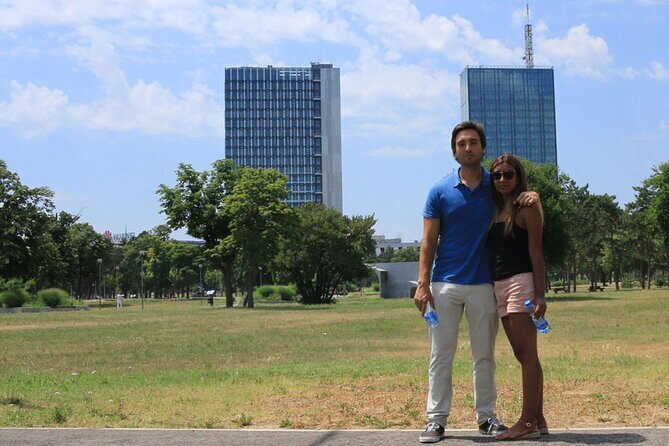
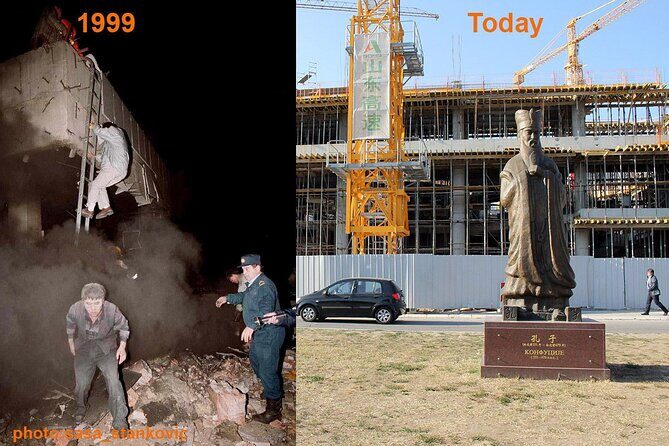
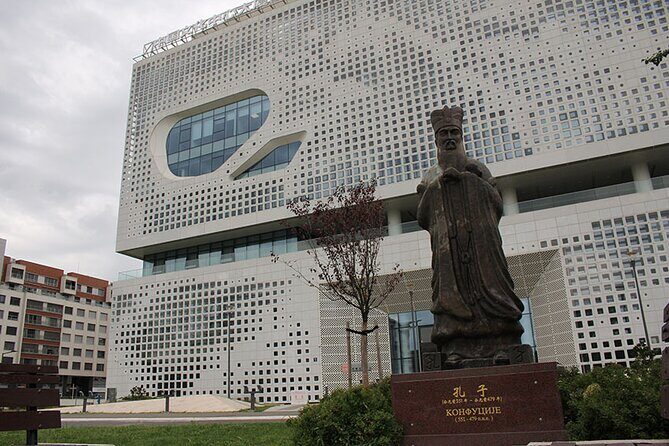
The Chinese Cultural Center is often the most controversial site on the route. It’s tied to the former Chinese embassy, and the bombing story around it is complicated: it was allegedly bombed due to an intelligence mistake, but there’s also suspicion that the embassy had another purpose.
You’ll hear that four Chinese citizens died on the night of 7 May 1999. That fact alone gives the stop a solemn tone.
What I appreciate about this part of the tour is balance in the way it frames uncertainty. The tour doesn’t just give a single neat answer; it explains why multiple interpretations exist and why the site became symbolically heavy for more than one country.
How this helps your understanding: after RTS, the Ministry of Defence, and Ušće, you’ve learned about military targeting and nearby damage. At the Chinese embassy site, the story broadens into intelligence, risk, and the real human cost when information fails.
Possible drawback to consider: if you prefer straightforward, uncontested history, this stop may feel emotionally and logically messy. It’s still valuable, but it asks more from your attention.
Stop 5: Air Force Command Building and the pilots who fought back
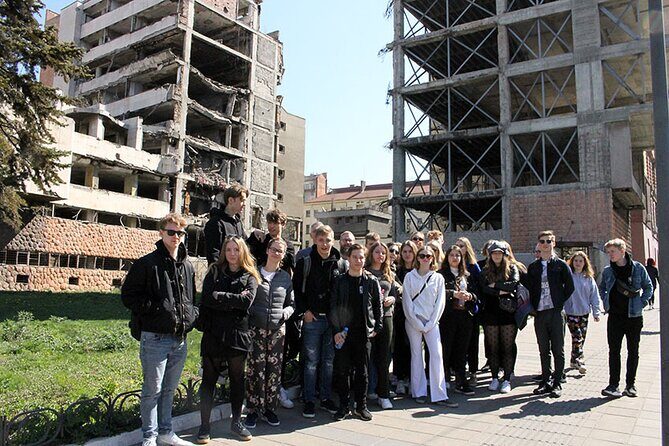
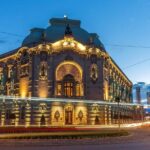
The final stop is the Air Force Command building. This is a 1935 edifice with a reputation described as a “pearl” of Yugoslav and Serbian architecture. It adds a different flavor to the tour: the beauty of a structure alongside the violence directed at it.
The guide connects the site to 5 April 1999, when it was hit as a strategic objective with two missiles. Then you shift from buildings to people again—learning about the pilots who, according to the guide’s account, knowingly engaged in the fight and lost their lives defending the sky over Serbia and Yugoslavia against a much stronger NATO air force.
Why this stop can land with you: it’s the point where the story changes from damage assessment to defense and decision-making. If you’ve been thinking the entire tour is just about destruction, this ending reframes it toward courage and loss.
Also, it’s the last stop for a reason. By the time you reach the Air Force Command building, your brain has already mapped the earlier locations. The final story clicks into place because you’ve built a mental timeline of nights and targets.
What makes the storytelling work (and what you should do)
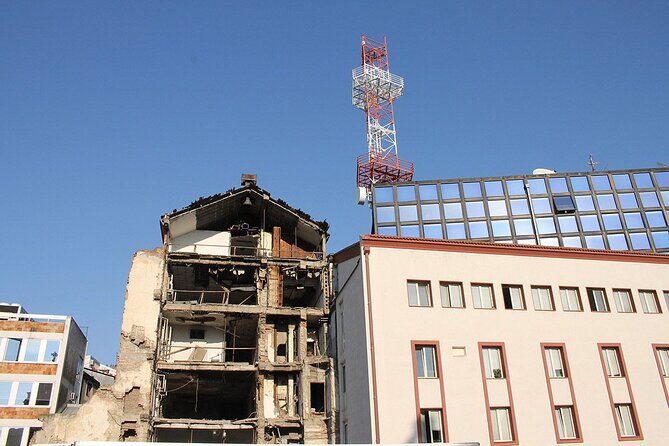
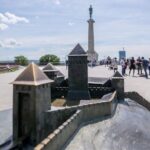
The tour’s strength is not only where it goes, but how it connects the facts to the visible locations. The guide uses a mix of on-site viewing and visual context (the kind of presentation that helps you “see” what’s being described). That matters because war history can be hard to picture. Here, the physical stops help you build mental images quickly.
I also like that the stops are short and timed—about 30 minutes each—so you get momentum without feeling trapped. You can listen closely, ask questions, and still have energy for the drive to the next site.
My practical advice: bring a pen or open your phone notes. With the dates and sites moving in your head, it’s easy to blur. A quick note after each stop keeps the timeline clear.
And if you’re sensitive to graphic or emotionally heavy stories, decide before you start. This is not a “light facts and photos” outing. It’s a respectful look at trauma that still shapes Belgrade’s memory.
Who this private NATO bombing tour is for
This tour is a good fit if you:
- like history that connects to real street-level places, not just textbooks
- want a guided route with pickup and drop-off so you can focus on listening
- care about understanding why certain targets mattered (and why mistakes and consequences followed)
It’s probably not ideal if you want purely scenic sightseeing, or if you’re uncomfortable with war-related death and memorial context.
Getting the most out of your 3–4 hour route
You’ll move through the center areas between five defined stops, with city driving included. With only 3 to 4 hours total, you’ll get the best experience if you keep your mindset in listening mode and save your longer city wandering for later.
A few simple prep tips:
- Wear comfortable walking shoes for short stops (even if most time is at viewpoints or building edges).
- Expect questions about dates and motives; the guide’s job is to explain.
- If you want food, plan it before or after. Food and drinks are not included, and the tour is only a half-day.
Should you book this tour?
Yes—if you want a focused, private, on-the-ground explanation of Belgrade’s 1999 NATO bombing sites, this is a solid choice. The price feels fair when you factor in the private guide/driver, pickup and drop-off, bottled water, and a route where each stop is free for the visit.
If you hate heavy emotional content, or you’re looking for a gentle first afternoon in Belgrade, consider saving this for a day when you’re ready to absorb difficult history. Otherwise, booking is an easy win: you’ll leave with a clearer timeline, more context for what you see around the city, and a sense of how Belgrade holds memory in plain view.
FAQ
How long is the NATO Bombing of Belgrade Private Tour?
It’s scheduled for about 3 to 4 hours.
What time does the tour start?
The start time is 10:00 am.
Is this tour private or shared?
It’s private. Only your group participates.
Does the price include pickup and drop-off?
Yes. Hotel pickup and drop-off are included.
Are entrance tickets included?
Admission at each listed stop is free, and the tour includes a ticket/free entry setup for the visits described.
What’s included in the $145.10 per person price?
Included items are a private guide/driver, hotel pickup and drop-off, bottled water, and the private tour itself.
Is food included?
No. Food and drinks are not included, so plan meals outside the tour time.
FAQ
Can I request pickup from a location other than the listed meeting points?
Yes. If your pickup location isn’t listed (like an Airbnb or apartment), you can specify it. Pickup is also available from Belgrade port where cruiser boats dock.
What language is the tour offered in?
The tour is offered in English.
When will I receive confirmation after booking?
You’ll receive confirmation at booking time unless you book within 20 hours of travel. In that case, confirmation is sent as soon as possible based on availability.
How does cancellation work?
You can cancel for a full refund up to 24 hours before the experience’s start time. If you cancel less than 24 hours before, the amount paid is not refunded.