Old Zemun feels small, then suddenly you realize it holds layers. This private walking tour pulls you through interwar architecture, religious landmarks, and old-town lanes, plus quick stops that explain how Zemun shaped Belgrade and Serbia. I love the way the route mixes big history with everyday details, and I love how the guide storylines connect the places so you understand the city beyond postcards. One thing to consider: the tower viewpoint tickets aren’t included, so budget a little extra if you want the best view.
If you do Belgrade first, this tour works like a second lens. It’s about 2 hours on foot, focused on key stops, and it ends right near the Danube walkway, so you can keep wandering after. My only caution is simple: since you’re moving the whole time, wear comfortable shoes and don’t plan on a full meal break because coffee and snacks aren’t part of the tour.
In This Review
- Key things you’ll notice on this Zemun walk
- Why Zemun feels like a city inside a city
- Timing it right: do Belgrade first, then switch gears to Zemun
- Stop 1: Air Force Command Building and the weight of interwar design
- Stop 2: Zemun City Park—churches, Roman stone, and a quarantine past
- Stop 3: Rabina Alkalaja 5—when a synagogue becomes a restaurant
- Stop 4: Gospodska 6 mural—your painted map of old Zemun
- Final viewpoint: the memorial tower in Zemun
- The stories that actually change how you see Belgrade
- Price and value: what $145.45 buys you
- What you’ll carry home in 2 hours
- Who this private Zemun tour fits best
- Practical tips for a smoother walk
- Should you book this Private Walking Tour of Belgrade and Old Zemun?
- FAQ
- How long is the tour?
- Is this a private tour or a group tour?
- What is the price per person?
- What’s included in the tour?
- Are tickets included for the memorial tower?
- Are the other stops admission-free?
- Where does the tour start and end?
- Is there a mobile ticket?
- Can most people participate?
- What’s the cancellation policy?
Key things you’ll notice on this Zemun walk
- Interwar architecture with real wartime scars at the Air Force Command Building, damaged during NATO air strikes
- A park that stacks faiths and eras, including Orthodox and Catholic churches plus a Roman sarcophagus and an Armenian khachkar
- Rabina Alkalaja 5, a former Ashkenazi synagogue now used as a traditional Serbian restaurant
- Gospodska 6 mural, basically a painted map of Zemun’s main sights on a restored historic wall
- The memorial tower viewpoint, built for the thousand years of Hungarian settlement in the Pannonian plain
Why Zemun feels like a city inside a city
Zemun doesn’t read like a “second-rate suburb.” It feels like another place that happens to belong to Belgrade. You’ll walk between vine-covered, tiled-roof houses and through small streets where one courtyard turns into the next story. That’s the core idea of this tour: you don’t just see sights, you learn how Zemun’s past layers changed the region.
I also like the pacing. The stops are short, so you keep moving and you don’t get stuck in one spot too long. Even with the walking, it stays conversational—more like a focused stroll with a good local than a museum march.
And yes, there’s an undercurrent. Zemun has a darker side to its history, and your guide points to the moments that affected not just this town, but wider European events. The goal isn’t gloom. It’s understanding. Once you know the context, the streets make sense.
You can also read our reviews of more walking tours in Belgrade


Timing it right: do Belgrade first, then switch gears to Zemun
This tour is designed as a follow-up to a main Belgrade sightseeing day. That matters because Zemun’s story links to larger national events and the way Belgrade’s story keeps expanding over time. If you’ve already picked up the basic geography and political background, Zemun clicks faster.
Your start point is Glavna 8, Beograd 11080, and the tour ends at Zemunski Kej na Dunavu. Since the ending is near the Danube waterfront, you can keep enjoying the area after the 2-hour walk. If you’re the type who likes to keep momentum—great. If you hate walking with no scheduled break—plan a short stop on your own right after, because coffee and snacks aren’t included.
Stop 1: Air Force Command Building and the weight of interwar design
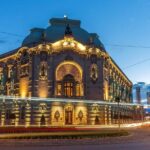
Your first stop is the Air Force Command Building, an interwar Yugoslav architectural monument. It’s the kind of building you notice even if you don’t know what it is yet—massive, formal, and built to last.
Here’s what makes this stop more than a photo opportunity: the guide ties the architecture to its later history. The building was damaged during NATO air strikes, and that fact changes how you read the structure. Instead of admiring a facade only, you start seeing it as a witness to real events.
How long you’re here: about 15 minutes. That’s enough time for the key points without dragging. If you’re traveling with someone who loves “big landmark” stops, this one tends to land well.
Possible drawback? If you prefer purely peaceful, light sightseeing, this is the most serious stop on the walk. It’s handled through explanation and context, but the subject is still heavy.
Stop 2: Zemun City Park—churches, Roman stone, and a quarantine past
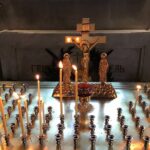
Next up is Zemun City Park, and it’s one of the most interesting “mix of eras” stops on the route. In this single area you’ll find Orthodox and Catholic churches, plus an ancient Roman sarcophagus and an Armenian khachkar. Yes, four different cultural markers, all in one place.
Even better, the guide connects the site to a tougher past: the park sits on the location of a former quarantine hospital. That detail gives the park a different tone. It stops being only pretty green space and becomes part of the city’s survival story—how communities dealt with disease, boundaries, and safety.
Time here: about 30 minutes, which is longer than the other stops. That’s because you’ll likely want a moment to take it in. Also, when a park holds so many layers, it’s hard to rush.
If you like architecture and symbolism, this stop is a highlight. If you’re less into history and more into strolling, you still get something tangible to look at: churches, stone artifacts, and the setting itself.
Stop 3: Rabina Alkalaja 5—when a synagogue becomes a restaurant
The walk shifts again at Rabina Alkalaja 5, a former Ashkenazi synagogue. The building is from the 19th century, and it’s tied to a major figure: rabi Alkalai, described as a precursor of modern Zionism, served here.
What I like about this stop is how it shows continuity and change. This synagogue isn’t stuck in the past as a dead monument. It now houses a traditional Serbian restaurant inside the building. So you get heritage you can actually touch with your day—through food and atmosphere—rather than only through a sign and a timeline.
Time here: about 15 minutes. That’s short, but it’s a smart length for this kind of stop. You’ll learn the story, see the space, and then move on without turning it into a long detour.
This is also where you can pick up the kind of fun, practical “I didn’t know that” knowledge that makes a walking tour worth it. One of the guides you might have (I’ve heard names like Olga and Elvira) is especially good at connecting the dots with engaging explanations, including colorful regional folklore. It’s one of the stops where the tour’s tone becomes both smart and memorable.
You can also read our reviews of more private tours in Belgrade


Stop 4: Gospodska 6 mural—your painted map of old Zemun
At Gospodska 6, you’ll see a mural depicting the main sights of Zemun, painted on the restored wall of one of the oldest houses in the area. This stop sounds simple, but it’s useful.
Think of it as your visual road sign for the rest of the town. While you’re walking, you can match what the guide says to what you’re seeing on the walls and corners. It turns the area from a blur of streets into a readable place.
Time here: about 15 minutes. Again, short enough to keep the flow.
If your goal is photos, murals also help. You’ll get a clear frame for a “this is Zemun” picture, and it won’t feel like you’re snapping random walls.
Final viewpoint: the memorial tower in Zemun
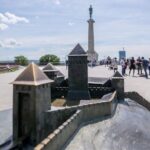
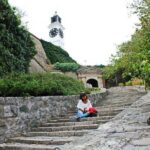
The last stop is the memorial tower, built for the celebration of a thousand years of Hungarian settlement in the Pannonian plain. Your guide frames it as the best viewpoint in Zemun.
Now, here’s the important practical note: tickets to the tower aren’t included. So you decide. If you want the panoramic look, plan to add the cost of admission on the spot. If you’re not big on paying for viewpoints, you can still enjoy what you’ve learned and keep the day going, but you’ll miss that final “wow” angle.
Time for this portion isn’t listed like the others, but you should expect a little longer than a quick street stop if you go up. Even if you don’t, the tower is worth seeing as part of the way Zemun marks its layered past in stone.
The stories that actually change how you see Belgrade
This tour isn’t only about buildings. It’s about meaning. Zemun’s history is the kind that repeats in Europe: empires shift, borders change, people arrive, and then they leave stories behind.
I like that your guide points out both the charming side and the darker side without turning it into fear-mongering. The vibe is: don’t ignore the secrets. Just understand them.
You’ll also pick up specific cultural tidbits. For example, you may hear why vampire is a Serbian word and how that ties into the wider Dracula conversation. That’s the kind of fact that makes future reading and conversations richer because it connects the folklore to actual language and local interpretation.
If you’re traveling with someone who loves legends, this is where the tour can feel especially fun. It’s not camp. It’s context plus story, and it gives the town personality.
And if you like Zionism history, this is where the rabi Alkalai connection matters. You’ll walk away with the sense that these are not “random” old buildings—they were tied to real people and movements.
Price and value: what $145.45 buys you
At $145.45 per person, this is not a budget walk. But it’s also not a long day with lots of extra stops that you have to drag through. You’re paying for a private tour with a guide, focused on a compact area for about 2 hours.
Here’s how I think about value:
- You get free admission for the listed stops (the tower is the exception because its ticket isn’t included).
- You get interpretation, not just a route. The guide explains why each place matters.
- You get privacy. This can be a big deal in a city like Belgrade, where you may want to ask follow-up questions or move at your group’s pace.
One thing to check in your head: if your group is small, the per-person price can feel steep. If your group is the kind that will actually use a guide’s storytelling skills, it often feels fair.
Also look for the mention of group discounts. If your booking allows it, that can meaningfully change the math.
What you’ll carry home in 2 hours
A good walking tour gives you three things: direction, context, and one or two details you’ll repeat later.
You’ll leave this one with direction because the route moves logically through Zemun’s key corners and landmarks. You’ll leave with context because each stop links to bigger chapters—interwar architecture, wartime damage, religious and cultural overlap, and the way public spaces carried past functions like quarantine. And you’ll leave with details that stick, like the synagogue-to-restaurant story and the tower built to mark a thousand years of Hungarian settlement.
I also think the ending by the Danube is smart. It gives you a natural transition. You finish the history walk, then you can relax by the water and decide what you want to do next.
Who this private Zemun tour fits best
This works well for:
- Couples or small groups who want only their group and a guide who can slow down for questions
- History-minded travelers who still want street-level life, not just lectures
- Photo people who enjoy architectural textures and murals, not only scenic viewpoints
- Anyone doing a Belgrade trip and realizing Zemun adds a different mood
It may not be your best choice if you want a fully food-centered experience or a long sit-down schedule. Coffee and snacks aren’t included, and the stops are built around short guided moments.
Practical tips for a smoother walk
Here are a few things that will make the day feel easier:
- Wear comfortable shoes. It’s a walking tour, and you’ll cover several short stops in about 2 hours.
- Bring small cash or a card plan for the tower ticket, since it’s not included.
- Plan for no built-in snack stop. If you need energy, grab something before or after the tour.
- If you’re a photo planner, expect murals and stone details to be your best quick-win shots.
- Since it’s a mobile ticket experience, have your phone charged and ready.
Also, consider the order of your trip. If you already toured Belgrade’s main highlights, Zemun will feel like an intelligent add-on instead of a separate lesson.
Should you book this Private Walking Tour of Belgrade and Old Zemun?
I’d book it if you want Zemun to feel understandable fast. This tour delivers that. The biggest reason is the structure: you hit major landmarks, each with an explanation that connects to the bigger story of Belgrade and Serbia. The private format also makes it easier to get answers and stay engaged.
Skip it only if your priorities are purely scenic or if you strongly prefer meals and long breaks built into the itinerary. This is a walking, storytelling tour with short stops. It’s at its best when you like learning as you go.
If you’re the type who enjoys a mix of history, folklore, and real street corners, this one is a solid value for the attention you get from the guide.
FAQ
How long is the tour?
It runs for about 2 hours.
Is this a private tour or a group tour?
It’s a private experience, so only your group participates.
What is the price per person?
The price is $145.45 per person.
What’s included in the tour?
The tour includes a guide.
Are tickets included for the memorial tower?
No. Tickets to the tower are not included.
Are the other stops admission-free?
The listed stops have admission ticket free notes, but tower admission is separate.
Where does the tour start and end?
Start: Glavna 8, Beograd 11080, Serbia. End: Zemunski Kej na Dunavu, Belgrade, Serbia.
Is there a mobile ticket?
Yes, it includes a mobile ticket.
Can most people participate?
Yes, most travelers can participate.
What’s the cancellation policy?
You can cancel for a full refund if you cancel up to 24 hours in advance of the experience start time.