REVIEW · BELGRADE
Traditional Serbian Cooking Class in Belgrade with Locals
Book on Viator →Operated by Traveling Spoon · Bookable on Viator
Cooking in a real Serbian kitchen beats guessing. This private class in Ripanj with Dragana turns a food tour into a hands-on lesson, from mixing and shaping to baking and then sitting down to your own meal.
I love the practical focus: you’ll make a main dish like prebranac (baked beans), sarma (stuffed cabbage), or pilav (rice) and you’ll also learn their bread—so you leave with real skills, not just photos. I also like that the meal has a clear flow with starters, salad, bread, and dessert, so you get a full sense of how a Serbian home plate comes together.
One consideration: the kitchen is compact. If you’re a bigger group, plan for a cozy setup, and I’d follow the common-sense approach of keeping it to two people max if you can, for comfort while cooking.
In This Review
- Key Highlights You Can Actually Use
- Ripanj Home Cooking: A Different Side of Belgrade
- What You’ll Cook: Main Dish Choices Plus Bread You’ll Bake
- Main dish options (pick one)
- Bread lesson: proja and the bread table
- Your Serbian Table: Starters, Ajvar, Kajmak, and Sitni Kolaci
- Optional Market Tour: Banjica Green Market With Real Produce Tips
- The 3-Hour Reality: What the Timing Feels Like
- Price and Value: Paying for a Real Lesson, Not a Meal Ticket
- Who Should Book This Cooking Class in Ripanj
- Should You Book This Serbian Cooking Class?
- FAQ
- Where is the meeting point for the cooking class?
- Is hotel pickup or drop-off included?
- How long is the class?
- Is the tour offered in English?
- What dishes will I learn to cook?
- What does the optional market tour include?
- Can Dragana make vegetarian or vegan meals?
- What about allergies or dietary restrictions?
- What kind of meal is included after cooking?
- What if the group is small or large?
Key Highlights You Can Actually Use
- Ripanj home cooking with Dragana, not a studio set-up
- Choose your main: prebranac, sarma, or pilav, plus a bread lesson
- Learn the bread side while your main cooks, so you stay busy the whole time
- Optional add-on: Banjica green market with tips on picking produce
- You help set the table, then share the meal you made at home
- Private format means it’s only your group for the class and meal
Ripanj Home Cooking: A Different Side of Belgrade
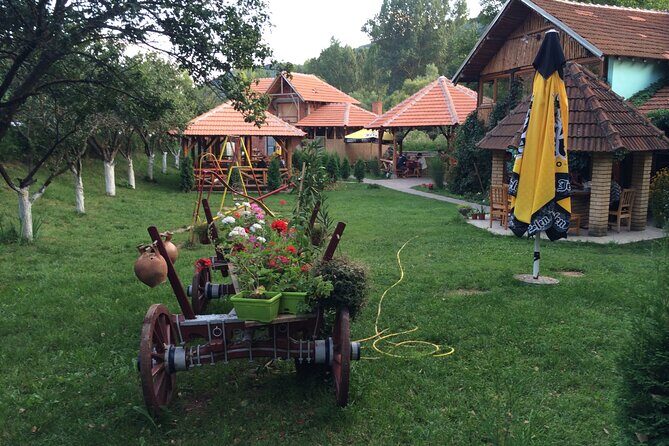
Belgrade can feel like a big-city mix of river views, cafés, and fast-moving days. This experience slows things down in a very human way, by moving you to Ripanj, a suburb where you’re invited into Dragana’s home kitchen. The location matters here: it’s close enough to Belgrade to feel connected, but far enough that it doesn’t feel staged.
This is not a “watch and wait” cooking show. You’ll be hands-on as you prepare two core parts of the meal—your main dish from scratch and the bread (with proja being the featured Serbian cornbread you’ll bake during the class). And then you’ll help set the table, which turns cooking into an actual home meal.
Because it’s private, your group gets the attention you need. That’s a big deal when you’re learning food steps you might not have seen before, like shaping a dish as it’s traditionally done in a Serbian home kitchen.
You can also read our reviews of more tours and experiences in Belgrade.



What You’ll Cook: Main Dish Choices Plus Bread You’ll Bake
You’ll pick one main direction: prebranac, sarma, or pilav. Each option is a classic Serbian comfort dish, and choosing ahead also helps you feel organized when you arrive.
Here’s the practical takeaway: you’re learning a main dish and you’re learning bread. That bread lesson is “famous” for a reason in the context of this home—so even if the main dish is what you’re most excited about, you’ll still get something uniquely Serbian to take with you.
Main dish options (pick one)
- Prebranac (baked beans) with a plate-style appetizer combination
- Sarma (stuffed cabbage) with a lighter salad pairing
- Pilav (rice) with an appetizer that includes a dumpling soup component
I like that these aren’t abstract choices. The menus connect the main to a real table lineup: smoked-meat and dairy-style flavors for one option, salad focus for another, and a rice meal that’s designed to be comforting and filling.
Bread lesson: proja and the bread table
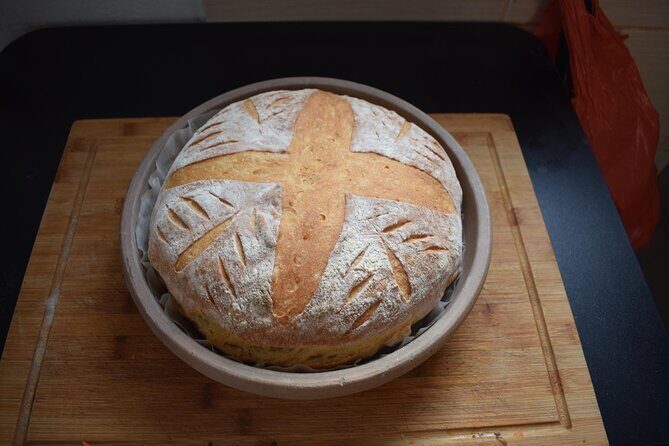
You’ll also learn to bake proja, described as traditional Serbian cornbread. The timing works well: you start your main, then while it’s cooking, you switch to baking so you stay active instead of waiting around.
One small detail to keep in mind: your full meal includes options for starters, and the menu lists proja or hleb (flatbread) as starter choices, along with a seasonal salad. So even with the bread lesson, you’ll still get a broader spread once everything lands on the table.
Your Serbian Table: Starters, Ajvar, Kajmak, and Sitni Kolaci
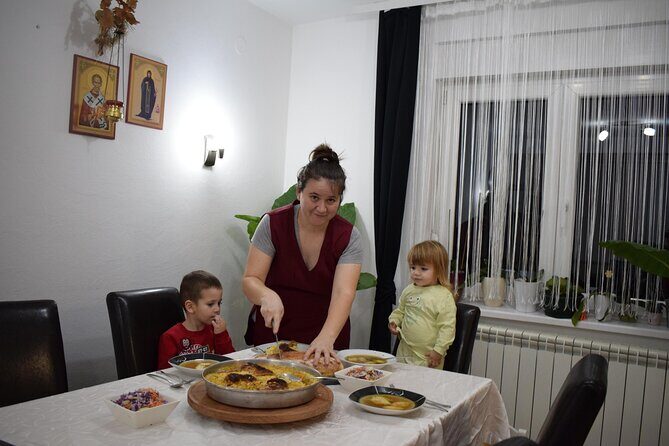
Cooking is only half the story. The value here is how your host builds the meal around the food you made.
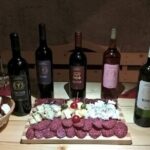
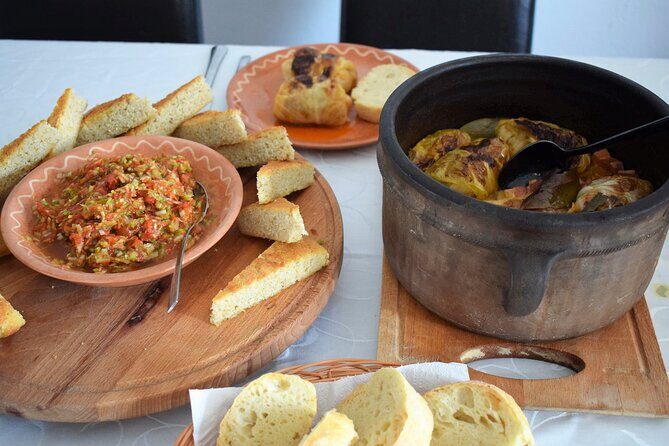
Depending on the main you choose, your appetizer lineup changes too. For example, one menu pairs the baked beans with suvi vrat (smoked meat), kajmak (clotted cream), and ajvar (eggplant and bell pepper dip). That’s a strong flavor trio, and it also gives you a real Serbian “how it’s served” moment—because dips and dairy-style sides are part of the rhythm of eating, not just extras.
Another menu option pairs sarma with trljanica, a salad. That’s a nice contrast: cabbage and hearty filling balanced by something fresher at the table.
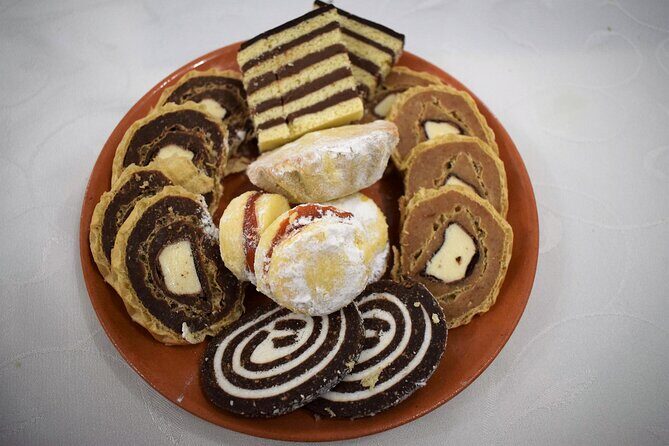
Dessert is sitni kolaci, which are sweet cookies. It’s a simple ending, but it fits the home-meal vibe. You’re not finishing with something fancy. You’re finishing with something you’d actually see in a kitchen where people cook often.


Optional Market Tour: Banjica Green Market With Real Produce Tips
If you add the optional market tour, you’ll visit Dragana’s garden first—this part is only in the summer months. That means you might see vegetables growing at home, not just shrink-wrapped supermarket versions. It adds a simple layer of context: the flavors you’ll later cook aren’t random. They come from what’s in season.
After the garden, you walk to the Banjica green market, described as a spacious open-air farmers’ market. Your host and guide take you to their favorite vendors, and they teach you how to pick the best produce.
This is the part I’d recommend most strongly if you like food details. Even if you don’t plan to recreate every dish later, you’ll come away with practical shopping judgment—what to look for, how produce quality gets assessed by the people selling it, and how locals build meals from what’s fresh.
Then you head back to Dragana’s home for the cooking class and meal. So the market isn’t a separate add-on you forget; it’s feeding into the main event.
The 3-Hour Reality: What the Timing Feels Like
The class runs about 3 hours. In that window, you’re doing several jobs: preparing the main dish, baking the bread, and then finishing with setting the table and eating.
That timing is one reason this works so well as an experience. You’re not stuck in a long schedule where half of the time is waiting. You work, you learn, and you eat while it’s still fresh from the kitchen.
The format is also built for interaction. It’s private for your group only, and it’s offered in English, so you should be able to follow steps and ask questions while you cook.
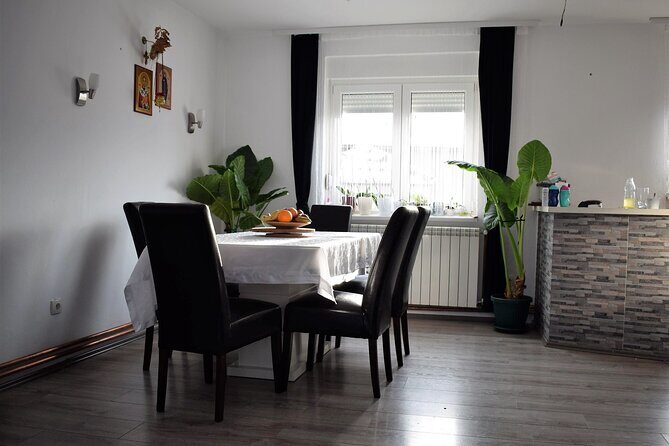
One more note on comfort: the kitchen is small, and that affects the experience. If you’re cooking side-by-side with someone in a compact space, you’ll want room for hands, bowls, and moving around. The practical advice here is to keep your group tight. The cooking is the star, so give yourselves enough space to focus.
Price and Value: Paying for a Real Lesson, Not a Meal Ticket
At $104 per person, this isn’t a cheap add-on. But the value comes from what you actually get.
You’re paying for:
- A private cooking class in Dragana’s home (not a larger classroom)
- Hands-on preparation of two main components: the main dish plus proja bread
- A home-cooked meal with starters, salad, bread, and dessert
- Everything included in the price: fees, taxes, and gratuities
Hotel pickup and drop-off are not included, which means you’ll want to plan your own way to the meeting point in Ripanj (Avalska, Ripanj). Once you’re there, the experience is fully wrapped up for you: you start and end back at the meeting point.
For me, the best way to judge the cost is simple. If you want one cooking class where you can learn steps you’ll actually remember (and you get to eat what you make), the price feels reasonable. If you’re only interested in a quick taste, you’d probably spend less elsewhere.
Who Should Book This Cooking Class in Ripanj
This is ideal if you fall into any of these categories:
- You want to learn a specific Serbian recipe process, not just watch cooking
- You like home-cooked meals and want to understand how they get served as a complete plate
- You’re traveling as a couple or small group and want a quieter, more personal experience
- You enjoy markets, especially when someone shows you how to choose produce
It’s less ideal if you hate compact spaces or you’re bringing a larger group and you’re expecting a roomy kitchen workflow. Also, it’s a good idea to plan for dietary needs ahead of time; Dragana can offer vegetarian and vegan meals on request, and the team asks you to advise allergies and dietary restrictions at booking.
Should You Book This Serbian Cooking Class?
Yes, if you want a real home-cooking lesson with Dragana and you’re excited about making dishes like prebranac, sarma, or pilav plus baking proja. The biggest selling point is the full cycle: cook, set the table, and share the meal you made.
I’d think twice if your main goal is sightseeing efficiency only, since there’s no hotel pickup and you’ll need to handle getting to Ripanj on your own. And if you want lots of elbow room, keep your group small because the kitchen is described as compact.
If you’re the type of traveler who enjoys learning how locals actually cook and eat, this is the kind of experience you’ll talk about long after the meal is gone.
FAQ
Where is the meeting point for the cooking class?
The experience starts at Avalska, Ripanj, Serbia. It also ends back at the same meeting point.
Is hotel pickup or drop-off included?
No. Hotel pickup and drop-off are not included, so you’ll need to arrange your own transport to Ripanj.
How long is the class?
It lasts about 3 hours (approx.).
Is the tour offered in English?
Yes. The experience is offered in English.
What dishes will I learn to cook?
You’ll learn to make a chosen Serbian main dish from scratch—prebranac, sarma, or pilav—and you’ll also bake proja (traditional Serbian cornbread).
What does the optional market tour include?
If you select it, you’ll visit Dragana’s garden in summer months (seasonal) and then go to the Banjica green market with a guide who helps you choose produce before returning home for the cooking and meal.
Can Dragana make vegetarian or vegan meals?
Yes. Vegetarian and vegan meals are available on request.
What about allergies or dietary restrictions?
You should advise any allergies, dietary restrictions, or cooking preferences at booking, so the menu and cooking approach can be adjusted.
What kind of meal is included after cooking?
You’ll help set the table and then share the meal you helped prepare. The menu includes choices for a starter, the chosen main menu option, and sitni kolaci for dessert.
What if the group is small or large?
The class is private, so only your group participates. The kitchen is described as small, so a smaller group—such as two people—tends to feel more comfortable.