REVIEW · BELGRADE
Belgrade City Walk, Gathering and Sightseeing
Book on Viator →Operated by Aleksandar Bastic · Bookable on Viator
Belgrade gets personal fast. This small-group walk (max 6) threads together landmarks, stories, and the kind of street-level context that helps you explore the rest of the city with confidence. I especially liked the easy pace and how the guide ties buildings to Belgrade’s turning points, not just dates on plaques.
One thing to consider: the tour can lean into broader themes like religion and politics as it moves through the city, so if you want only architecture and zero discussion of modern tensions, this may feel a bit too opinion-forward at times. You’ll also be doing a real walking route, and transportation isn’t included, so wear comfortable shoes and plan your own way to the start.
In This Review
- Key things to know before you go
- A smart first move: how this Belgrade walk helps you orient fast
- Where you meet and finish (and why it matters for your day)
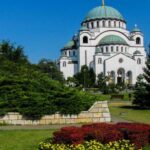
- Stop 1: Crkva Svetog Marka and the Obrenović family story
- Stop 2: The House of the National Assembly—monumental architecture and state history
- Stop 3: The Old Palace (now the City Assembly) and academism in action
- Stop 4: Hotel Moskva’s Russian secession style and a very Belgrade coffee break
- Stop 5: Republic Square—Belgradians’ main meeting point
- Stop 6: Nebojsa Tower and customs you only hear about once you’re there
- Stop 7: Monument of Gratitude to France by Ivan Meštrović
- Stop 8: Kalemegdan Park and the Belgrade Fortress—where the rivers frame the city
- Stop 9: Pobednik (Victor)—how a fountain became a symbol
- Price and ticket reality: what you pay $38.41 for
- Who this tour suits best (and who may want something else)
- Should you book this Belgrade city walk?
- FAQ
- How long is the Belgrade City Walk?
- What’s included in the price?
- Is transportation included?
- What language is the tour offered in?
- Where does the tour start and end?
- What’s the maximum group size?
Key things to know before you go
- Small group size (up to 6) means more back-and-forth and questions that actually get answered
- Hot coffee/tea included gives you a proper break at a landmark stop, not just a photo break
- A packed route for first-timers: church, parliament building, old palace, squares, towers, and the fortress
- Ticket details are mixed: the church ticket is included, while some other stops are free or not included
- English-language guidance keeps the stories clear as you move between sites
- Central ending by the City Library makes it easy to continue on foot after the tour
A smart first move: how this Belgrade walk helps you orient fast
If you’re new to Belgrade, you’ll notice quickly that the city is all about layers. One street can feel Ottoman-era, Habsburg-era, Yugoslav-era, and then suddenly modern—sometimes within a few blocks. This tour is built for that feeling. In 2 to 3 hours, you get a guided map in your head, so later you can recognize what you’re seeing instead of just snapping pictures.
I liked that the guide doesn’t treat the city like a museum. You’re walking through active public spaces—church surroundings, official buildings, main squares, and the fortress area—so the stories land in a real setting. The group is small, too, and that matters. When there are only a handful of people, you get more focused attention and less time standing around waiting.
You also get a complimentary hot beverage during the tour, and it’s not a gimmick. In Belgrade, coffee culture is a ritual, and the timing makes it feel like a natural pause in the walk instead of an afterthought.
You can also read our reviews of more walking tours in Belgrade
Where you meet and finish (and why it matters for your day)
The tour starts at Kosovska 47, Beograd 11000 at 11:00 am. It ends in front of the Belgrade City Library at Kneza Mihaila 54a, Beograd 11000. That end point is handy because it drops you near the city’s central pedestrian-friendly zone, where you can keep wandering without needing a plan.
The tour runs about 2 to 3 hours, and it’s designed so most people can participate. Still, this is a walking city walk, and some parts (especially around the fortress area) can involve uneven steps and longer stretches than you expect. If you’re the type who hates sore feet by mid-afternoon, bring supportive shoes and go slow early on.
Also, you’ll receive a mobile ticket, and the tour operates in English. It’s near public transportation, so if your schedule is tight, you can usually work it into a broader day.
Stop 1: Crkva Svetog Marka and the Obrenović family story
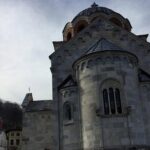
The walk begins with Crkva Svetog Marka, where you’ll hear some heavy but essential names. The church burial ground includes Milan Obrenović (described as the eldest son of Miloš Obrenović), and also King Alexander I Obrenović along with his wife, Queen Draga. That’s a lot of political weight for one stop, but it sets the tone: Belgrade’s identity is tied to dynasties, power shifts, and official decisions.
You also get a specific historical moment tied to the church site itself. On the ground where the current church stands, in 1830, the sultan’s edict was read—announcing Serbian autonomy within the Ottoman Empire. It’s the kind of detail that makes later sights make more sense, because you start to understand why Belgrade developed the way it did.
Good to know: this stop runs about 20 minutes, and the admission ticket is included. If you like your early tour stops to have meaning right away, this one does.
Stop 2: The House of the National Assembly—monumental architecture and state history
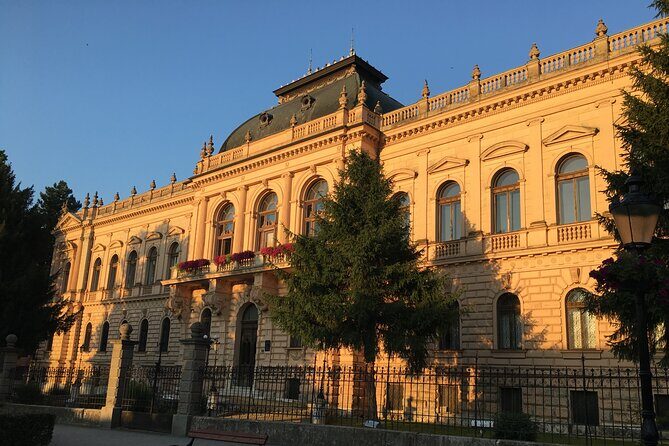
Next up is the House of the National Assembly of the Republic of Serbia, a monumental building tied to the Kingdom of Yugoslavia period. The project stretched from 1907 to 1936, and the story isn’t smooth: there were interruptions and changes to the plans as politics and finances shifted.
Two architects are directly connected to this building’s path. The Ministry of Construction entrusted Konstantin A. Jovanović with the implementation in 1892, but delays pushed the work forward later under Jovan Ilkić. When you understand that, the building stops feeling like a static monument. It becomes a physical record of a country trying to build stable institutions while the ground kept moving.
This stop is about 15 minutes, and the admission ticket is not included. So expect to see it as part of the guided experience rather than assuming everything is covered inside. If you’re the kind of person who wants every interior detail, you may want to plan for a little extra ticketing later.
Stop 3: The Old Palace (now the City Assembly) and academism in action
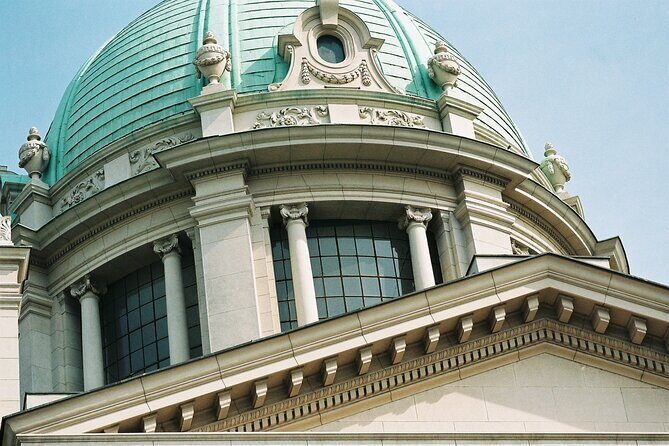
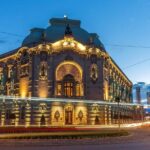
Then you move to the Old Palace, the royal palace of the Obrenović dynasty, which today houses the City Assembly of Belgrade. Built between 1882 and 1884 to a design by Aleksandar Bugarski, the exterior is described as one of Serbia’s notable achievements of 19th-century academism.
Even without going deep into art history terms, you can feel why this stop is important. It gives you a sense of how official power was expressed—symmetry, formal presence, and a style meant to signal legitimacy. When you later look at other civic buildings and squares, you’ll start to spot patterns in how the city visualized authority.
This is another 15-minute stop, and it’s free. If you’re budgeting on a tight trip, it’s also one of the “easy wins” on the route.
You can also read our reviews of more city tours in Belgrade


Stop 4: Hotel Moskva’s Russian secession style and a very Belgrade coffee break

After the palace, you’ll reach Hotel Moskva, a historic four-star landmark near the center. It was established in 1908 at Terazije Square and is noted for a Russian secession style. It’s protected as a cultural monument, and it has a famous café, restaurant, and spa.
One of the most fun, human details here is the celebrity list. The hotel has hosted big names like Albert Einstein and Robert De Niro—not the sort of trivia that changes your life, but it does add a wink of context. Belgrade wasn’t always isolated; it was—and still is—connected enough to attract international attention.
Admission at this stop is not included, but the tour includes a complimentary hot beverage, and reviews highlight the coffee moment here as a peak experience. That makes sense. The setting is classic, and the timing turns it into a real pause, not just a photo stop.
This stop is about 15 minutes. If you’re sensitive to loud café energy, be ready for a livelier atmosphere near the center.
Stop 5: Republic Square—Belgradians’ main meeting point
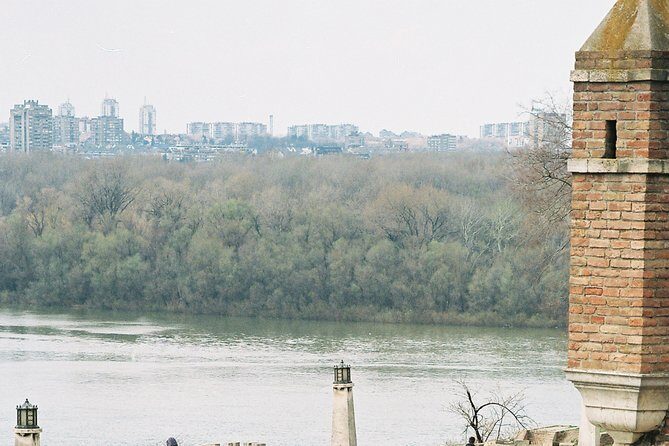
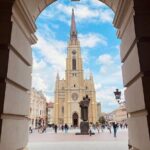
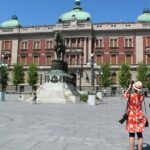
Next comes Republic Square (Trg Republike), the city’s main meeting point in everyday life. It’s only 15 minutes on the tour, but the idea behind it is big: the square sits on the place where the gates leading into the city used to be.
That kind of location detail matters. It means you’re standing where arrivals and control would have felt immediate. Today it’s a public gathering space; back then it was a boundary and checkpoint. It’s a quick lesson in how urban space evolves without changing its core role as a “front door.”
Admission isn’t required here. You’ll likely get guidance on what the square represents and how it connects to other parts of the downtown.
Stop 6: Nebojsa Tower and customs you only hear about once you’re there
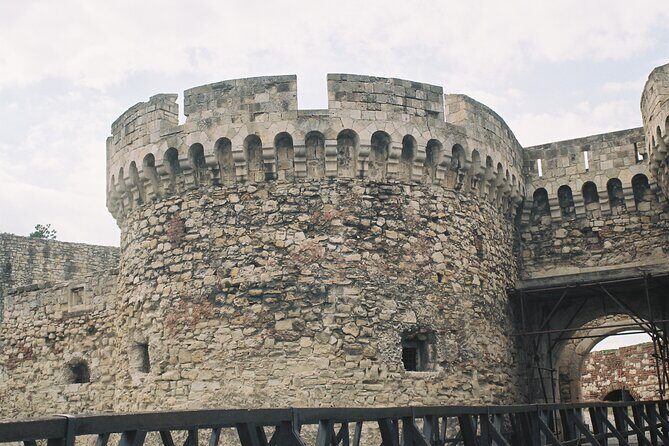
At Nebojsa Tower, the tour shifts into traditions. You’ll learn about special customs and celebrations that are only celebrated in Serbia. The stop is about 25 minutes, and admission is free.
The value here is less about checking a box and more about changing your lens. When you’re in Belgrade as a visitor, it’s easy to focus only on what’s visible—buildings, statues, fort walls. This part reminds you that what’s visible is shaped by beliefs and celebrations, too.
If you like cultural stories that you can later connect to what you see in museums or in daily life, this is a good mid-tour change of pace. If you want pure architecture and fewer cultural explanations, you might find this section more discussion-heavy than you expected.
Stop 7: Monument of Gratitude to France by Ivan Meštrović
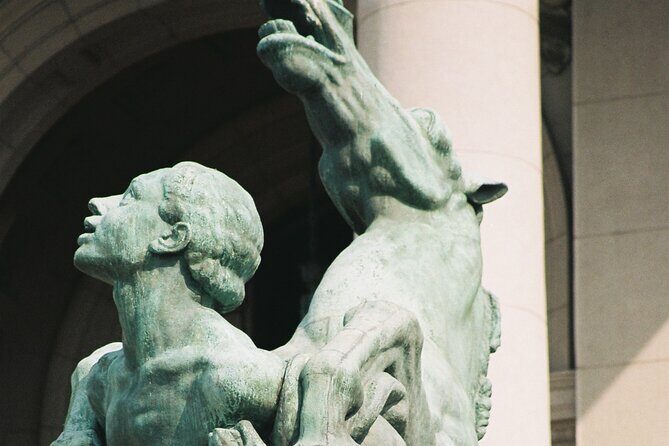
Then you’ll walk to the Monument of Gratitude to France, created by sculptor Ivan Meštrović. It was erected at the end of the main alley of Kalemegdan Park in 1930.
This is one of those stops that pays off if you slow down and look. The monument sits in a specific park setting, not just on a random corner, and that makes it feel like part of a planned ceremonial walk through the fortress area. It also helps you understand how international relationships were commemorated in stone—public memory made physical.
Admission isn’t included here, but it’s a short 10-minute stop, so it works well as a bridge to the bigger fortress views.
Stop 8: Kalemegdan Park and the Belgrade Fortress—where the rivers frame the city
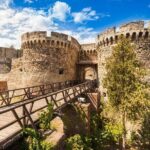
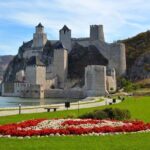
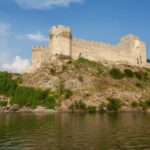
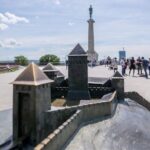
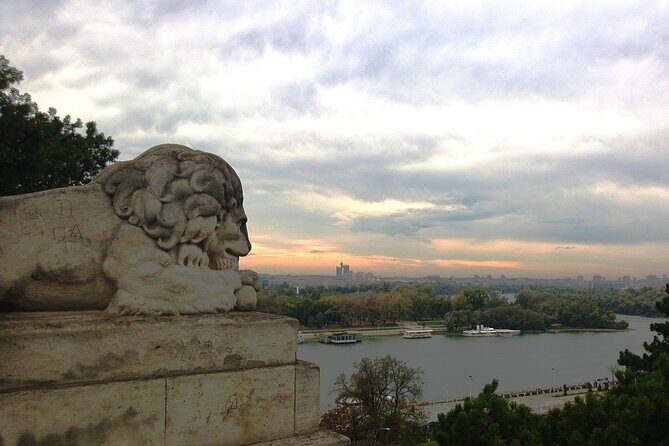
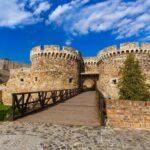
Now you reach the centerpiece: Kalemegdan Park and the Belgrade Fortress. The fortress consists of the old citadel and the park area right at the confluence of the Sava and Danube rivers. This sits in the modern city in the Stari Grad municipality and forms the historical core.
A good guide will do more than point out walls. They’ll explain how rivers controlled movement, defense, and trade—why this spot mattered long before it became a scenic urban park. If you’re the type who likes to understand why a place is located where it is, this part will click.
This stop is about 45 minutes, and admission is free. That length is important: it gives you time to absorb views and not just march to the next photo point. If you’re tired halfway through, it’s still long enough to catch your breath and re-energize.
Stop 9: Pobednik (Victor)—how a fountain became a symbol
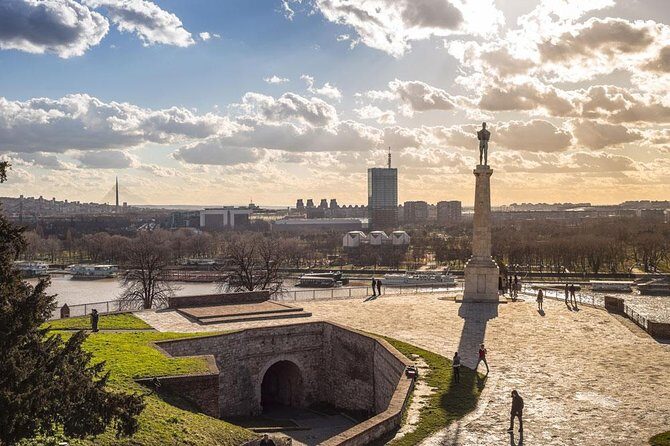
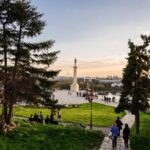
The final stop is Pobednik, known as the Victor monument. It’s one of the most recognizable symbols of Belgrade. The sculpture was created before the First World War, though its production took a surprisingly long time.
The origin story is the most compelling part. The monument was originally conceived as a fountain meant for the center of Belgrade at Terazije. By the beginning of the First World War, the central part was cast in the form of a naked male figure holding a sword in the right hand (symbol of war) and a falcon in the left hand (symbol of peace). That contrast makes it more than a victory pose; it’s a statement about what war was believed to lead to.
This stop is about 15 minutes, and admission isn’t included. It’s a good ending because you finish with a symbol you’ll likely see referenced around town later.
Price and ticket reality: what you pay $38.41 for
The price is $38.41 per person, and the tour lasts 2 to 3 hours. For central Belgrade, that’s a fair deal when you factor in a few things: a guided route that hits multiple landmark categories, a small group (max 6), and a hot drink included.
Ticket coverage is mixed, and that’s worth understanding so there are no surprises in your planning:
- Crkva Svetog Marka: admission ticket is included
- House of the National Assembly: admission ticket is not included
- Old Palace: admission is free
- Hotel Moskva: admission is not included
- Several viewpoints/areas like Republic Square, Nebojsa Tower, Monument of Gratitude to France, Kalemegdan Fortress, and Pobednik are noted as free or not requiring admission as part of the tour flow
So you’re paying mainly for interpretation and pacing, not for a “fully ticketed” museum pass. If you enjoy history talk and want your first visit to feel connected, the value is there. If you’re trying to squeeze every paid interior moment out of the price, you’ll probably need to accept that some stops are more about seeing exteriors and hearing stories than doing ticketed entry everywhere.
Who this tour suits best (and who may want something else)
This tour fits you well if you:
- want orientation in central Belgrade fast
- like your history told through places you can actually see and walk around
- appreciate a guide who can talk about culture, religion, and state life without turning it into a lecture
- prefer a small group rather than being one face in a big crowd
It may be less ideal if you:
- only want architecture with minimal discussion
- hate routes where the “meaning” parts take more time than the “view” parts
- expect transportation to be part of the package (it isn’t)
The vibe is also shaped by the guide’s style. One common theme in feedback is that the guide is personable and puts energy into explanations, with coffee at Hotel Moskva often remembered as a highlight. That matters, because a city walk lives or dies on how engaging the guide is when the buildings start to blur together.
Should you book this Belgrade city walk?
If you’re trying to make your first Belgrade days simpler, I’d book it. For $38.41, you get a tight route that reaches the church-and-palace axis of the city, then shifts into public squares and ends with the fortress area and Pobednik. The small group size and included hot beverage make the experience feel human, not rushed.
Book it especially if you’re curious about how Belgrade became Belgrade—dynasties, institutions, and everyday spaces. Just go in with the right mindset: this is a story-walk, not a pure sightseeing checklist. And since there’s some emphasis on broader themes, treat it as a starting point for your own deeper questions rather than a single “final answer.”
FAQ
How long is the Belgrade City Walk?
The tour lasts about 2 to 3 hours.
What’s included in the price?
Coffee and/or tea is included. Crkva Svetog Marka has an admission ticket included, while some other stops are free or not included.
Is transportation included?
No. Transportation is not included, so you’ll need to handle getting to the start and continuing afterward on your own.
What language is the tour offered in?
The tour is offered in English.
Where does the tour start and end?
It starts at Kosovska 47, Beograd 11000, Serbia, and ends at Kneza Mihaila 54a, Belgrade, in front of the Belgrade City Library.
What’s the maximum group size?
The maximum group size is 6 travelers.