REVIEW · BELGRADE
3 Hour Private Walking Tour in Novi Sad City
Book on Viator →Operated by Smart Walks NS · Bookable on Viator
Novi Sad gets personal on this walk. I love how the guide connects architecture to real events, and I like the photo-friendly pacing that still feels meaningful. One thing to consider: a couple stops touch WWII atrocities, so if you prefer light sightseeing only, this may feel intense.
This is a private walking tour built for people who want to understand why Novi Sad looks the way it does, not just where things are. You’ll cover major landmarks on foot, with frequent easy pauses and one included coffee/tea stop in the middle of the route. It also doesn’t include transportation, which keeps the price focused on guiding rather than getting you between cities.
The tour is about 2 hours 30 minutes (listed as approx.) and is designed for moderate walking. It runs in good weather, and some interior visits are optional, so you’ll get the most out of it if you’re comfortable walking and staying flexible.
In This Review
- Key highlights you’ll notice right away
- Why this private Novi Sad walk beats a self-guided stroll
- Starting at Trg slobode: Name of Mary Church and the City Hall story
- Zmaj Jovina Street: the poet, the courtyards, and Bauhaus touches
- Svetozara Miletica Street: WWII memory and a look at money-era architecture
- Grčkoškolska to Matica Srpska: where culture becomes the main character
- Saborna crkva and Vladicanski Dvor: Orthodox architecture with an empire context
- Danube time: fish market energy, a coffee break, and museum streets
- Petrovaradin Fortress and the Monument to Fascism: the Danube as a storyteller
- City Assembly exterior and Matica Srpska’s gallery square
- Novi Sad Synagogue and the National Theatre finale
- Price, timing, and value for a group of up to 4
- Who should book this tour (and who might not love it)
- Should you book this 3-hour private Novi Sad walking tour?
- FAQ
- How long is the Novi Sad private walking tour?
- How much does the tour cost?
- Where does the tour start and end?
- Is transportation included?
- What’s included during the walk?
- Are there ticket costs or entry fees?
- What if the weather is bad?
Key highlights you’ll notice right away
- A guide-led story that ties Catholic, Orthodox, and Jewish Novi Sad together
- Matica Srpska stops that explain why culture here matters
- Danube-focused moments, including Petrovaradin Fortress on the far bank
- WWII remembrance built into the walk, not handled as a side note
- Coffee/tea included, with a short break on Dunavska Street
Why this private Novi Sad walk beats a self-guided stroll
Sure, you can wander Novi Sad on your own and shoot plenty of photos. But this tour is about understanding the city’s “why.” The walking is scenic, yet the stops keep circling back to how politics, religion, and different communities shaped the streets you’re standing on.
What I like most is the way the guide keeps switching angles without making it feel like a lecture. One minute you’re looking at church architecture, and the next you’re learning how Austro-Hungarian influence, Serbian identity, and older empires show up in details you might otherwise miss. It also helps that the group is small—your questions don’t get lost in the noise.
The route is also practical. You start at Trg slobode and finish back there, so you’re not planning a complicated end to your day. And since transportation isn’t included, the price is essentially paying for the walking time and the local guidance.
You can also read our reviews of more walking tours in Belgrade
Starting at Trg slobode: Name of Mary Church and the City Hall story
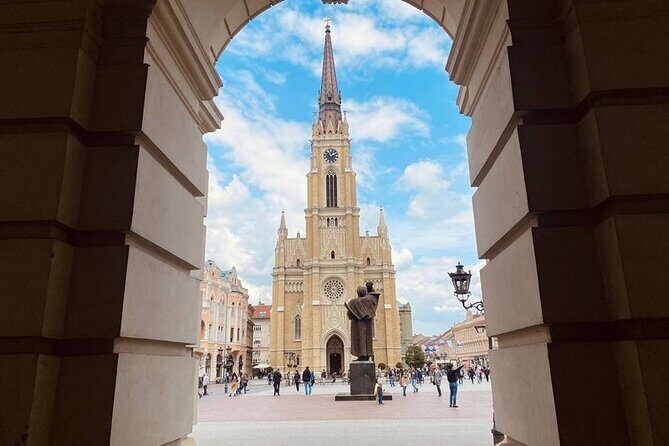
Your tour begins at Trg slobode, the main square and meeting point, where you orient fast. The first stop is Name of Mary Church, the city’s main Catholic church. You’ll see the exterior, and you can optionally go inside if it’s available.
From there you head to Градска Управа (City Hall) for an exterior stop that quickly turns into a lesson on local leadership. You’ll hear about the first Serbian mayor of the city and a monument created by a well-known Croatian sculptor. This is a good early stop because it sets the theme: Novi Sad isn’t one single cultural story—it’s layered.
If you love urban details, this start is a win. You’re learning while you’re already surrounded by the classic “postcard Novi Sad” views, so nothing feels like a detour.
Zmaj Jovina Street: the poet, the courtyards, and Bauhaus touches
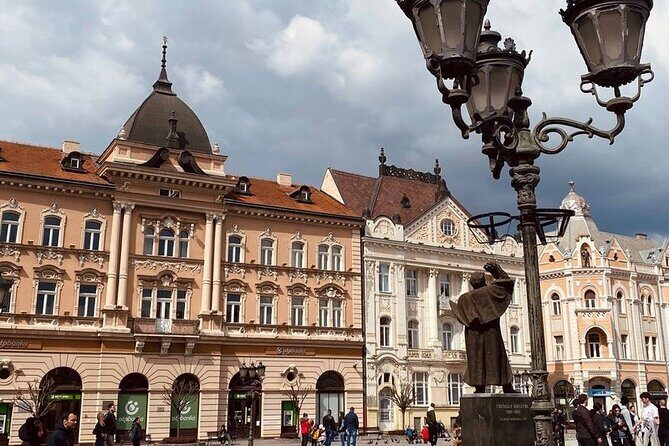
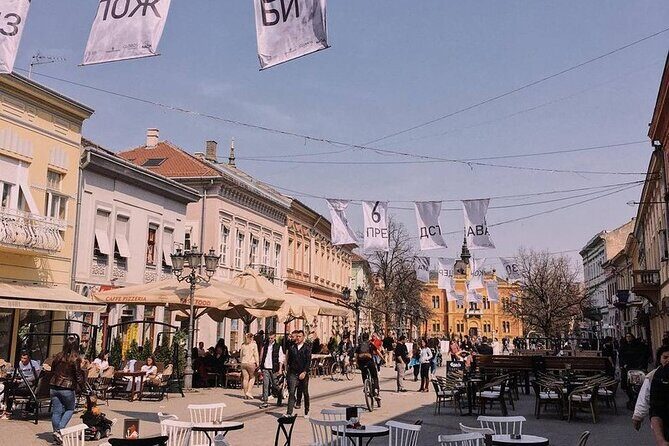
Next you walk along Zmaj Jovina Street, Novi Sad’s main pedestrian corridor and a key culture line. It’s named for one of Serbia’s most popular poets, so expect the guide to connect the street name to identity—not just the fact that it exists.
You’ll also get a proper chance to look around. The route includes lovely courtyards and a notable Bauhaus-style building, the kind of architecture that can be easy to miss when you’re just passing by. You’ll pause at the poet’s monument, which gives you a simple landmark for photos and a moment to reset.
This section is where the tour feels especially “walkable.” The pace makes it easy to enjoy the street life and still absorb the reasons behind the design.
Svetozara Miletica Street: WWII memory and a look at money-era architecture
As you continue along Svetozara Miletica Street, the mood shifts in a necessary way. You’ll stop at a mansion tied to mass executions during WWII. It’s the sort of stop that asks you to pay attention, not just look.
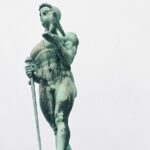
After that, you move into the city’s more expensive historical area, and the contrasts help the story land. You’ll spot architectural masterpieces, including a building associated with one of the oldest banks in Serbia, with a Mercury monument on top. It’s a strong reminder that power, wealth, and public memory can all occupy the same city blocks.
If you’d rather avoid heavy topics, this is the part you should mentally prepare for. The tour doesn’t erase the difficult history, but it also doesn’t drown you in it—then it brings you right back to what shaped the city’s streets afterward.
Grčkoškolska to Matica Srpska: where culture becomes the main character
One of the best “wait, wow” areas is around Grčkoškolska and the streets leading into Matica Srpska. Here you’re walking through parts of the city where the richest people of Novi Sad used to live, so the buildings carry that old civic pride.
A highlight is the most famous balcony of a merchant who built the building where Matica Srpska now exists. Even if you’re not an architecture nerd, that kind of detail makes the city feel more human—someone built it, lived around it, and the place kept evolving.
Then you reach Matica Srpska Library, a cultural center that’s central to Serbia’s literary and historical life. The street itself has an interesting story here too: Einstein and his Serbian wife reportedly spent several months in the area. That’s the kind of fact that turns a normal pause into something you’ll remember later.
This is also where I’d tell you to slow down. The Matica Srpska area is a natural place to look up at façades and read the street with fresh eyes, because the buildings aren’t random—they’re part of the same civic identity story.
You can also read our reviews of more city tours in Belgrade



Saborna crkva and Vladicanski Dvor: Orthodox architecture with an empire context
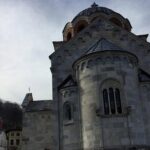
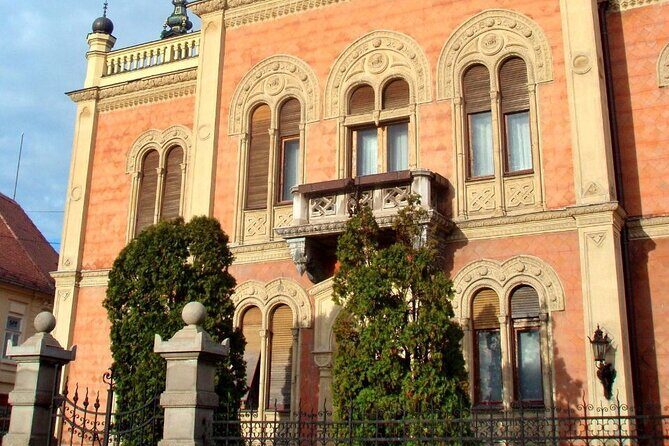
Next come the big religious landmarks, and the guide uses them to explain why Novi Sad’s architecture looks the way it does. At Saborna crkva (the Orthodox Church named after St. George), you’ll learn about the influence of the Austro-Hungarian Empire in this region and the differences between Orthodox and Catholic traditions. You can also optionally view the church interior if it’s possible during your visit.
After that, you head to Vladicanski Dvor (Bishops Palace), again exterior-focused. This stop is all about traditional medieval Serbian architecture, with links to the southern parts of the country. Seeing these forms in person is one thing; understanding why they’re there is another, and the tour gives you both.
This section works well if you like comparison. You’re seeing religion in stone, then getting the context for why styles mixed and why certain features became markers of identity.
Danube time: fish market energy, a coffee break, and museum streets
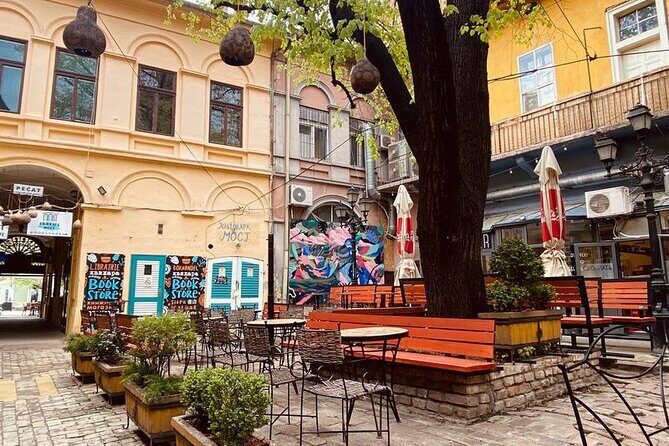
By the time you reach Рибља пијаца (Fish Market), the tour starts feeling more local. You’ll stop at a monument to King Peter I of Serbia, then move toward the fish market itself, which is a main attraction for locals. The guide also points out how it comes alive especially when there are events at night.
Then it’s a practical break: Dunavska Street includes a short pause in the middle of the day. The tour mentions a shortage of non-smoking places in Serbia, so it’s good that this stop targets non-smoking coffee options. Coffee or lemonade is included, and it gives you time to reset before the museum stretch.
After your break, you walk the street of museums. You’ll spend time near the Museum of Novi Sad, Museum of Vojvodina (with archaeological exhibits), and the Museum of Contemporary Art with temporary exhibitions. You’ll also get a look at Danube park, founded toward the end of the 19th century. Even if you don’t go inside everything, the guide helps you understand what these institutions represent.
If you’re the kind of traveler who likes a plan but hates rigid pacing, this museum section is a good match. It keeps moving, but it still gives you enough time to absorb.
Petrovaradin Fortress and the Monument to Fascism: the Danube as a storyteller
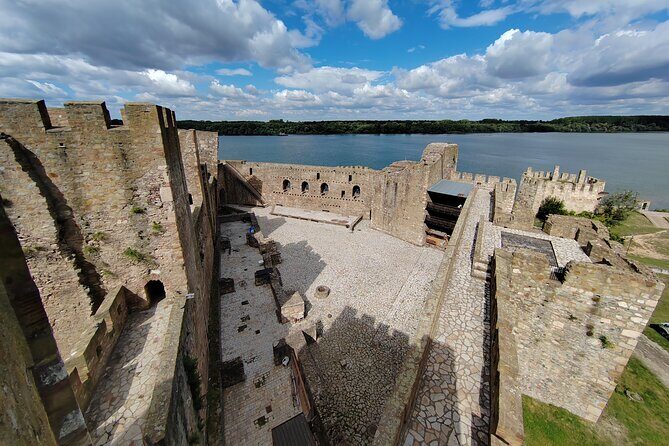
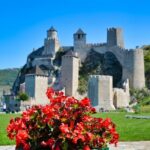
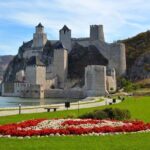
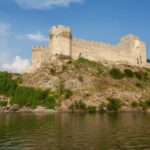
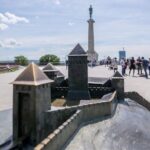
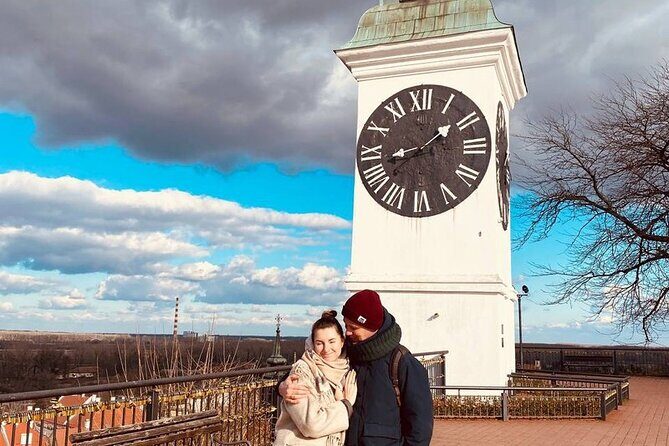
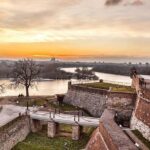
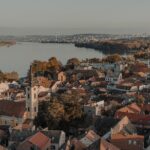
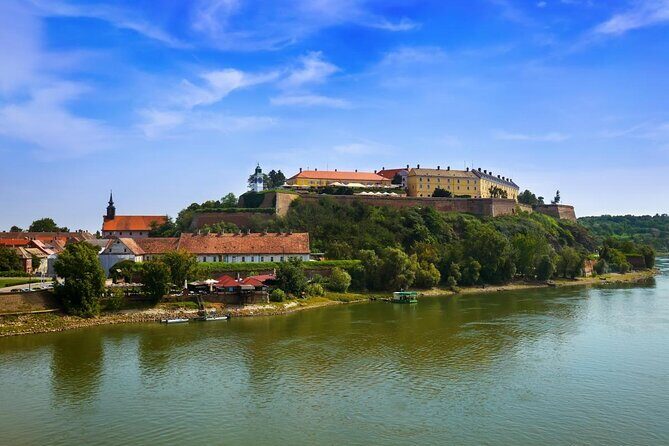
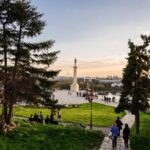
One of the most memorable parts of Novi Sad is the view across the Danube. From the Petrovaradin Fortress area, you’ll learn about the fortress’s role in Novi Sad history, and the guide helps you understand what you’re looking at across the river. Even without climbing everything, the “look and learn” approach is satisfying.
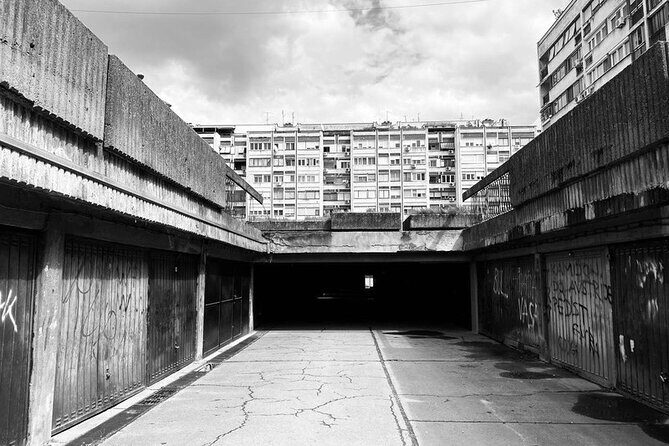
Near the Danube embankment, you’ll stop at the Monument to the Victims of Fascism in Novi Sad, tied to the Novi Sad massacre of 1942. The tour connects these events to WWII and to Serbia’s role in the formation of socialist Yugoslavia. It’s not the kind of stop you shake off quickly, and that’s exactly why it belongs on a walking route focused on understanding the city.
If you’re traveling with someone who hates emotional stops, agree on pace in advance. You can spend a moment, then keep walking—but don’t try to rush the meaning.
City Assembly exterior and Matica Srpska’s gallery square
The tour continues with a strong civic look at the City Assembly (exterior). It’s described as impressive, especially when you consider the decade it was built. This is one of those moments where the guide ties architecture to how the city functions and why this northern region mattered to Serbia as a whole.
Then you head to the Gallery of Matica Srpska, also exterior-focused. This gallery is presented as a major space for Serbian art, and the square includes two more galleries: modern art and contemporary art. Even if you don’t step inside every venue, it’s useful to know that this isn’t just one museum—it’s a whole art block built around the Matica Srpska identity.
This area is also a good place to ask questions. The tour’s earlier religious and WWII stops create context, and the art stops help you see what Novi Sad chose to build afterward.
Novi Sad Synagogue and the National Theatre finale
Finish with two landmarks that show Novi Sad’s identity beyond churches and monuments. At Novi Sad Synagogue (exterior), you’ll see why it’s considered a must-see highlight. Even if it’s not active anymore and is turned into a concert hall, the building still tells the story of the Jewish community’s importance in the city.
The synagogue is credited to Lipot Baumhorn, one of the better-known architects connected with Novi Sad. That name gives you a real anchor: you can recognize this isn’t just local folk architecture—it’s tied to broader architectural currents.
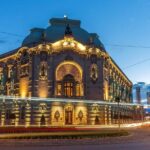
The final stop is the Serbian National Theatre (exterior). Here the guide shifts into conversation mode—talking about the role theatre plays in national identity and using that as a springboard to answer your questions and point you toward good next steps.
It’s a satisfying close. You end on culture you can still feel in the present, not just the past.
Price, timing, and value for a group of up to 4
This tour costs $57.82 per group, for up to 4 people, so the value depends on how you group up. If you’re traveling solo, it may feel like a premium for a walking route. If you’re with a couple friends or a family unit, it becomes much more reasonable because you’re paying as a single unit while still getting a private guide.
The duration is listed as about 2 hours 30 minutes, and the stops are frequent but not drawn out. That matters because walking tours can get either too rushed or too slow. Here, the format sounds designed to keep momentum while still giving you time to look, ask, and take photos.
One more value point: the tour doesn’t include transportation. That’s especially relevant if you’re based in Serbia and reaching Novi Sad from Belgrade by bus or train. You’ll do the getting-there on your own, but you’re not paying the guide to transport you around—so your money stays on interpretation and local storytelling.
Who should book this tour (and who might not love it)
Book this if you want a walk that reads like a story. It’s ideal for people who care about architecture, religious differences, and how a city’s identity changes over time. It’s also a solid pick if you like photos but don’t want to treat landmarks like background scenery.
It may be less ideal if you prefer light, purely scenic walking. WWII-related stops—like the mass execution site and the massacre monument—add emotional weight. Also, it’s moderate walking, so if your mobility is limited, you’ll need to consider whether you can comfortably handle about 2.5 hours on foot.
Should you book this 3-hour private Novi Sad walking tour?
I’d book it if you want Novi Sad to feel like more than a pretty place. The best reason is the way the guide links streets to meaning: Catholic and Orthodox architecture, Jewish heritage, culture institutions like Matica Srpska, and Danube landmarks like Petrovaradin Fortress.
You’ll likely get extra value if you like asking questions and if you’re curious about why Novi Sad differs from Belgrade. The pace and private format make it easier to tailor the conversation to what interests you most, from art to WWII remembrance.
If you’re the type who can handle serious moments and wants a guided “see and understand” day, this is a strong match.
FAQ
How long is the Novi Sad private walking tour?
The tour lasts about 2 hours 30 minutes.
How much does the tour cost?
It’s priced at $57.82 per group for up to 4 people.
Where does the tour start and end?
It starts at Trg slobode, Novi Sad, Serbia and ends back at the same meeting point.
Is transportation included?
No. The tour does not include private transportation.
What’s included during the walk?
Coffee and/or tea is included, with a planned break during the walk.
Are there ticket costs or entry fees?
The stops list admission tickets as free, and some interior views are optional where noted.
What if the weather is bad?
The experience requires good weather. If it’s canceled due to poor weather, you’ll be offered a different date or a full refund.