REVIEW · BELGRADE
Football tour: Red Star and Partizan Ultras History
Book on Viator →Operated by Serbian Adventure Factory · Bookable on Viator
Rivalry makes Belgrade make sense fast. This tour links ultras culture to real neighborhoods, then finishes with stadium access where the trophies and banners are the main characters. I really like the way you move from street graffiti in Dorcol and Senjak straight into the big-game rooms of Red Star, then over to Partizan for an old-school pitch experience. One thing to consider: this is a walking-heavy, outdoors-focused outing, and it does require decent weather.
The guides help a lot here. People like Andrija and Tihomir are known for turning football facts into stories you can actually picture, including how fandom shaped life across Serbia. If you’re into European football history, this gives you context you won’t get from a standard sightseeing loop. If you’re hoping for a quiet museum day only, you might find the fandom vibe a bit intense.
In This Review
- Key points before you go
- Starting at Studentski trg: the fastest way to get Belgrade’s football geography
- Dorcol: Partizan fan murals, bar streets, and a neighborhood you can actually hang in
- Senjak: the oldest Red Star graffiti, protected by fans 24/7
- Red Star Marakana Stadium: museum trophies, flags, documents, and the 1991 Champions League trophy
- Partizan Stadium: walking the pitch in an old-style “ghetto” stadium
- The real value: how ultras stories reshape Belgrade neighborhoods
- Price and value: what you really get for $84.21
- When to book this tour (and who it’s best for)
- Should you book it? My decision guide
- FAQ
- How long is the Football tour in Belgrade?
- What time does the tour start, and where do you meet?
- Is the tour offered in English?
- Do you visit both stadiums?
- What do you see at the Red Star Marakana stop?
- Is admission included for the stadium or neighborhood stops?
- Is the tour suitable for most travelers, and are service animals allowed?
- What happens if the weather is bad or I need to cancel?
Key points before you go
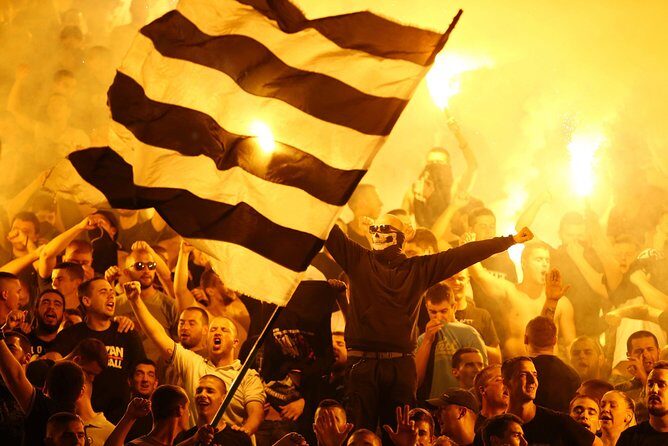
- Dorcol then Senjak: you learn the rivalry by walking the fan districts, not just reading plaques
- Stadium museum time at Red Star Marakana, including standout trophies
- Partizan Stadium pitch walking gives you a feel for the atmosphere that photos can’t
- A beer inside a stadium is part of the experience style, so plan on a relaxed pace at the end
- Small-group feel despite scale: capped at 99, and it’s guided throughout
Starting at Studentski trg: the fastest way to get Belgrade’s football geography
You meet at Studentski trg 16, by Student Park, with the tour starting at 10:00 am. The meeting point matters because it puts you close to the action without forcing you to start your day deep in maze-like side streets.
The best early value is the setup: you’re not just being told that Red Star and Partizan are rivals. You’re shown how their fan cultures connect to specific neighborhoods, walls, and street corners. That’s a big difference from doing stadiums as isolated stops. Here, the city’s layout becomes the lesson.
Another practical point: this runs about 3 to 4 hours, so you get enough time to make it meaningful, but you’re not committing an entire day. It also helps if you have other plans later (or you simply want your football fix without needing a second suitcase just for scarves).
You can also read our reviews of more historical tours in Belgrade

Dorcol: Partizan fan murals, bar streets, and a neighborhood you can actually hang in
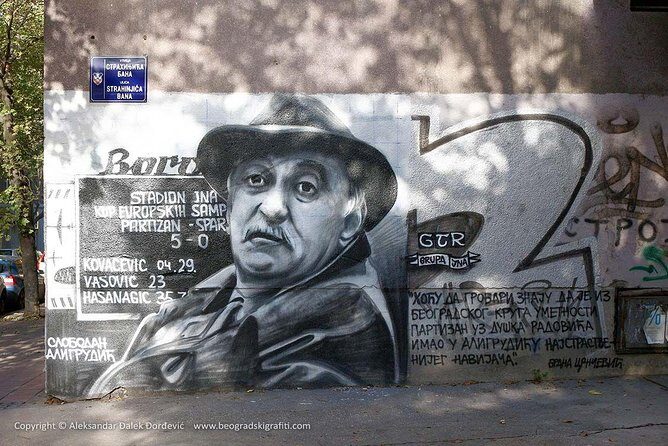
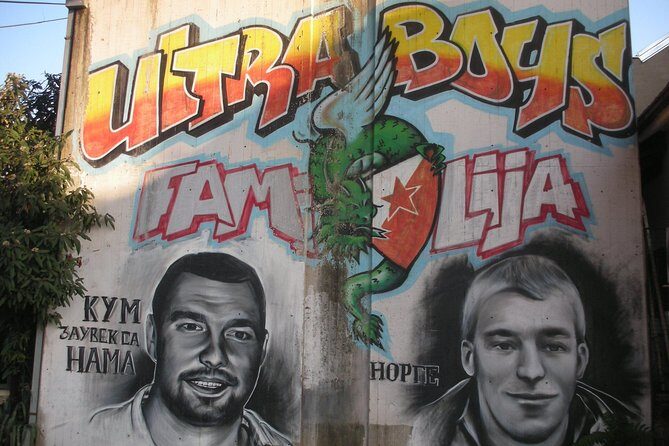
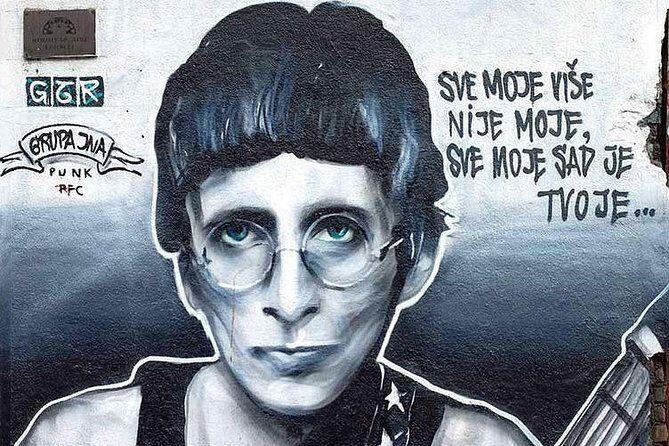
The tour kicks off in Dorcol, a Partizan fan district where graffiti is a loud form of memory. You’re walking through an area known for famous supporter artwork tied to one of the fiercest fan groups, so the visuals are the introduction.
But Dorcol isn’t only hardcore football paint. It’s also a touristic part of town with bars and pubs and a neighborhood feel that makes the morning walk more enjoyable. In practice, that means you can pay attention to the messages on the walls without feeling like you’ve stepped into a theme park. The atmosphere stays tied to everyday streets.
What I like about this stop is the balance. You get the passion and the symbolism, while still getting a sense of how people actually live, drink, and socialize nearby. For you, it’s also a useful way to train your eyes: once you see the style of the murals and where they sit in the streetscape, the later Red Star stop lands much harder.
Time check: about 1 hour.
Senjak: the oldest Red Star graffiti, protected by fans 24/7
Next is Senjak, the Red Star fans district. This stop is shorter, around 20 minutes, but it’s designed as a punch. You’re guided to the area with the oldest graffiti in the city dating from the 1990s, and the key detail is that fans guard it 24/7.
That “guarded” part changes the vibe. You’re not just looking at old street art. You’re seeing something treated like a living landmark. It’s the kind of detail that helps you understand ultras culture as behavior and commitment, not only decoration.
A nice part of this stop is that it resets the rivalry context. After Dorcol’s Partizan visuals, Senjak gives you a counterpoint: different traditions, different messaging, and a different sense of where the movement places its pride. It’s also a good moment to slow down and take photos if you like, because this is the kind of spot you’ll remember even if the rest of the day blurs a bit.
Since it’s a quick stop, wear comfortable shoes and keep your phone battery charged. There’s no long sit-down break built into this part.
Red Star Marakana Stadium: museum trophies, flags, documents, and the 1991 Champions League trophy
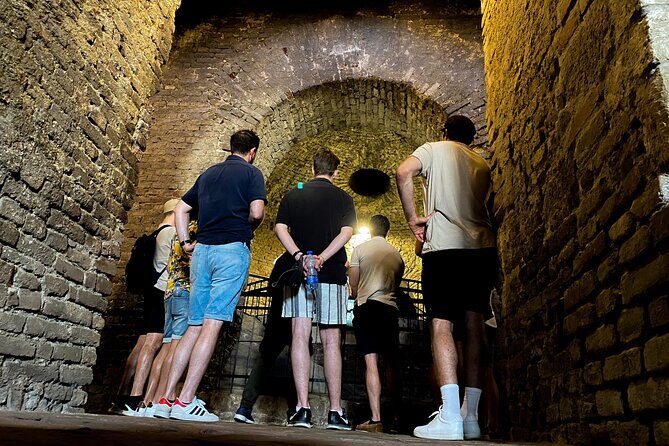
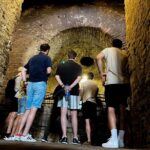
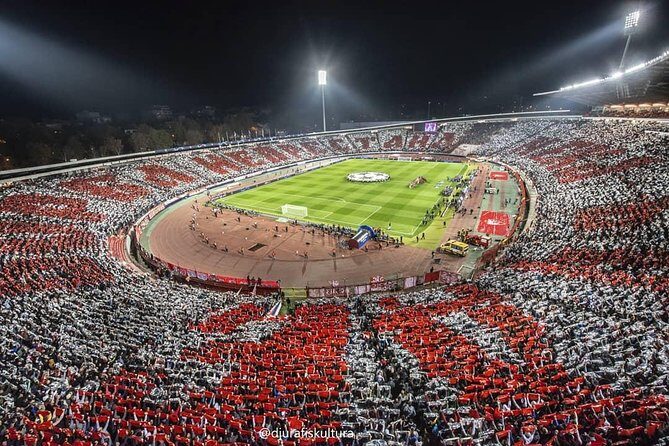
Then comes the major payoff: Red Star Belgrade Stadium, known as Marakana. You’ll spend about 2 hours here, and the museum is the star of the show.
What makes this stop valuable is that the museum isn’t generic. You can see a lot of club trophies, flags, and important club documents. The standout is the Champions League Trophy from 1991. The tour framing also highlights how rare it is: it’s one of the few Eastern European clubs with that trophy in the room, mentioned alongside Steaua Buchuresti.
And yes, there’s a practical comfort built in. The museum is in the stadium complex, and it’s described as possible to see both attractions with one ticket. So you aren’t bouncing between separate sites or losing time to extra entry rules.
Another highlight from the tour concept: you’ll sip a beer inside one team’s stadium. That matters more than it sounds. It turns a museum visit into a lived sports moment. Even if you’re not a beer person, the idea is you’re relaxing inside the environment where the stories were made.
Potential drawback: this is a deeper content stop than the neighborhood sections, so it’s better for people who enjoy reading and looking closely at objects. If you prefer fast, outdoor-only experiences, you may want to keep your energy up for the museum time.
Partizan Stadium: walking the pitch in an old-style “ghetto” stadium
After Red Star, you head to Partizan Stadium. This portion is about 30 minutes, but it’s the kind of half-hour that can be the memory you brag about later.
The tour experience here centers on walking down the pitch. That’s a real shift from watching the sport from behind fences. You get one of the last remaining ghetto stadium styles in Europe, which is described as a surviving example of an intense, fan-close stadium feel.
Why this works for you: pitch access changes your body memory. You see sightlines differently, you feel how narrow the angles can be, and you start to understand how supporters can dominate the atmosphere. Even without fancy extras, being down at pitch level makes the stadium feel less like a building and more like a stage.
A helpful detail: admission for this stop is described as included. So you’re not scrambling to figure out separate tickets at the last moment.





The real value: how ultras stories reshape Belgrade neighborhoods
Here’s what makes this tour stand out beyond stadium access: it treats football fandom like a neighborhood identity, not a separate sport event.
You’re shown how graffiti acts like a public archive. The walls carry dates (like that 1990s Red Star piece), group symbols, and living reminders that fans maintain. You’re also shown how the rivalry can shape where people gather, which streets feel like theirs, and even how the day-to-day bar scene fits around the teams.
That is also where the guides matter. Andrija’s approach is highlighted as both highly knowledgeable about Serbian football history and generous with extra help, including assisting with plans to catch a Red Star game later in the day. Another guide, Tihomir, is mentioned as professional with deep ultras history knowledge. Even if you don’t remember every date, you’ll remember the way stories click into place.
If you like your travel with context you can see, this delivers. If you only care about famous landmarks, it might feel too focused. But honestly, for Belgrade, football is one of the most practical keys to understanding local identity.
Price and value: what you really get for $84.21
At $84.21 per person, this isn’t a “cheap and cheerful” street walk. But it also doesn’t feel inflated for what you get in a few hours.
You’re paying for:
- guided walking time across fan districts (Dorcol and Senjak)
- stadium museum time at Red Star Marakana with trophies, flags, and major club artifacts
- included access connected to Partizan Stadium, including time on/near the pitch area
- the added social touch of a beer inside a stadium
- a tour run in English with a mobile ticket, plus group discounts available
The best value question is not just cost. It’s how much you’d otherwise pay to combine stadium access, a meaningful guide, and time-efficient neighborhood context. Doing it yourself could mean separate ticket hunting plus missing the local storytelling layer. Here, the guide stitches it all together quickly.
And there’s a timing advantage: the tour is often booked around 41 days in advance on average. If you want a particular day, don’t treat it like a last-minute whim.
When to book this tour (and who it’s best for)
This is a strong fit if:
- you’re into European football history and want club stories you can see with your own eyes
- you like walking tours that teach you how neighborhoods work
- you want a Belgrade activity that feels local, not generic
You might want to skip it or adjust expectations if:
- you prefer only quiet, indoor sightseeing
- you hate walking for stretches without long breaks
- you’re not interested in fandom culture or the rivalry framing
Weather also matters. The experience is noted as requiring good weather. If it’s canceled due to poor weather, you’ll be offered a different date or a full refund, so you still have options.
Group size is capped at 99 travelers, which is large on paper, but you’re still moving as part of a guided route. For people who like to ask questions, the guide-led format is the point.
Should you book it? My decision guide
Book it if you want Belgrade to make sense through a story that locals actually live. The pairing of fan districts plus both stadium experiences is efficient, and the museum focus at Marakana is the kind of stop that turns your understanding from surface-level to real.
Pass if you’re mainly hunting for classic monuments and you’d rather keep football as a secondary interest. This tour is built around rivalry culture, graffiti, ultras context, and stadium time, so that theme drives everything.
If you do book, aim to show up with curiosity and good shoes. And keep an eye on the weather—because the city stories start outside, on the street.
FAQ
How long is the Football tour in Belgrade?
It runs about 3 to 4 hours.
What time does the tour start, and where do you meet?
The tour starts at 10:00 am. The meeting point is Student Park (Studentski trg 16, Beograd 11000, Serbia), and the tour ends back at the meeting point.
Is the tour offered in English?
Yes, it is offered in English.
Do you visit both stadiums?
Yes. You visit Red Star Belgrade Stadium (Marakana) and then Partizan Stadium.
What do you see at the Red Star Marakana stop?
You spend about 2 hours at the stadium’s museum, where you can see trophies, flags, important club documents, and the Champions League Trophy from 1991.
Is admission included for the stadium or neighborhood stops?
Admission is free for the neighborhood stops mentioned, and the museum at Red Star and the Partizan Stadium stop are described as free or included as part of the experience.
Is the tour suitable for most travelers, and are service animals allowed?
The tour says most travelers can participate, and service animals are allowed.
What happens if the weather is bad or I need to cancel?
The experience requires good weather. If it’s canceled due to poor weather, you’ll be offered a different date or a full refund. You can cancel for a full refund up to 24 hours in advance.