REVIEW · BELGRADE
Private Day Trip to Timisoara from Belgrade
Book on Viator →Operated by VICTOR TOURS · Bookable on Viator
A border day trip made easy. I love the free hotel pickup and the English-speaking guide who turns the day into a clear, story-driven route. One thing to plan for: the sightseeing window is tight, and the revolution museum time is limited, so you’ll want to decide what you care about most.
This is a true private outing, so you’re not squeezed into a large group while you’re crossing into Romania. You’re traveling in a comfortable vehicle, getting dropped off at your place in Belgrade, and then you still get some breathing room to wander on your own in Timisoara.
What makes the destination worth the long day is how Timisoara reads like a map of Central Europe. You’ll move from Cetate’s classic building styles to the big church squares, and you’ll end at Memorialul Revolutiei to connect the city’s look with the events of December 1989.
In This Review
- Key highlights to know before you go
- Belgrade to Timisoara: A Full Day That Still Feels Manageable
- The Drive Across Serbia and Romania: Where Time Usually Disappears
- Cetate First: How the City’s Architecture Teaches You Its Story
- Victory Square (Piata Victoriei): Opera Square and a Revolution Memorial
- Liberty Square (Libertatii Square): Turkish Inscriptions and a Plague-Era Monument
- Union Square (Unirii Square): Two Churches, One Name, and a Little Irony
- The Churches: Baroque Splendor on Different Sides of the Same Squares
- Timisoara Orthodox Cathedral: Neo-Moldavian Style and Revolution Clues
- Serbian Orthodox Episcopal Church and the Bishop’s Residence
- The Roman Catholic Cathedral: Fisher von Erlach and a Plan That Took 18 Years
- Memorialul Revolutiei: The Day’s Emotional Anchor
- Price and Value: What $226.85 Buys You in Real Life
- Punctual, Flexible, and Usually Stress-Free
- Who Should Book This Timisoara Day Trip
- Should You Book This Tour or Skip It?
- FAQ
- What time does the tour start?
- How long is the day trip?
- How does hotel pickup work in Belgrade?
- Is this tour truly private?
- What vehicle will you use?
- What’s included in the price?
- Is the Memorialul Revolutiei video appropriate for children?
Key highlights to know before you go
- Hotel pickup and drop-off from your accommodation, with set coverage near Republic Square
- Private transport in a small minivan (4–7) or sedan (1–3) depending on your group
- Focused walking route through Cetate and the key squares: Victory, Liberty, Union
- Big church stops where architecture tells you which cultures shaped Banat
- Memorialul Revolutiei admission included plus a video with English subtitles (not for young children)
Belgrade to Timisoara: A Full Day That Still Feels Manageable
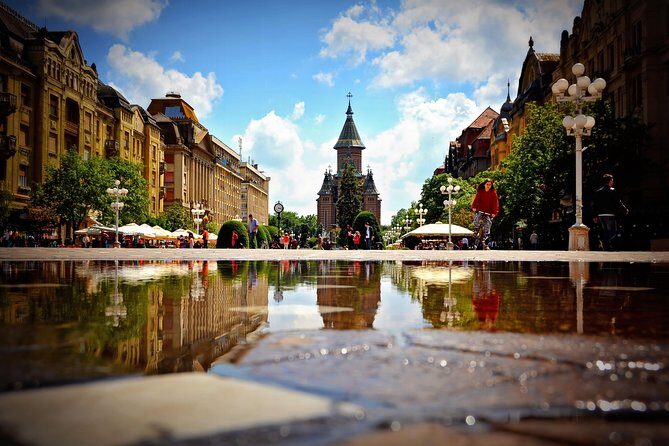
This trip is built for people who want a day abroad without the stress of figuring out schedules, transport changes, and meeting points. You meet your driver in Belgrade at 8:00 am, then you head out in a private vehicle for the ride to Timisoara (about 2.5 hours).
Once you arrive, the day shifts gears into a guided walking tour. You get your bearings fast through the downtown quarter of Cetate, and then you move square to square with context instead of random sightseeing.
The pacing is the main trade-off. The route covers a lot of ground, so you’ll be glad you brought comfortable shoes. If you’re the type who wants to linger for an hour in one church or read every sign in the museum, this schedule may feel short. On the other hand, you do get time afterward to wander independently and grab lunch where your guide thinks it’s best.
You can also read our reviews of more private tours in Belgrade

The Drive Across Serbia and Romania: Where Time Usually Disappears
The best part of the long ride is that it doesn’t feel like dead time. With your driver and guide handling logistics, you can sit back and enjoy the countryside rolling by. In the process, you also get real context for what you’re about to see.
I like this format because it makes the border crossing feel routine. You’ll go through customs smoothly as part of the day, and the route is planned so you don’t end up stuck trying to coordinate anything at the last minute.
Also, since this is private, you’re not waiting for a big group to gather. That small efficiency matters when your day is measured in hours.
Cetate First: How the City’s Architecture Teaches You Its Story
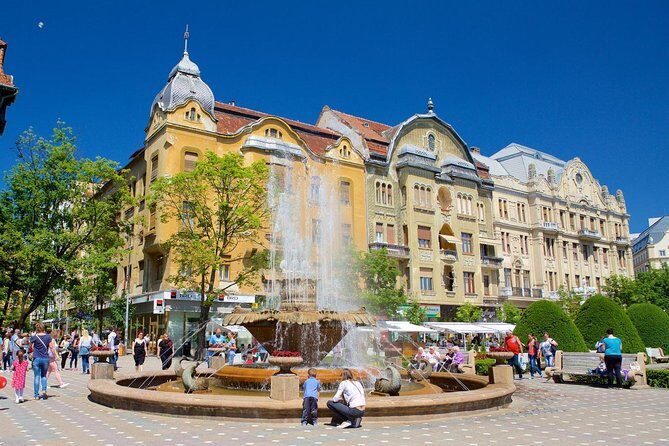
Your walking tour starts in Cetate, and that’s smart. This is where the city’s older fabric shows up—lots of older buildings with styles you’ll recognize as you travel around Europe. Expect a mix of Art Nouveau and Baroque touches, plus pedestrian-friendly squares where it’s easy to slow down.
Your guide isn’t just pointing at pretty façades. You’re learning why Timisoara looks the way it does and how the multicultural character of the Banat region shaped what was built where. That matters because later, when you see different churches facing each other across squares, the symbolism makes more sense.
This first stretch is also your setup time. By the end of it, you understand the layout enough that the rest of the day doesn’t feel like a blur.
Victory Square (Piata Victoriei): Opera Square and a Revolution Memorial
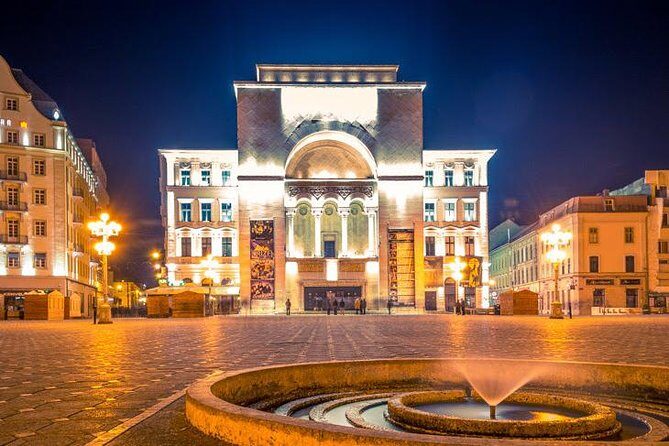
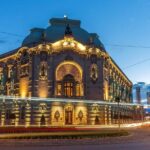
From Cetate, you head to Piata Victoriei, also known as Opera Square. It’s laid out in 1906, and it has a classic “old city center” feel: theaters, a museum, monuments, and buildings that support street life.
What I like here is the way different layers of time share the same space:
- You’ll spot the monument to King Ferdinand
- You’ll see a memorial connected to the 1989 revolution
- There’s an old artesian well
- And there’s a sculpture of a Capitoline she-wolf, described as a gift from Rome
If you’re the kind of traveler who enjoys small details you can later point out in photos, this is a strong stop. It also gives you a quick win: in about 20 minutes, you can absorb a lot without feeling rushed.
Liberty Square (Libertatii Square): Turkish Inscriptions and a Plague-Era Monument
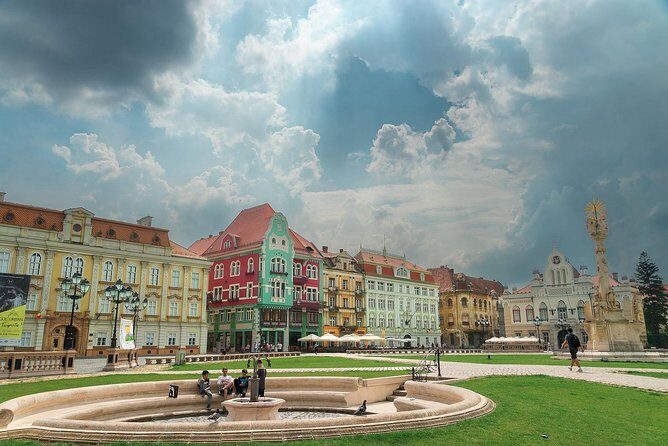
Next up is Libertatii Square, where the story gets even more specific. The Old City Hall here has a Turkish inscription, which is a straightforward reminder that this region didn’t develop in isolation.
Around the square you’ll notice the density of power and administration—buildings connected with civil life and institutions, including the Casino Military Museum, plus the old town hall and the Foreign Ministry.
In the middle stands the Sf Ioan Nepomuk Monument, built in 1756 by a Viennese sculptor named Wasserburger Blim, honoring those who died during the 1738 plague epidemic.
This is a great stop for people who like their sightseeing to have meaning. It’s also a good moment to slow down and look at how religious, political, and historical influences show up in one compact public space.
A few more Belgrade tours and experiences worth a look


Union Square (Unirii Square): Two Churches, One Name, and a Little Irony
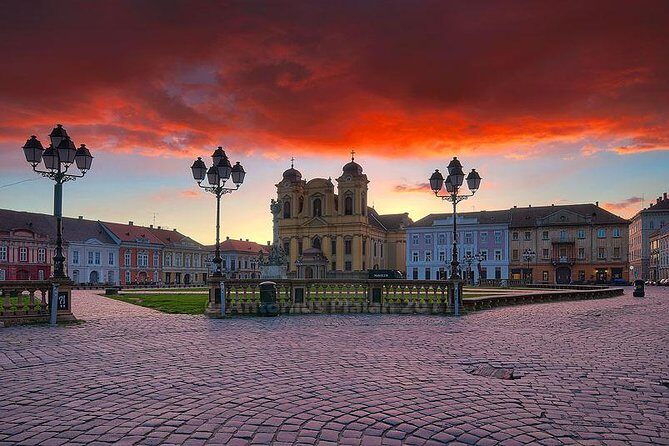
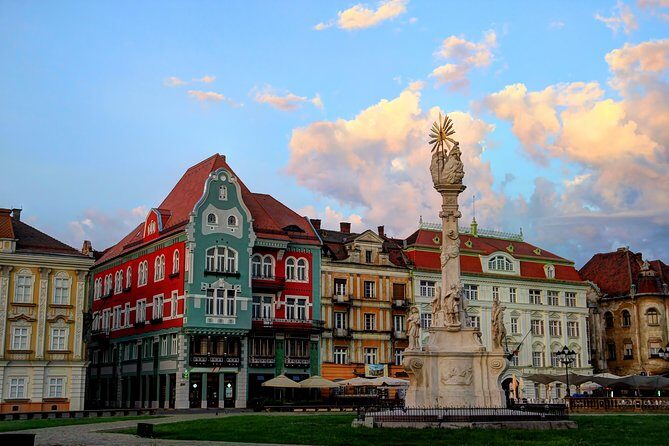
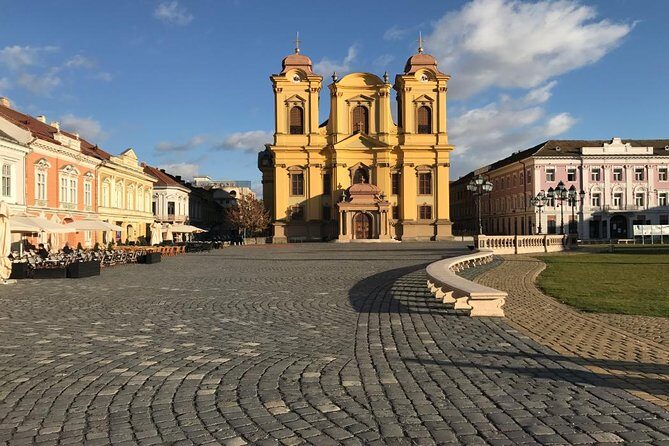
Unirii Square is often the “aha” stop. It’s the oldest square in Timisoara, and the architecture on either side is different enough that you can feel why the city didn’t name it lightly.
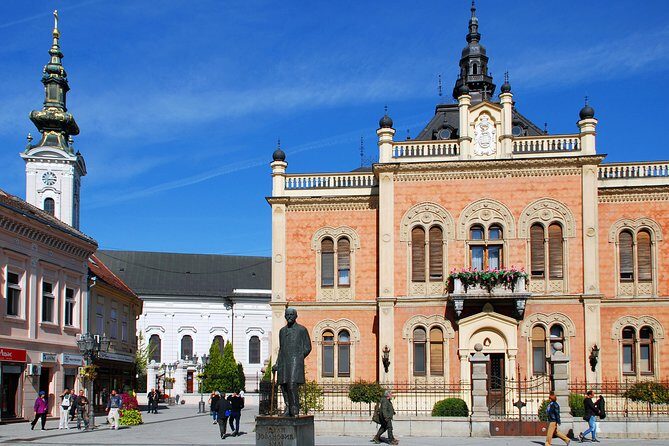
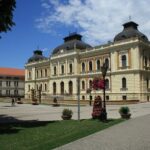
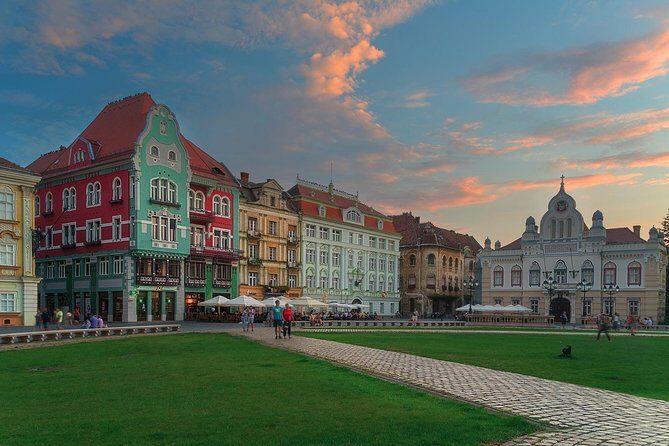
You’ll see St. George Roman-Catholic Cathedral and the Serbian Orthodox Cathedral with a Bishop’s Residence nearby, facing each other in peace. The square’s symbolism connects to how the name “Union” plays out in real urban space.
There’s also a historical twist. Until 1919, this was known as Lasonczy Market, named for Stefan (Istvan) Lasonchy, who defended the city from the Turks in the 16th century. It’s one of those details that makes the square feel lived-in, not staged.
If you’re short on time, this square gives you the best snapshot of “why Timisoara matters” in a very concentrated area.
The Churches: Baroque Splendor on Different Sides of the Same Squares
Your tour includes multiple major church stops, and each one is designed to help you read the city’s past.
Timisoara Orthodox Cathedral: Neo-Moldavian Style and Revolution Clues
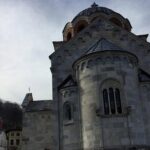
The day begins in the Timisoara Orthodox Cathedral, built in the late 1930s in an eclectic neo-Moldavian style. You’ll hear how it combines Byzantine, Gothic, Ottoman, and Renaissance elements, which explains why it looks unusual compared to the more familiar “one-style” cathedrals.
Inside, look for the Baroque-style fragments of an 18th-century altar. Then, if the basement is open during your visit, you can also learn about the collections there: religious objects, rare books, icons, and paintings.
One detail to watch for is on the steps in front of the cathedral: bullet marks, described as part of the story of the people’s revolution that started in Timisoara. That’s a chilling reminder that this isn’t just decorative architecture—it’s tied to events.
Serbian Orthodox Episcopal Church and the Bishop’s Residence
The Serbian Orthodox Episcopal Church was built between 1745 and 1748 in the baroque style. Next to it, the Bishop’s Residence (also called the Vicariate) helps you see the area as a whole complex of Serbian presence in Banat.
This proximity is meaningful. The guide frames it as a sign of how strong the Serbian community has been in this region, and that you’re still close to the Serbian border today.
The Roman Catholic Cathedral: Fisher von Erlach and a Plan That Took 18 Years
Then comes the Roman Catholic Cathedral, designed by Emanuel Fisher von Erlach. It’s also described as baroque, and construction started in 1736, taking 18 years to finish.
After Fisher von Erlach died in 1742, local architects Theodor Kostka and Alexander Steinlein took over. The main altar painting of St. George is attributed to Michelangelo Unterberger, and the organ was made by Austrian master Carl Leopold Wegenstein.
This is the kind of stop where you might not notice every name unless you listen. But if you do, you’ll come away understanding that these buildings weren’t random projects. They were major investments by people with resources, connections, and long timelines.
Memorialul Revolutiei: The Day’s Emotional Anchor
Your tour ends with Memorialul Revolutiei, the place you go to understand why Timisoara is tied to the December 1989 anti-communist revolution.
The displays are described as documentation, posters, and photography from those days. There’s also a 20-minute video with English subtitles. The important practical note is that the video is described as not suitable for young children, so plan around that if you’re traveling with kids.
This stop is included with admission, and it’s the clearest way to connect what you just saw—church façades, squares, and street space—with the historical moments that played out here.
After the museum, you get free time to wander on your own or handle shopping. If you want a practical lunch idea, your guide can recommend a place for traditional food (lunch is at your own expense).
In other words, your guide gives you the story, the museum gives you the facts, and then you get to choose how you spend the rest of the afternoon.
Price and Value: What $226.85 Buys You in Real Life
At $226.85 per person, this isn’t a budget add-on. But it can be great value if you look at what’s bundled.
You’re getting:
- Private transport (not shared shuttles)
- Free hotel pickup and drop-off in the defined area
- An English-speaking guide
- Fuel, parking, and road tolls handled
- Entrance included for Memorialul Revolutiei
- A bottle of water per person
For many travelers, the true value is the avoidance of friction. Trying to coordinate a Belgrade-to-Timisoara day on your own means figuring out transport, borders, timing, and local guidance once you’re there. Here, your day is pre-shaped: you know when you start, where you meet, how the route runs, and how you return.
It also makes sense for couples or small groups because the private vehicle stays comfortable whether you’re 2 people or a few more. One person going solo pays the same per-person rate, but you still benefit from that door-to-door structure.
Punctual, Flexible, and Usually Stress-Free
What really drives the positive feel of this tour is the on-the-day attitude. Multiple guides and drivers are described as showing up on time, driving safely, and explaining history while you’re on the move.
Names that show up in firsthand accounts include Uros, Drazen, Konstantin, Radenko, Vladimir, Michael, Milos, and Stefan. The common thread is clear communication and good pacing—enough structure to keep you on track, plus enough flexibility to let you take photos and breathe.
There’s also a nice practical benefit: if the weather or timing doesn’t cooperate, guides tend to adjust what they can. I’ve found that matters on days when you’re visiting outdoors squares and churches back-to-back.
One small warning from real-world timing: if you visit around major holidays, some parts of town can feel quieter or closed. It’s not the tour’s fault, but it can change your overall experience.
Who Should Book This Timisoara Day Trip
You should book if:
- You want a private day trip and don’t want to manage borders and transport on your own
- You care about architecture plus history tied to real events
- You like guided walks, but still want free time afterward
- You value door-to-door pickup and return in Belgrade
You might choose something else if:
- You plan to read slowly and spend long stretches inside museums (the revolution museum time is short by design)
- You’re visiting during a period when businesses and streets may be shut down, and you’d be disappointed by fewer open options
Should You Book This Tour or Skip It?
If your goal is to see Timisoara in one day with minimal stress and maximum structure, I think this is a strong pick. The combo of private transport, English-guided walking, and a museum that connects to the 1989 revolution makes the day feel coherent rather than random.
I’d book it if you’re the type who likes to go beyond photos and learn what the buildings mean—especially if you’re interested in the Banat region’s mix of influences. If you’re trying to squeeze Timisoara into a tight travel schedule from Belgrade, this does it with fewer moving parts.
So, my honest rule: if you want convenience and context, book. If you only want a casual wander and you’re okay managing logistics yourself, you might not need a guided private day.
FAQ
What time does the tour start?
The tour starts at 8:00 am, with you meeting your driver and getting pickup arrangements in Belgrade.
How long is the day trip?
It runs about 10 hours (approximately), including the drive and the guided walking tour in Timisoara.
How does hotel pickup work in Belgrade?
Pickup is offered from any hotel, Airbnb, or pension up to 10 km from Republic Square, and it’s free. For locations farther than 10 km from Republic Square, you need to contact the tour provider directly. Pickup from Belgrade port is also free.
Is this tour truly private?
Yes. It’s listed as a private tour/activity, so only your group participates.
What vehicle will you use?
Depending on group size, it’s either an air-conditioned minivan for 4–7 people or a private sedan car for 1–3 people.
What’s included in the price?
The tour includes free hotel pickup and drop-off, transport by car/minivan, a professional English-speaking guide, fuel, parking, and road tolls, the entrance fee to Memorialul Revolutiei, and a bottle of water per person.
Is the Memorialul Revolutiei video appropriate for children?
The video shown at the museum is described as not suitable for young children.