REVIEW · BELGRADE
Belgrade Sightseeing Half-Day Trip Old and New Belgrade
Book on Viator →Operated by VICTOR TOURS · Bookable on Viator
Belgrade has a way of layering eras fast. This half-day tour is a smart way to get your bearings with Kalemegdan views, major monuments, and quick stops that still feel human-sized. I like that it blends fortress walking with real city driving, so you’re not stuck in traffic the whole time.
Two standout wins for me are the fortress walk (Roman and medieval traces, plus the Sava–Danube confluence viewpoints) and the scale of St. Sava Temple, which hits you even before you’re close. The one thing to consider: it’s a tight schedule, so you won’t get long, slow hangs in each spot—bring comfy shoes and plan for sun if you’re there in hot weather.
In This Review
- Quick highlights to know before you go
- Entering Kalemegdan Fortress: Roman leftovers and big river views
- Orthodox churches inside the fortress: Chapel of St Petka and Ružica
- Pobednik and the walk toward clocks and old gates
- The ride to New Belgrade: from socialist power to modern business
- Dedinje mansions and stadium legend: Topčider Hill area
- House of Flowers and Tito’s legacy: history you can’t ignore
- St. Sava Temple: what 70 meters of dome looks like in real life
- Nemanjina Street to Parliament: state power and royal palaces
- Republic Square finish: National Theatre, National Museum, and Prince Mihailo
- Price and Logistics: why this costs what it does
- Who should book this Belgrade half-day tour
- Should you book this old-and-new Belgrade half-day tour?
- FAQ
- How long is the Belgrade Sightseeing Half-Day Trip Old and New Belgrade?
- What time does the tour start?
- Is hotel pickup included?
- Is there a pickup option from the airport?
- Is the tour private?
- What language is the tour guide?
- What is included in the tour price?
- Is St. Sava Temple entrance covered?
- Do I get a mobile ticket?
- What is the cancellation policy?
Quick highlights to know before you go
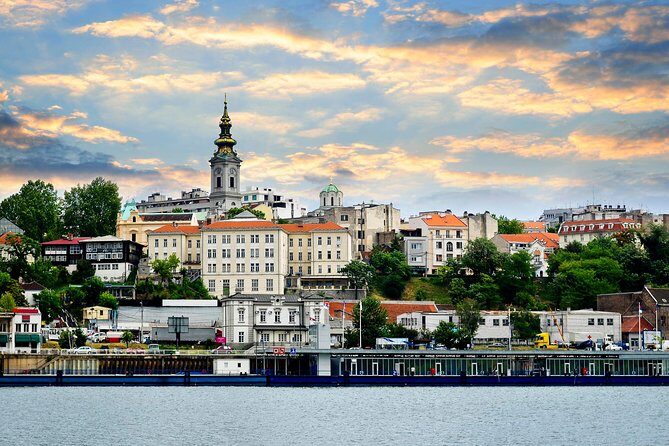
- Kalemegdan Fortress views in a short, efficient loop from Leopold’s Gate through the upper town viewpoints
- Orthodox churches inside the fortress with Chapel of St Petka and Ružica Church (Virgin Mary Church) stops built in
- Pobednik and the old gates including Clock Gate and Clock Tower, plus Istanbul (Stambol) Gate sights on the way
- New Belgrade’s architecture ride past major socialist-era landmarks and modern venues like Sava Center and Belgrade Arena
- Dedinje + Tito stops with Rajko Mitić Stadium area and the Museum of History of Yugoslavia and House of Flowers
- St. Sava Temple entrance included so you don’t have to plan tickets on the spot
Entering Kalemegdan Fortress: Roman leftovers and big river views
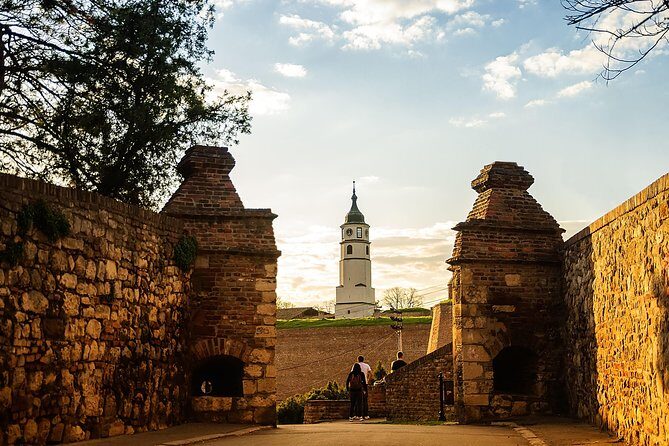
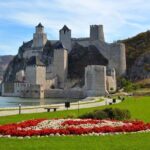
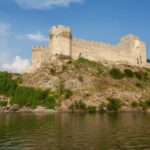
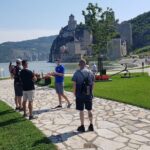
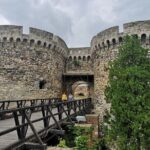
You start with free hotel pickup and a short drive to Kalemegdan, the oldest and largest central park area. Then you begin walking from Leopold’s Gate along the fortress layers that sit on top of older structures—think Roman castrum remnants (Singidunum) and medieval walls built on the same ground.
From here, the tour moves through fortress landmarks that are easy to miss if you wander on your own: gates like Zindan Gate and Despot’s Gate, plus Jakšića Tower. It’s a compact history lesson in stone, with your guide connecting the dots between eras instead of just naming places.
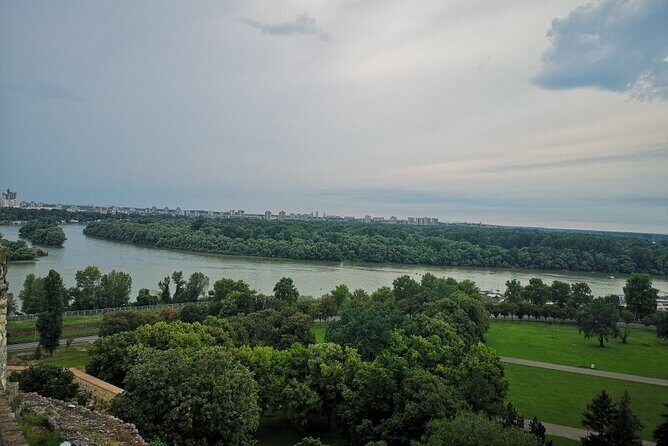
A key moment is reaching the upper town area and looking out at the confluence of the Sava and Danube. Even if the rest of the city feels busy, this spot gives you breathing room and a clear sense of why Belgrade has always mattered strategically.
A few more Belgrade tours and experiences worth a look
Orthodox churches inside the fortress: Chapel of St Petka and Ružica
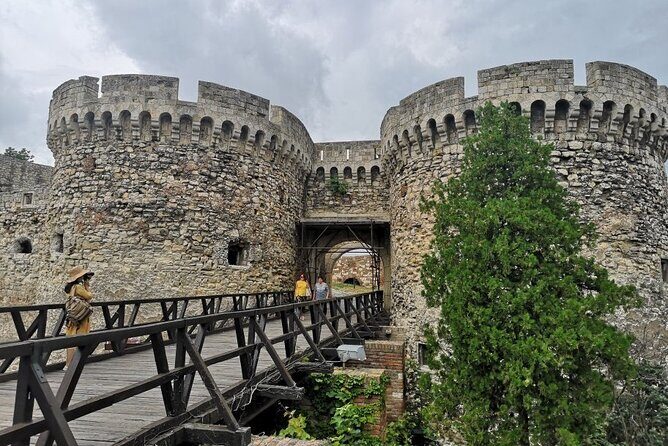
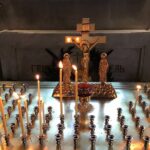
Within the Kalemegdan fortress zone, you’ll visit two Orthodox churches placed right in this part of the stronghold area: the Chapel of St Petka and Ružica Church (Virgin Mary Church). The tour format keeps it practical, with just enough time to see, photograph, and understand what makes these churches fit the fortress setting.
What I like here is the way your guide ties religion to history and place. These aren’t random church stops; they’re part of why the fortress functions as a cultural landmark, not only a military one.
Most of these stops are listed as admission-free in the tour flow, and the time slot is short enough that you can keep moving without feeling rushed the whole day. Still, if you want to linger for worship or deep interior time, remember this is a half-day plan.
Pobednik and the walk toward clocks and old gates
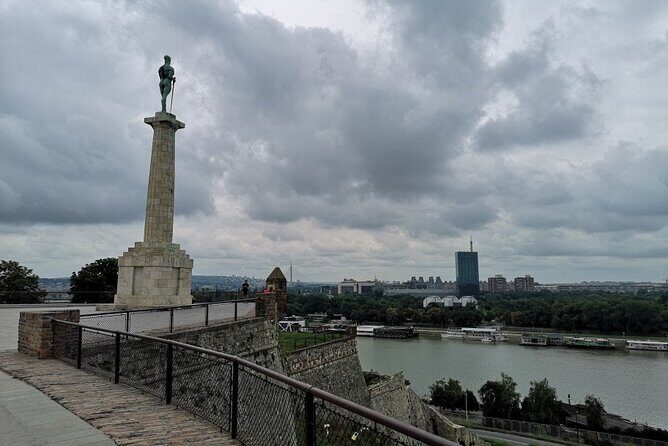
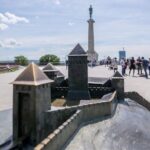
After Kalemegdan’s fortress section, you continue the upper town walking route and hit Belgrade’s signature sculptural landmark: Pobednik (the Victor monument by Ivan Meštrović). It’s one of those sights that looks different depending on where you stand, because it sits with the fortress and river views as part of the backdrop.
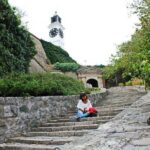
From there, the tour keeps you moving through classic old-town details: the Roman well, the King’s Gate, and the Sava promenade. You also pass through Ottoman-era memory points such as the Damat Ali Pasha Tomb, and then the clocks start showing up—Clock Gate (Sahatkapija) and Clock Tower (Sahatkula).
This part works especially well if you’re new to Belgrade. The guide can explain how Belgrade’s old core isn’t one “style” city; it’s a stack of layers, and the streets and monuments show that stacking.
In the Kalemegdan park area again, you’ll see Ivan Meštrović’s Monument of Gratitude to France and busts of Serbian men of letters. It’s a nice human touch after the fortress edges and gate names.
The ride to New Belgrade: from socialist power to modern business
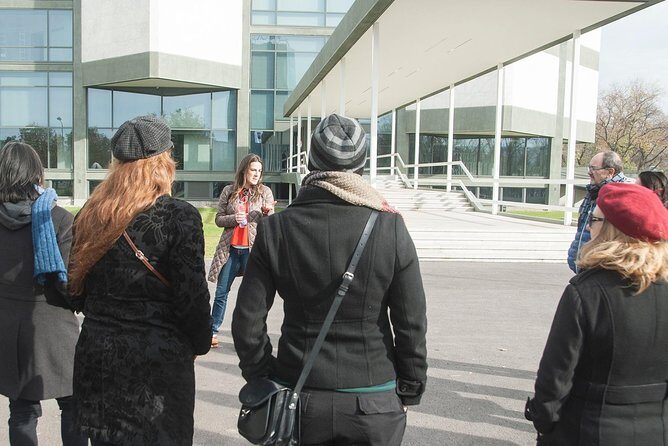
After the walking portion, you get back in the vehicle and head into New Belgrade, which shows you Belgrade’s different face. This area was built after WWII and under the socialist regime, so you’ll notice the planning, wide spaces, and the big “institution” feeling of many buildings.
The tour points out specific architecture landmarks, including:
- Palace of the Federal Executive Council (also known as the Palace of Federation)
- Genex Tower (often called the Western Gate of Belgrade)
- Sava Center, a major congress hall space in this part of Europe
You’ll also hear about how architecture shows up in pop culture and art context; the tour notes that MoMA in New York prepared an exhibition connected to New Belgrade architecture called Toward a Concrete Utopia. That’s a helpful detail because it signals New Belgrade isn’t just local planning history—it’s been studied internationally.
If you like architecture, this segment is where your photos start looking like a different city. Some buildings lean toward brutalist-style cues from the Eastern bloc era, while later decades add modern business buildings too. It’s not random; it’s a timeline you can see from the car window and then confirm at key stops.
Dedinje mansions and stadium legend: Topčider Hill area
Next comes Dedinje, described as Belgrade’s more luxurious residential zone. The tour takes you through a greener, calmer feeling area around Topčider Hill, where mansions sit among the trees and the hills shape the views.
Your guide shares stories about the properties and what happened to them during the turbulent 20th century. That matters here because Dedinje can look like “just pretty homes” if you’re glancing from the sidewalk. The tour helps you read the political and social changes reflected in the buildings.
Then you’ll see the stadium area for Red Star Belgrade: Rajko Mitić Stadium. The tour also frames Red Star’s global football credibility with the fact that it’s the last club from Eastern or Southern Europe to win the prestigious Champions League—useful context if you watch football and want meaning behind the local passion.
A few more Belgrade tours and experiences worth a look
House of Flowers and Tito’s legacy: history you can’t ignore
After Dedinje, you head to two closely connected sites: the Museum of History of Yugoslavia and the House of Flowers. This is where Belgrade shifts from monuments and architecture into direct political memory.
Tito’s resting place is a core part of the stop, and your guide explains the significance in a way that’s easier to follow if you know you’re dealing with the second Yugoslavia era. Even if you’re not a Balkan history expert, this stop grounds the morning so the earlier fortress and architecture pieces don’t feel abstract.
Timing is short here, so I’d treat it as a “must-see orientation” stop. If you end up wanting more, you’ll know exactly what to research afterward because you’ll have seen the main focal points.
St. Sava Temple: what 70 meters of dome looks like in real life
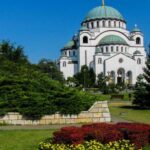
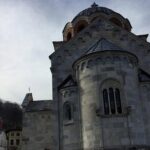
From Dedinje, the tour visits the Vračar area and one of Belgrade’s most prominent landmarks: the Church/Temple of St. Sava, often called the St. Sava Temple. This place is so large that you can spot the dome from across the city, and the tour builds up to that idea before you’re fully inside.
Construction began in the 1930s at the site connected to relic history—your guide ties it to the Ottoman period when occupying forces burned the relics of St. Sava. You’ll learn why St. Sava is such a major figure in Serbian history and how the temple’s style fits Serbian-Byzantine traditions.
In terms of scale, the numbers are almost comical until you see them: the dome rises about 70 meters, and the gilded cross adds another roughly 12 meters, bringing total height to around 82 meters. The tour also mentions the floor area across the main level and galleries, so you understand this isn’t a small “cathedral day.”
What I appreciate is that you’re not only seeing the structure from the outside. You’ll spend time in the temple environment, including the crypt area beneath the floor, described as decorated and tied to Saint Sava.
Good news: entrance to St. Sava Temple is included, so you don’t have to handle last-minute ticket decisions mid-tour. It’s one less hassle on a packed morning.
Nemanjina Street to Parliament: state power and royal palaces
When you leave the temple area, the drive continues through key city corridors like Slavija Square and onto Nemanjina Street, where major governmental institutions are located. This gives you a window into pre-war architecture and the way the city represents state authority in its planning.
You then reach the House of the National Assembly of the Republic of Serbia for a short photo break in front of the Parliament building. Your guide connects what you’re seeing with two royal palace areas—Old and New Royal Palaces—and explains the two dynasties that ruled Serbia in the 19th and 20th centuries.
There’s also a stop near Nikola Pašić Square, with a monument to the first Prime Minister of the Kingdom of Yugoslavia. Even if you’re not into politics, it helps to have these names placed in context instead of being random statues at a traffic light.
You’ll then pass through Kralja Milana Street, the city’s artery with multiple notable buildings, before heading to Terazije Square. That’s where you’ll see the recognizable white stone fountain and the Moskva Hotel.
Republic Square finish: National Theatre, National Museum, and Prince Mihailo
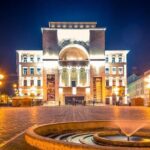
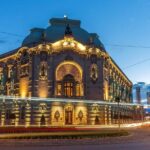
Your tour ends at Trg Republike (Republic Square), the “heart” area of the capital where major cultural institutions sit. The tour highlights buildings around the square such as the National Museum and the National Theatre.
You also get an explanation of why Prince Mihailo is an important figure from Serbia’s modern history, which adds meaning to the plaza instead of leaving you with just a pretty finish photo.
This last stretch is short, but it works well because by the end of the morning you’ve already seen fortress layers, socialist-era planning, and religious scale. The square ties it together with culture and national identity in a more open, central setting.
Price and Logistics: why this costs what it does
At about $150.85 per person for roughly 3 hours, this isn’t a bargain-basement deal. But you’re paying for several things that add real value in a city like Belgrade: private-style pacing, hotel pickup and drop-off, air-conditioned transport, and a professional English-speaking guide.
You also get practical inclusions that matter when you’re moving fast: transport by minivan or private sedan, fuel and parking costs covered, and a bottle of water per person. The only major paid entrance in the schedule—St. Sava Temple—is also included, which is a nice “no surprises” element.
The pickup radius has to be understood too. Pickup is free from your hotel or accommodation up to 5 km from Republic Square, and if you’re farther out but still in the 5–10 km band, there’s a 10 EUR supplement. Starting from Belgrade airport has a 15 EUR supplement. If you’re staying beyond that free zone, factor the extra cost into your trip math.
Who should book this Belgrade half-day tour
This tour fits best if you want a structured overview without losing half your morning to figuring out routes and entrances. It’s also a solid choice for first-time visitors because it covers multiple Belgrade “faces” in one go: fortress-old Belgrade, New Belgrade architecture, and the religious-national centerpiece of St. Sava Temple.
If you love sports history or modern football culture, Dedinje and the Red Star stadium context gives you a fun angle. And if you’re traveling with someone who can’t do long walks, the mix of driving plus short walking sections makes it easier to manage the day.
If you’re the type who likes to sit and stare—church interiors for an hour, museum time that becomes a full afternoon—this may feel too quick. It’s a great sampler, not a slow, deep-day plan.
Should you book this old-and-new Belgrade half-day tour?
Yes, if you want a high-value orientation to Belgrade’s key contrasts in one morning. It’s especially worth it when you want Kalemegdan + St. Sava Temple without piecing together tickets, transit, and logistics yourself.
I’d skip it if you already know you want to spend most of your day in one place—either the fortress, the museum side, or the temple interiors—because this format prioritizes breadth over lingering.
If you book, wear good walking shoes and don’t overpack your expectations for slow time. Use the tour to learn the city’s main threads—then pick your next stops for deeper exploration.
FAQ
How long is the Belgrade Sightseeing Half-Day Trip Old and New Belgrade?
It runs for about 3 hours.
What time does the tour start?
The tour start time is 9:30 am.
Is hotel pickup included?
Yes. Pickup and drop-off are free from your hotel or accommodation in Belgrade up to 5 km from Republic Square. For locations between 5 km and 10 km from the city center, there’s a 10 EUR supplement.
Is there a pickup option from the airport?
Yes. If you start from Belgrade airport, there’s a 15 EUR supplement.
Is the tour private?
Yes. It’s a private tour/activity, and only your group will participate.
What language is the tour guide?
The tour is offered with a professional English-speaking guide.
What is included in the tour price?
Included items are free hotel pick-up and drop-off, air-conditioned transport, professional guide service, fuel and parking, entrance fee to St. Sava Temple, and a bottle of water per person.
Is St. Sava Temple entrance covered?
Yes. The entrance fee to St. Sava Temple is included.
Do I get a mobile ticket?
Yes. A mobile ticket is included.
What is the cancellation policy?
You can cancel for a full refund up to 24 hours before the experience’s start time. If you cancel less than 24 hours before, the amount paid is not refunded.