REVIEW · BELGRADE
Communist Tour in Belgrade
Book on Viator →Operated by Belgrade Walking Tours · Bookable on Viator
Communist Belgrade hits hard, in a walk.
This 3-hour route connects Tito-era ideas to the wars of the 1990s, then carries you to the scars of the NATO bombing in 1999, all through real streets and famous buildings.
I love the way the tour keeps the story fact-based and nuanced, not just slogan-by-slogan. I also like that you get included time at the Museum of Yugoslavia, so the history lands inside a real collection instead of stopping at street corners.
One possible drawback: the schedule is tight, with short stops (mostly around 15 minutes), so if you want lots of free roaming and long photo sessions, you may feel a bit rushed.
In This Review
- Key things that make this tour worth your time
- First steps on Trg Republike: setting the tone fast
- Republic Square: Tito, the Youth Relay Baton, and the Non-Aligned story
- Dom Sindikata (Trade Union Hall): socialist realism in stone
- Nikola Pašić Square and the House of the National Assembly: power, reshuffled
- Kneza Miloša: from korzo promenade to embassy-lined artery
- Generalštab (Yugoslav General Staff): post-war architecture, bomb scars
- Trolleybus transfer to the Museum of Yugoslavia
- Museum of Yugoslavia: Kingdom, socialist years, and Tito’s final stop
- Guides make or break it: why English clarity matters on this topic
- Price and value: $24.03 for guided structure plus museum entry
- Who should book this tour, and who should skip it
- Should you book the Communist Tour in Belgrade?
- FAQ
- How long is the Communist Tour in Belgrade?
- What’s the price per person?
- Is the tour offered in English?
- What does the tour include?
- Where does the tour start and end?
- How big is the group?
- Is free cancellation available?
Key things that make this tour worth your time
- Small group size (up to 15): you’ll actually hear your guide and ask questions without shouting over a crowd.
- English-led storytelling: guides like Stefan, Michael, and Milan are praised for strong English and clear explanations.
- Serious subjects, handled carefully: Tito, the Non-Aligned Movement, 1990s conflicts, and 1999 NATO bombing are covered with context.
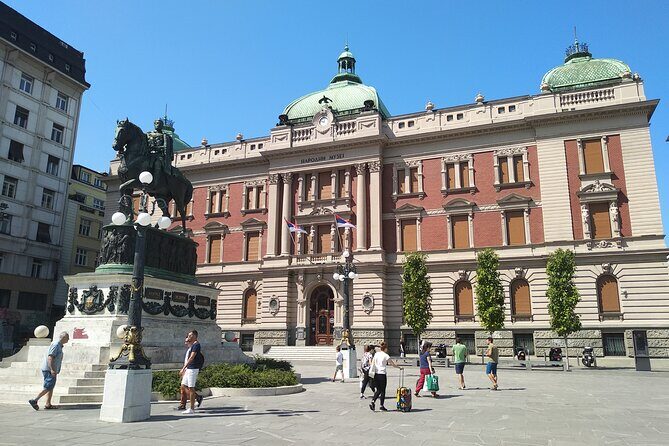
- Major Belgrade landmarks, not random stops: Republic Square, Dom Sindikata, the National Assembly building area, Kneza Miloša, and the General Staff site.
- Museum time included: you get about an hour inside the Museum of Yugoslavia, with admission included.
- You get the ride too: a short trolleybus transfer (about 15 minutes) connects the street sites to the museum.
First steps on Trg Republike: setting the tone fast
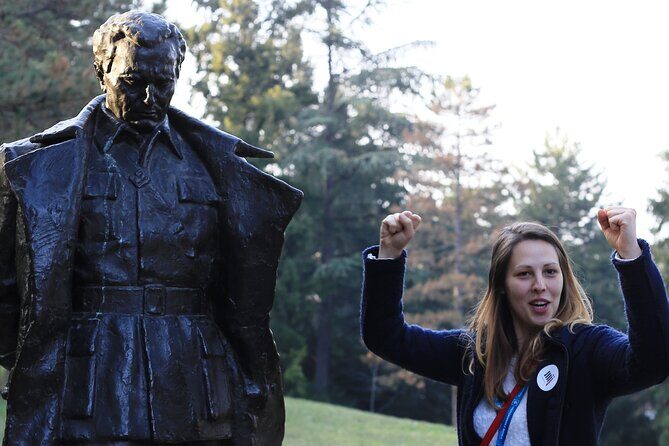
You start at Trg Republike (Republic Square), right in the center of Belgrade. The timing is practical: a 3:00 pm start means you’re not fighting the darkest hours, and you can still get decent light for photos later.
This opening stop matters because it tells you how to read the city. Republic Square isn’t just a pretty set piece; it’s where Belgrade’s 20th-century political story shows up in public space. Your guide builds a timeline in plain language, so the rest of the walk doesn’t feel like separate trivia facts.
You can also read our reviews of more tours and experiences in Belgrade.


Republic Square: Tito, the Youth Relay Baton, and the Non-Aligned story
At Trg Republike, you get an introduction to Josip Broz Tito and the ideas tied to his era. Expect the “Youth relay baton” reference and how it connects to youth culture and state messaging in socialist Yugoslavia.
Then the tour expands outward: the Non-Aligned movement and why Yugoslavia mattered as a middle power during the Cold War. Your guide also brings the story forward through the 1990s conflicts and the NATO bombing of Serbia and Montenegro in 1999, before landing on the democratic changes of the early 21st century.
The practical upside here is you learn the lens first. Without it, many of Belgrade’s key buildings can look like architecture only. With it, you start noticing symbols, street layouts, and what the city chose to keep or change.
Dom Sindikata (Trade Union Hall): socialist realism in stone
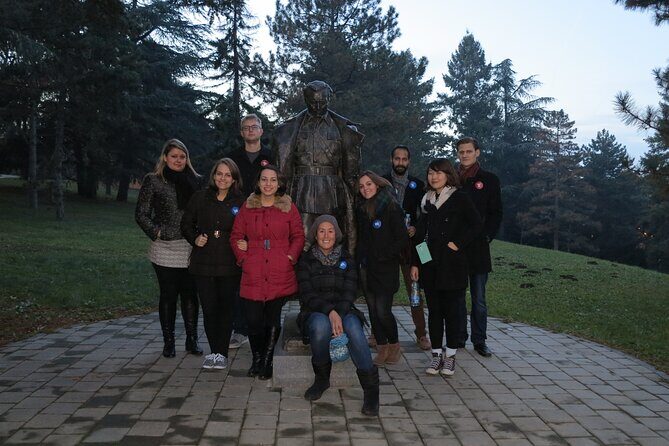
Next you head to Dom Sindikata, the Trade Union Hall. This is a massive building in the style of socialist realism, projected by Branko Petričić with construction starting in 1947.
Why do I think this stop is valuable? Because socialist realism isn’t only an artistic label. It’s political messaging you can feel in scale and form—big lines, strong presence, a sense of authority meant to look permanent.
This is also a good checkpoint for your expectations. The stop is about 15 minutes, so you won’t get a deep architectural lecture. But you do get enough to recognize what you’re looking at, and you’ll know what questions to ask your guide as you move on.
Nikola Pašić Square and the House of the National Assembly: power, reshuffled
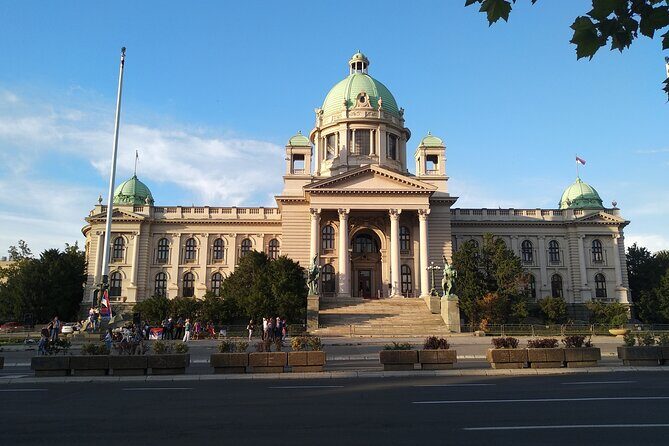
From there, you reach the area around the House of the National Assembly of the Republic of Serbia, located on Nikola Pašić Square. The building is a landmark, and it’s also a story about what governments do to buildings when history changes.
Here’s the key timeline your guide points out: between completion in 1936 and 2006, it served as the seat of the Parliament of Yugoslavia and later the Parliament of Serbia and Montenegro. That gives you a useful takeaway for how Belgrade repurposes political space without starting from scratch every time.
This stop works especially well if you like seeing politics reflected in everyday geography. You’re not just reading dates; you’re watching a city negotiate identity through institutions.
Kneza Miloša: from korzo promenade to embassy-lined artery
Then the tour shifts to a street you can feel in your legs: Kneza Miloša Street. It was the main city korzo (promenade), and today it’s one of Belgrade’s major traffic arteries.
What I like here is the contrast. Kneza Miloša used to be about strolling and public life; now it’s also a corridor of national institutions and the street with the largest number of embassies in Belgrade. In other words, you see how the city’s identity keeps changing while the road itself keeps doing the same job: connecting people to power.
The stop is about 20 minutes, so you’ll have time to orient yourself and spot how the urban landscape echoes the tour’s themes.

Generalštab (Yugoslav General Staff): post-war architecture, bomb scars
Now you move to one of the tour’s most sobering sites: Generalštab, the Yugoslav General Staff building. It’s known as the Yugoslav Ministry of Defence, tied to defending the Federal Republic of Yugoslavia from internal and external threats.
This building is described as a masterpiece of post-war architecture, and your guide also points out something far less aesthetic: it was bombed and heavily damaged during the NATO bombing of Yugoslavia in 1999.
This stop is short (around 15 minutes), but it packs a punch because it forces the big question: how do you live beside a structure that carries trauma? Even if you focus mainly on the exterior, you’re likely to feel the weight of “before and after” as you stand there.
Trolleybus transfer to the Museum of Yugoslavia
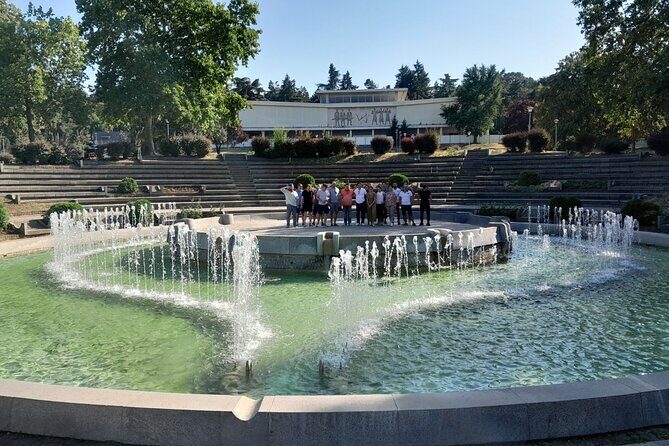
After Generalštab, the group takes a trolleybus to the museum. The ride is about 15 minutes, and the trolleybus ticket is included.
This is more than a logistical fix. It turns the tour from a pure walking loop into a more complete route through Belgrade. You also get a small break from street-level standing and listening—handy when the topic is heavy.
Museum of Yugoslavia: Kingdom, socialist years, and Tito’s final stop
The tour ends at the Museum of Yugoslavia, with entry included. The included time is about 1 hour, which is enough to orient you, not enough to read every label like it’s a university thesis.
Inside, the museum is presented as a public history museum in Belgrade that chronicles the Kingdom of Yugoslavia and Socialist Yugoslavia, along with the life of Josip Broz Tito. Your guide also connects what you saw outside to what you see inside.
One specific detail worth knowing: Tito’s grave is located in one of the museum buildings, the House of Flowers. If you’re trying to understand how Yugoslavia remembered Tito—officially, emotionally, and physically—this is a key anchor point.
Practical tip for your hour there: pace yourself. With only about 60 minutes, I’d focus on the sections that match what your guide emphasized outside: the political shifts, the socialist era, and the way the museum frames the lead-up to the later changes.
Guides make or break it: why English clarity matters on this topic
A lot of “history tours” can turn into a blur of dates and opinions. This one has an advantage: the guides’ communication gets praised for being clear, strong in English, and careful with nuance.
In particular, guides like Stefan are singled out for handling complicated modern Serbian history with fact-based information and insight, plus follow-up suggestions for books and documentaries. Michael gets credit for bringing the information to life and even knowing the transit system well. Milan is praised for an objective presentation of both distant and recent past.
That’s the real value for you: when topics are contested and emotional, a guide who can explain without turning it into a shouting match makes the experience feel safer and smarter.
Price and value: $24.03 for guided structure plus museum entry
At $24.03 per person for about 3 hours, you’re paying for more than a walk. You get a professional guide, museum entrance included, and the trolleybus ticket. Some stops along the way also have free admission, which helps keep the total cost predictable.
Is it cheap? In Belgrade terms, it’s positioned as an accessible history option. The real value comes from what you avoid: you don’t have to plan a transport-to-museum jump, figure out what buildings matter, or spend extra time buying museum admission separately.
One thing to consider is the structure: it’s designed to cover a lot in a short window. If you’re the type who wants to linger, you might have to add independent time afterward (especially at the museum).
Who should book this tour, and who should skip it
This is a great fit if you:
- want a guided introduction to communist-era Yugoslavia through real Belgrade locations
- like your history explained with context, not just slogans
- prefer a small group (up to 15) and a clear, English-led format
- are headed to the museum anyway and want it tied to what you see outside
You might skip it if you:
- hate tight schedules and short stops
- only want a light, superficial overview without the 1990s and 1999 NATO bombing sections
- need long, unstructured time for photos and wandering
Should you book the Communist Tour in Belgrade?
If you’re curious about Tito-era Serbia and the city’s shift from socialist Yugoslavia into modern Serbia, I’d book it. The price is reasonable for what’s included, the group size keeps things manageable, and the storytelling gets strong marks for clarity and objective framing.
Just go in with the right mindset: this is a 3-hour orientation with important stops, not a slow museum marathon. If you want, plan to return later for extra time inside the Museum of Yugoslavia—especially if the House of Flowers leaves you wanting more.
FAQ
How long is the Communist Tour in Belgrade?
It’s about 3 hours long.
What’s the price per person?
The price is $24.03 per person.
Is the tour offered in English?
Yes, it is offered in English.
What does the tour include?
The tour includes entrance to the Museum of Yugoslavia, a trolleybus ticket, and a professional tour guide.
Where does the tour start and end?
It starts at Trg Republike in Belgrade and ends in front of the Museum of Yugoslavia.
How big is the group?
The tour has a maximum of 15 travelers.
Is free cancellation available?
Yes, you can cancel for a full refund up to 24 hours in advance of the experience start time.