REVIEW · BELGRADE
E-Scooter Belgrade Hooligans Tour
Book on Viator →Operated by E-Around Electric Scooter Rental & Tours · Bookable on Viator
Graffiti, scooters, and rivalry talk in three hours. This E-Scooter Belgrade Hooligans Tour is built around Belgrade’s football neighborhoods and the wall art that tells the story of Partizan and Red Star culture. What I like most is the focus on football graffiti you can actually see up close, and the way the e-scooters keep you moving so the whole loop feels efficient instead of rushed.
One thing to keep in mind: this tour requires good weather, and it also runs with a small group limit (up to 20 people), so timing matters. If conditions aren’t right, you may be offered a different date or a full refund.
In This Review
- Key highlights at a glance
- Why a hooligan-themed scooter tour is oddly perfect for Belgrade
- Getting set up: e-scooters, helmet, and safety briefing
- Dorćol first: black-and-white vs red-and-white graffiti zones
- Partizan Stadium graffiti: reading the stands in 30 minutes
- Red Star Belgrade (Marakana): same city, different football language
- Čubura and Vračar: neighborhoods that carry fan identity
- The scooter route pace: how the 3 hours really feel
- Price and value: what $48.06 buys you
- Guides make the difference: Uros and Marko’s storytelling style
- Practical tips so you enjoy every stop
- Who this tour is best for (and who might not love it)
- Should you book the E-Scooter Belgrade Hooligans Tour?
- FAQ
- How long is the E-Scooter Belgrade Hooligans Tour?
- What does the tour cost?
- Where do we meet, and does the tour end nearby?
- What’s included in the price?
- Are admission tickets required for the stops?
- How many people are in the group?
- What are the tour hours?
- What happens if the weather is poor?
- What is the cancellation policy?
Key highlights at a glance
- E-scooters with helmet and a safety briefing, so you’re not guessing your way around
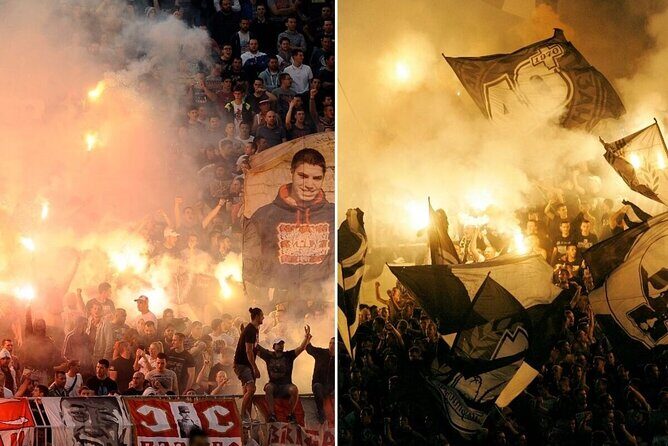
- Two stadium zones in one run: Partizan Stadium and Red Star Belgrade (Marakana)
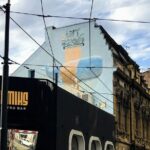
- Dorćol’s split-color neighborhood where murals and graffiti are part of the street identity
- Čubura and Vračar graffiti stops tied to Red Star and Grobari-style fan culture
- Small group size (max 20) keeps it more personal than a big bus tour
- No paid entry tickets at the stops, since each listed admission is free
Why a hooligan-themed scooter tour is oddly perfect for Belgrade
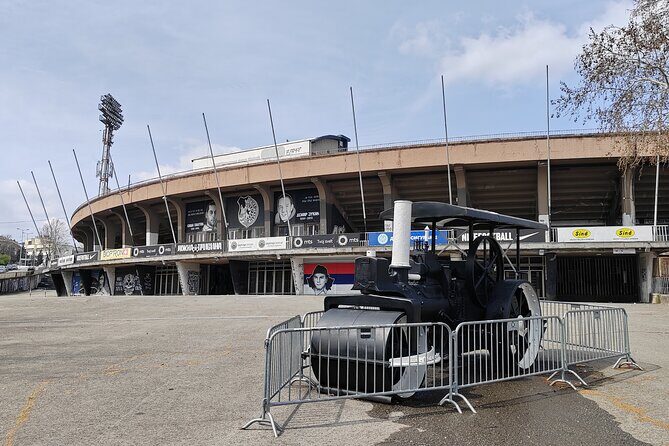
Belgrade is a city where football isn’t just a sport. It’s a set of symbols, neighborhoods, and street language. This tour taps into that through graffiti and murals, with enough motion on the e-scooters that you’re not stuck waiting around.
The route is also smart for first-timers. In about three hours (approx.), you hit a set of districts and two stadium landmarks that many visitors only see from a distance. Instead of just photographing walls, you get the context behind the marks you’re noticing.
A few more Belgrade tours and experiences worth a look
Getting set up: e-scooters, helmet, and safety briefing
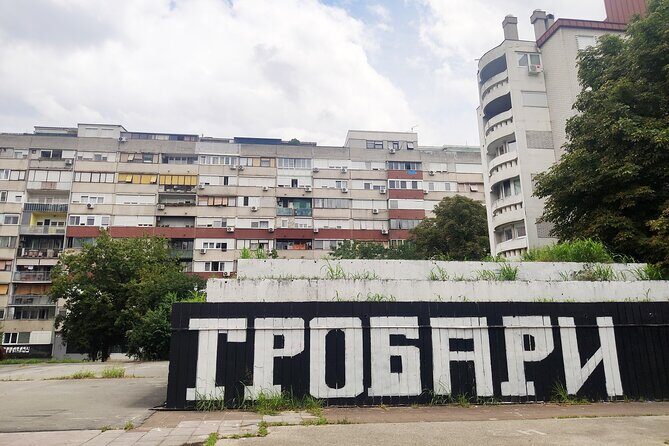
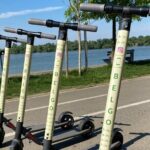
You’re not showing up to a “good luck” situation. The tour includes the e-scooter and a helmet, plus a safety briefing before you roll. That matters because scooter tours can vary a lot in how they handle basic riding rules.
It also shapes your mindset for the day. You’re going to be moving through city streets, then stopping frequently to look closely at murals and graffiti. If you follow the briefing and ride calmly, the pace feels fun and controlled, not frantic.
And you’ll likely notice something else quickly: with a scooter, your perspective changes. You can scan walls, corners, and stadium-area stands in a way you just can’t do from the sidewalk.
Dorćol first: black-and-white vs red-and-white graffiti zones
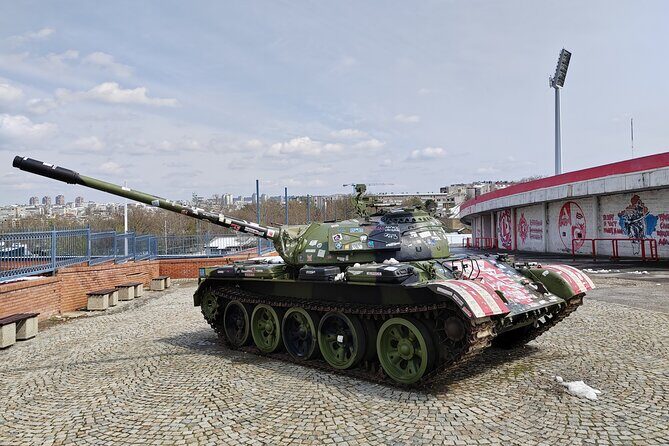
The tour kicks off in Dorćol, a neighborhood known for its split identity. You’ll see areas that are divided into black and white as well as red and white, and that visual split shows up in the street art. This stop is the longest one at about one hour, which is a hint that this is where your eyes should start getting trained.
What you’re aiming to spot here isn’t just “cool graffiti.” It’s the idea that color blocks and fan symbolism can become part of how a place feels. Dorćol gives you that baseline, so later stops like Čubura and Vračar land with more meaning.
One practical note: because it’s the first stop, use it to get comfortable with the scooter timing—how long you’ll be off the scooter, how the group gathers, and when your guide expects attention.
Partizan Stadium graffiti: reading the stands in 30 minutes
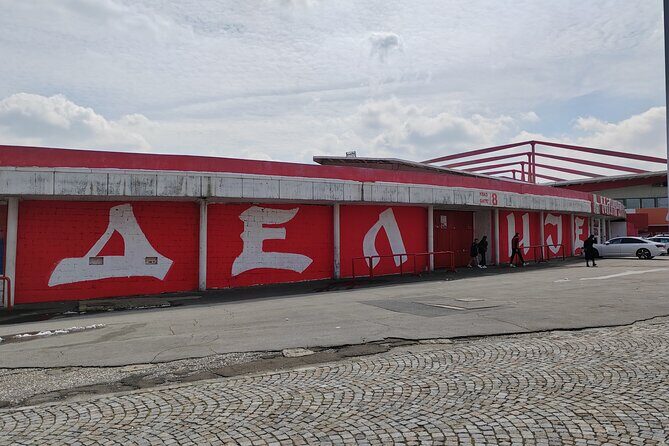
Next comes Partizan Stadium, where you’ll spend about 30 minutes exploring graffiti on the stadium stands. This is a tight window, so your guide’s commentary becomes important. The value here is not only what you see, but why it’s placed where it is and what it signals.
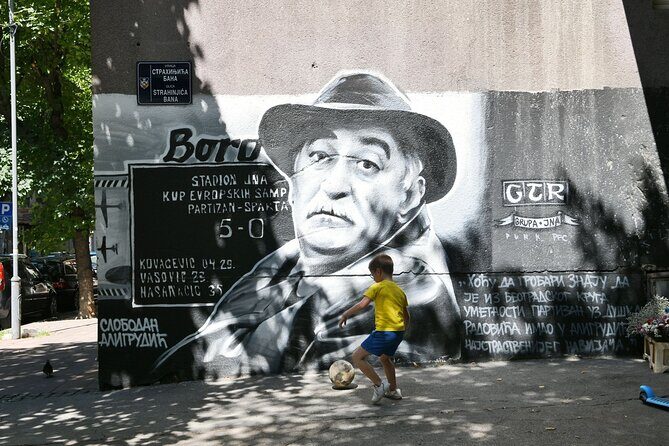
At stadium-adjacent locations, graffiti can feel more intense because the visuals are meant for a specific audience. You get to notice that the art is often “fan-to-fan,” built around identity and memory. Even without entering anything beyond what’s possible on the ground with the group, the stands become a kind of canvas.
If you’re the type who likes sports details, this stop is likely to satisfy you fast: you’ll connect symbols to the club name you’ve heard for years.
Red Star Belgrade (Marakana): same city, different football language
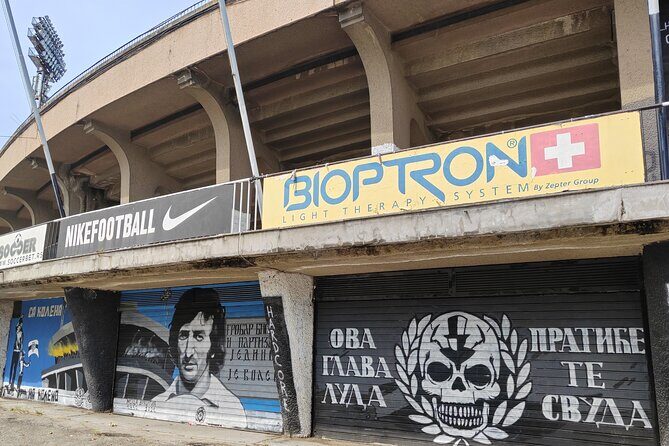
The tour then swings to Red Star Belgrade Stadium (Marakana) for another 30-minute stop, focused on their graffiti on the stadium stands. The time allocation is similar to Partizan, which makes it feel balanced: two clubs, two stadium zones, and two different sets of street signals.
This is where the contrast becomes clear. You can compare how different styles, colors, and references show up around the Red Star side of Belgrade’s football geography. If you keep your eyes open, you’ll start seeing how neighborhood identity turns into visual storytelling.
It’s also a good reminder of how Belgrade works as a layered city. Even when you’re seeing similar “stadium graffiti” in two locations, the crowd culture behind it won’t feel identical.




Čubura and Vračar: neighborhoods that carry fan identity
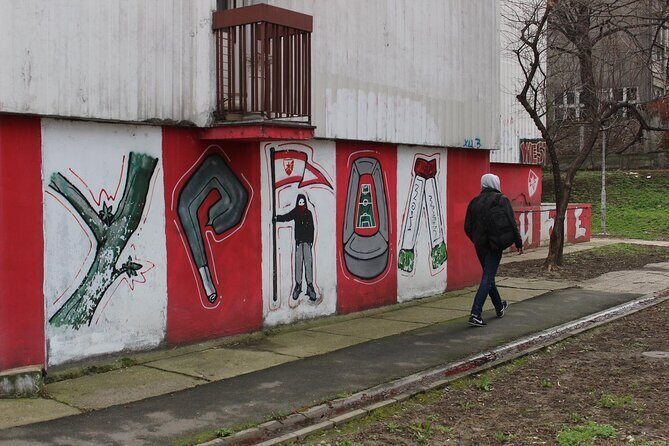
After the stadium stops, the tour shifts to neighborhood texture, with two key areas: Čubura and Vračar.
- Čubura (about 30 minutes) is described as a famous Red Star neighborhood, and you’ll look for hooligans graffiti there.
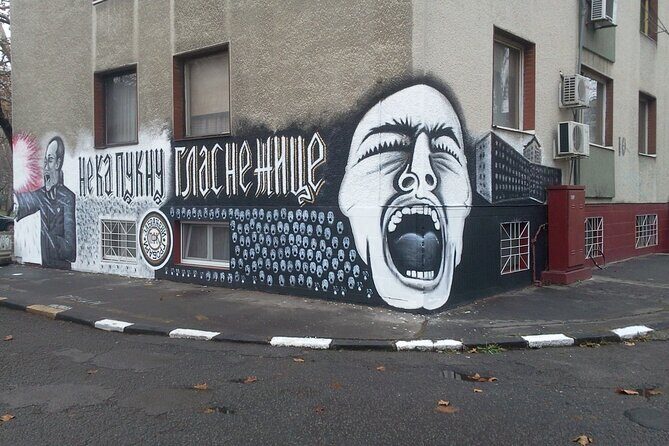
- Vračar (also about 30 minutes) includes a stop for Njegoševa street, where you’ll see Grobari graffiti.
These neighborhood segments are where the tour stops being only about stadium landmarks and starts feeling like a city map. You’ll notice that the fan culture isn’t limited to matchdays or the stadium building—it’s written into the streets.
The time is short at each neighborhood, but that’s partly the point. This is a “see a lot, understand enough” format. If you’re curious, it’s also a great springboard for later independent exploring once you know which streets and color themes to pay attention to.
The scooter route pace: how the 3 hours really feel
You’re scheduled for about 3 hours (approx.), and the stop lengths are distributed across the loop. With Dorćol at around an hour and the stadium/neighborhood stops around 30 minutes each, the day has a rhythm: ride, stop, look closely, then ride again.
That rhythm is a big part of why this tour works. Graffiti is best when you can pause and see details. But graffiti-only walking tours can drag. Here, you get scooter time between stops, which keeps energy up and travel friction low.
A bonus of the scooter format: you can shift your attention. One moment you’re tracking street colors and symbols in your head; the next you’re moving toward the next landmark without spending extra time navigating.
Price and value: what $48.06 buys you
At $48.06 per person, this isn’t a free-form DIY activity, but it’s also not priced like a multi-stop day packed with paid museum tickets. The key value is that you get:
- the e-scooter
- helmet
- safety briefing
- and guided context as you move between five named stops
Since the stops are listed with free admission tickets, you’re not paying extra at each location. In other words, your money is paying for transportation setup plus interpretation—someone guiding your eyes to the right things.
This is also a tour you can treat as a specialty “football + Belgrade streets” experience. If you’re interested in both sports culture and urban art, $48.06 starts to feel like a fair trade for three hours of organized access and momentum.
Guides make the difference: Uros and Marko’s storytelling style
This tour’s standout strength is the guide’s passion. The experience is guided, not just routed. In real conversations with guides, you get the feeling they know the scene well and they enjoy connecting the dots between the visuals and the club identities.
You may meet guides such as Uros or Marko. One guide approach that shows up clearly is time for questions. When the group asks about what the graffiti is referencing, you’re not brushed off. The explanations stick because they’re delivered in plain language tied to what you can see right now.
That matters for a subject like hooligan culture, which can easily sound mysterious or one-sided if you only see symbols without context. With an animated guide, the tour becomes less about guessing and more about understanding.
Practical tips so you enjoy every stop
A few things will help you get more out of the ride and less out of the hassle:
- Check the weather before you go. The tour requires good weather, and bad conditions can trigger a different date or a refund.
- Plan for frequent stops. You’re not doing a “tour from a seat.” You’ll hop off, look at walls/stands, then move again.
- Don’t rush Dorćol. Since it’s your longest stop, give your eyes time to adjust to the neighborhood’s color split and mural style.
- Bring your questions. This tour’s value climbs when you’re curious about what you’re seeing, especially around the two stadiums and the fan-named neighborhood streets.
Also, the tour uses a mobile ticket, and it’s near public transportation, so it tends to fit easily into a day of sightseeing in Belgrade.
Who this tour is best for (and who might not love it)
This is a great fit if you:
- like football culture and want the street-level version, not only stadium highlights
- enjoy graffiti and murals and want to learn what to look for
- prefer a guided route with enough motion to keep things fun
It might be less satisfying if you:
- hate riding on scooters or worry about weather and timing
- want lots of indoor time or formal museum-style exhibits
- expect a long “sit and listen” history lecture (this one is built around outdoor viewing stops)
Should you book the E-Scooter Belgrade Hooligans Tour?
If you’re doing Belgrade on a tight schedule and you want one activity that combines neighborhoods, stadium icons, and street art with real fan context, I’d book it. The two stadium stops plus the neighborhood legs (Čubura and Vračar) make the route feel like a real map of the rivalry, not just a checklist of places.
The only real caution is weather. If skies are good and you’re comfortable following the safety briefing, this tour is a clever way to spend a few hours seeing Belgrade through the lens of its football symbols. If the forecast looks bad, it’s still easy to be flexible since the tour has a weather-based plan in place.
FAQ
How long is the E-Scooter Belgrade Hooligans Tour?
The tour lasts about 3 hours (approx.).
What does the tour cost?
The price is $48.06 per person.
Where do we meet, and does the tour end nearby?
The meeting point is Maršala Birjuzova 23, Beograd 11000, Serbia. The tour ends back at the meeting point.
What’s included in the price?
Included items are the e-scooter, helmet, and a safety briefing.
Are admission tickets required for the stops?
The stops listed (including Dorćol and the stadium areas) are shown with free admission ticket.
How many people are in the group?
This activity has a maximum of 20 travelers.
What are the tour hours?
The tour runs Monday to Sunday from 11:00 AM to 6:00 PM, within the listed operating dates.
What happens if the weather is poor?
The tour requires good weather. If it’s canceled due to poor weather, you’ll be offered a different date or a full refund.
What is the cancellation policy?
You can cancel for a full refund if you cancel up to 24 hours in advance of the experience’s start time. Canceling less than 24 hours before start time doesn’t refund the amount.