REVIEW · BELGRADE
Southern Serbia: Full Day Private Trip to Niš from Belgrade
Book on Viator →Operated by VICTOR TOURS · Bookable on Viator
Niš turns one long day into many stories. This full-day private trip makes it practical to see major history sites in Southern Serbia without worrying about transport. I like the climate-controlled ride and straightforward hotel pickup, and I also like that key entrances are handled with a combined ticket.
The day is structured around Niš’s big turning points: Constantine the Great’s home city, grim WWII memorial sites, and Ottoman-era reminders in the form of Skull Tower and the fortress. You get guide-led context, then you get breathing room to wander Niš on your own and hunt down lunch and local flavors.
One consideration: this itinerary includes WWII locations with heavy, emotional subject matter. If you’d rather keep the day lighter, plan for breaks, and bring the mental energy that sort of history demands.
In This Review
- Key things that make this day trip work
- The Belgrade to Niš drive: efficient, comfortable, and timed
- Niš with a guide: Constantine to modern streets in one run
- Red Cross Nazi Concentration Camp Museum: where the emotions do the teaching
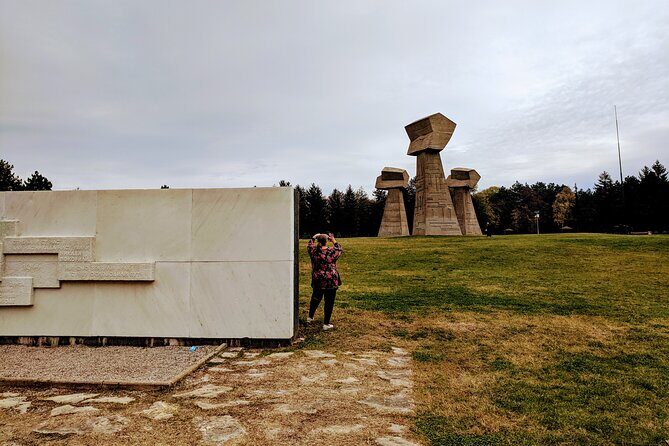
- Bubanj Memorial Park: the fists, the hill, and the scale of loss
- Skull Tower: Ottoman “warning” turned Serbian reminder
- Niš Fortress (1723): Ottoman stone, Roman roots, and event space today
- Archaeological Hall in the Niš National Museum: a strong last chapter
- What you actually get for $258.88 per person (and why it can be fair)
- Who should book this Niš day trip, and who should reconsider
- Should you book Southern Serbia: Full Day Private Trip to Niš?
- FAQ
- What time does pickup start for this Niš day trip?
- How long is the trip and how is travel time handled?
- What vehicle will I ride in?
- What’s included in the price?
- What is not included?
- Which sites have tickets included?
- How far can pickup be from the city center?
- Can I cancel for a refund?
Key things that make this day trip work
- Door-to-door pickup in Belgrade means you start fast, not by hunting a meeting point
- A small group cap (max 8) keeps the day from feeling crowded
- Guided storytelling in Niš helps you connect the dots between Roman, Ottoman, and WWII eras
- A combined ticket handles entry for the Nazi Concentration Camp Museum, Skull Tower, and the Archaeological Hall
- Real time to wander after the structured stops, so you can experience Niš at street level
- A long but managed day with roughly 2+ hours each way by highway, plus timed stops that don’t drag
The Belgrade to Niš drive: efficient, comfortable, and timed
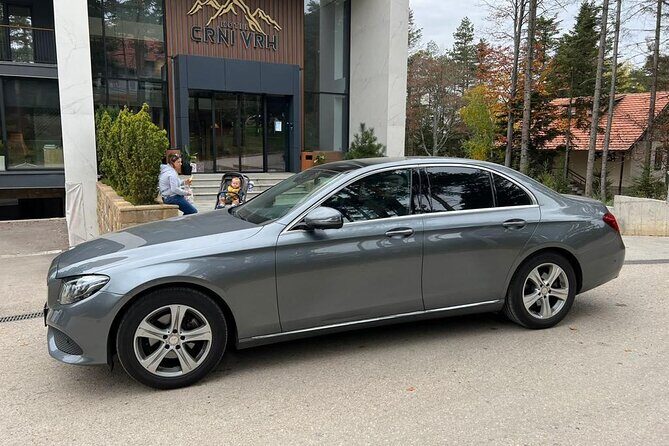
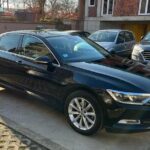
Your day starts early at 8:00 am, with pickup from your Belgrade accommodation. If you’re in the shared-tour option, pickup runs 15–30 minutes before departure; for private departures, 08:00 is the default. The ride is in an air-conditioned minivan (4–7 people) or a private sedan (1–3 people), which matters on a long day when you want to stay comfortable from the first hour.
The drive is a little over two hours and uses highway only, so you’re not sitting through slow back roads. When you’re planning a history-focused trip, this kind of transport setup is value: you conserve energy for Niš, not for the commute.
One small detail that helps: you’ll get a bottle of water per person, which is genuinely useful when the day is long and you’ll be walking at multiple sites.
You can also read our reviews of more private tours in Belgrade

Niš with a guide: Constantine to modern streets in one run
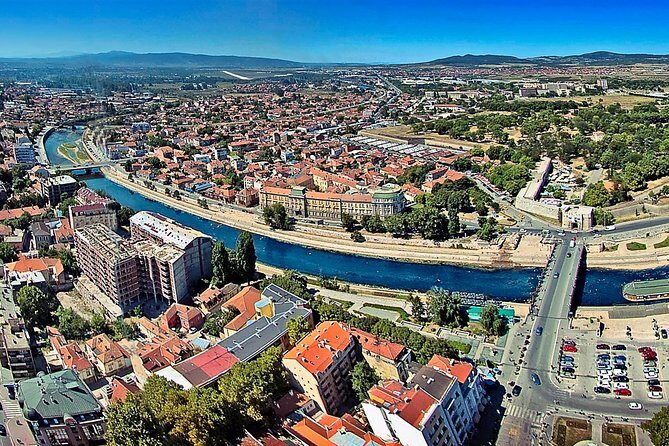
Niš is Serbia’s third-biggest city, and the schedule gives you the city’s core story fast. Before you scatter on your own, your guide covers the big historical arc—from pre-Roman times through the Roman era, and with special focus on Niš as the birth city of Constantine the Great.
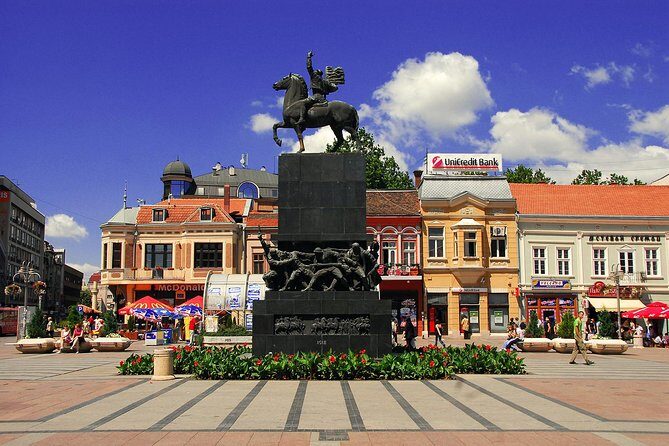
I like this approach because it prevents a common day-trip problem: you end up taking photos at monuments but missing what they mean. With a guide laying the timeline out, you can read the city like a map. You’ll pass key landmarks such as the Banovina Building, the Niš Liberators Monument at King Milan Square, and a monument to Serbian writer Stevan Sremac—famous for comedy writing in Serbia.
This part of the day is also where your Niš “vibe” starts to show. Even with scheduled stops, the city doesn’t feel like a checklist. It feels like you’re arriving somewhere with layers—ancient influence, Ottoman-era marks, and modern memory all stacking on top of each other.
Red Cross Nazi Concentration Camp Museum: where the emotions do the teaching
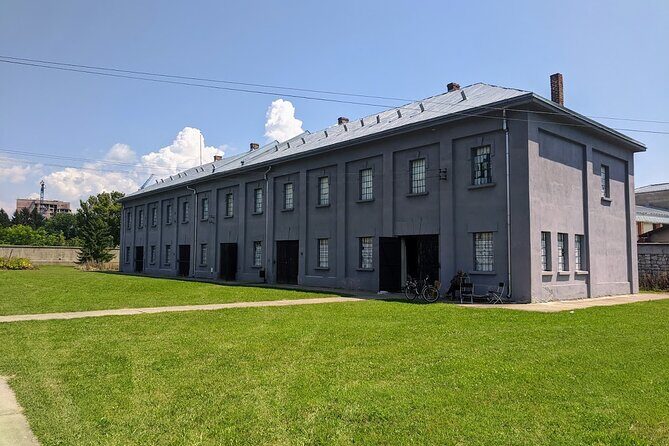
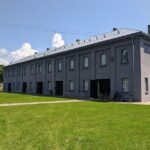
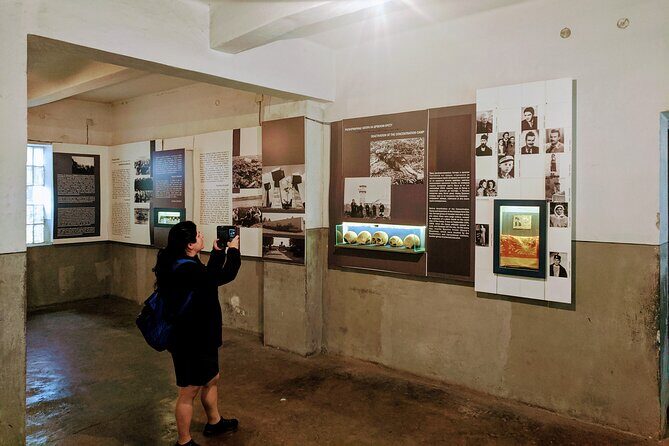
The first WWII stop is the Red Cross Nazi Concentration Camp, now a museum. The guide frames it clearly: it was operated by the German Gestapo and held around 30,000 prisoners, including Jews, Serbs, and Roma during WWII.
A key detail that shapes how you’ll experience this place is the camp’s function as a transit camp. The day doesn’t present it as only an isolated prison site; it explains that many people were taken to places like Bubanj Hill for execution, or sent onward to concentration camps such as Auschwitz and Dachau.
There’s also a specific historical event tied to this site: on February 12, 1942, inmates organized the first mass escape in occupied Europe—105 prisoners fled that day.
This is not a “light” stop, and the one-hour time slot reflects that. You’ll want a slower pace here, not a fast walk-through. If you’re the kind of person who processes info best by reading displays and sitting with it for a moment, give yourself permission to do that.
Practical note: time is limited, and the subject is heavy. If you’re sensitive to WWII content, plan to take short breaks before you move on to the next memorial.
Bubanj Memorial Park: the fists, the hill, and the scale of loss
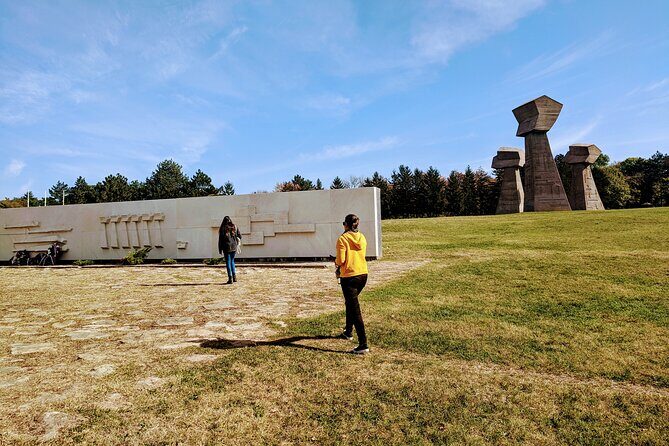
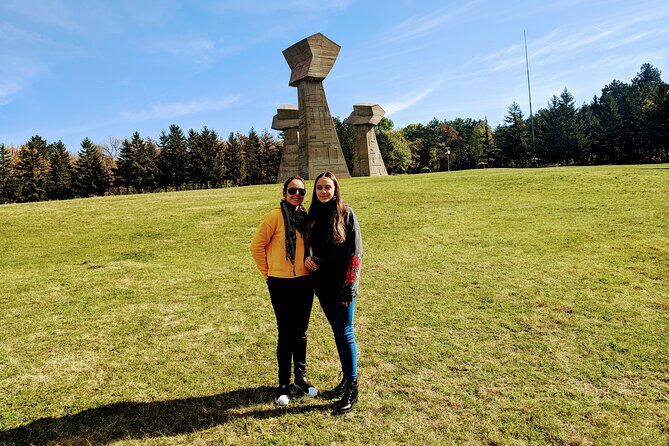
Next comes Bubanj Memorial Park, on Bubanj Hill, about 3 km from the city center. This stop is only around 20 minutes, but it’s a powerful one.
The centerpiece is a sculptural landmark: three gigantic fists rising from the ground. They’re credited to Croatian sculptor Ivan Sabolić, and the fists symbolize resistance and suffering. The interpretation can vary, but the core message remains human: the memorial points to the trauma experienced by men, women, and children during WWII.
What makes Bubanj matter in a way that connects back to the previous camp is the execution history. Your guide ties it together by explaining that Nazis carried out mass executions here—close to 10,000 prisoners from the concentration camp.
Because this stop is short, I recommend treating it like a moment you don’t rush. Look first, then read. The memorial is built for emotional comprehension, not just information pickup.
Skull Tower: Ottoman “warning” turned Serbian reminder
After Bubanj, your tour visits the Skull Tower, often described as unique in the world. The monument was erected by the Ottomans, with the intent to discourage opposition to Ottoman rule.
Originally, the tower was built into a far more complete form, with 952 skulls reportedly used. Today, 59 remain. The site still works as a physical symbol of horror and power.
One tricky part of this stop is that you’re standing in front of a structure meant as propaganda. Your guide helps you reinterpret it as a warning, and also as a later reminder tied to Serbian memory—why the tower was kept rather than destroyed, and why it matters to future generations.
This stop is about 30 minutes, so you’ll likely have time to understand the story and capture a few photos. But don’t let photos be your entire plan. The monument is at its strongest when you let the history do the talking.
A few more Belgrade tours and experiences worth a look

Niš Fortress (1723): Ottoman stone, Roman roots, and event space today
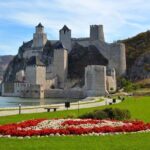
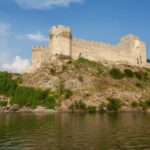
Then you move to Niš Fortress, lying by the Nišava River. The current fort shape is from 1723, when the Turks built it as their reign in the area was nearing an end. Your guide also notes the workforce: over 40 stonecutters from Constantinople and around 400 bricklayers from Niš—details that make the construction feel real, not abstract.
A nice context twist: the area isn’t “invented” in the 1700s. There have been forts on this site since ancient Roman times. So you’re not just seeing one era—you’re seeing a location repeatedly claimed and reshaped.
Today, the fortress isn’t only a historic object. It functions as a cultural property and a venue for frequent cultural and artistic events. That matters because it keeps the fortress from feeling like a sealed-off ruin. You’re in a place still used by locals, not only visited by tourists.
Time on this stop is about 45 minutes and the entry is free. It’s a good segment to stretch your legs and reset emotionally after WWII memorial sites.
Archaeological Hall in the Niš National Museum: a strong last chapter
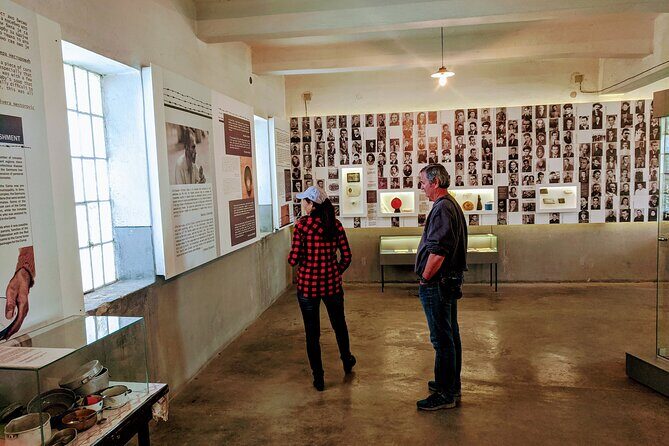
Your day wraps with museum time at the Archaeological Hall of the Niš National Museum. This is where the tour balances all the heavy memorial content with something more grounded in daily human life—artefacts and timelines.
The exhibits cover history and culture from the Neolithic Age and Roman period through to the Middle Ages. Even if you’re not a museum person, this kind of broad sweep helps you connect what you saw earlier in the day around Constantine, because you’re seeing the deeper timeline underneath it.
You’ll also have free time for individual activities in Niš. That free block is your chance to do the most fun part of any city day trip: slow down, find a side street, and pick lunch based on what smells good rather than what the schedule told you to pick.
For lunch, the optional traditional Serbian meal is priced at 1,000–1,800 RSD per person.
What you actually get for $258.88 per person (and why it can be fair)
At $258.88 per person for a 9–10 hour day, you’re paying for far more than “a ride to Niš.” Your cost covers:
- Hotel pickup and drop-off in Belgrade
- Air-conditioned transport (and fuel, parking, road tolls)
- A professional English-speaking guide
- A combined ticket that takes care of entry for the Nazi Concentration Camp Museum, Skull Tower, and the Archaeological Hall
- Water, plus tour organization and 24/7 assistance through a licensed operator
For some travelers, that combined-ticket piece is the hidden value. You don’t have to sort out multiple entries, and you avoid the “which ticket includes what” headache on a tight schedule.
Also, the group cap of 8 travelers matters on long days. Small groups tend to move faster, ask better questions, and feel easier to manage. And the private vehicle option (sedan for 1–3 people) makes the day feel more like your plan, not a shared shuffle.
Who should book this Niš day trip, and who should reconsider
This is a great fit if:
- You want a guided day with context, not just sightseeing
- You’re interested in Constantine’s Niš, plus Ottoman and WWII-era history
- You prefer small-group pacing and convenience over public transport stress
- You’ll use the free time to eat and wander, instead of rushing through every minute
You might reconsider if:
- You’re traveling with someone who finds WWII memorial sites extremely difficult
- You hate long days with early starts (this one is built around an early 8:00 am departure)
- You’d rather spend more time in Belgrade or in Niš than the schedule allows
If you do book, bring a strategy: take your time at memorial stops, then use the fortress and museum segments to shift gears back into lighter observation.
Should you book Southern Serbia: Full Day Private Trip to Niš?
Yes, you should book it if you want one high-yield day that covers Niš’s major eras with a guide, plus a real chance to experience the city on your own afterward. The value comes from the smooth Belgrade-to-Niš logistics, the small-group setup, and the combined ticket for the key sites.
Just be honest with yourself about the emotional weight of the WWII stops. If you’re okay with that, this is a strong way to see Niš without wasting time figuring out transport and entry details.
FAQ
What time does pickup start for this Niš day trip?
The tour starts at 8:00 am. If you’re booked on the shared option, pickup is scheduled 15–30 minutes before departure. You’ll receive pickup details by email the day before, not before 6 PM.
How long is the trip and how is travel time handled?
The day runs about 9 to 10 hours. The drive to Niš is slightly more than two hours, and you return to Belgrade after about two hours from Niš (with the full itinerary filling the rest of the day).
What vehicle will I ride in?
You’ll travel by air-conditioned minivan (4–7 pax) or a private sedan (1–3 pax), depending on your booking option.
What’s included in the price?
Included are hotel pickup/drop-off, transport (including fuel, parking, and road tolls), an English-speaking professional guide, a combined ticket for the Nazi Concentration Camp Museum, Skull Tower, and the Archaeological Hall, plus one bottle of water per person.
What is not included?
Lunch is optional. The traditional Serbian lunch is priced at 1,000–1,800 RSD per person.
Which sites have tickets included?
The tour includes a combined ticket for the Nazi Concentration Camp Museum, Skull Tower, and the Archaeological Hall. Other stops listed include free entry where noted.
How far can pickup be from the city center?
Pickup is free from hotels/Airbnbs/pensions within up to 5 km from Republic Square. If it’s 5–10 km, there’s a 10 EUR supplement. Beyond 10 km, you need to contact them directly.
Can I cancel for a refund?
Yes. You can cancel up to 24 hours in advance for a full refund. If you cancel less than 24 hours before the start time, you won’t receive a refund.